

Paper
Ibrahim Saif, Ahmed Ghoneim
{
  "authors": [
    "Ibrahim Saif"
  ],
  "type": "legacyinthemedia",
  "centerAffiliationAll": "",
  "centers": [
    "Carnegie Endowment for International Peace",
    "Malcolm H. Kerr Carnegie Middle East Center"
  ],
  "collections": [],
  "englishNewsletterAll": "",
  "nonEnglishNewsletterAll": "",
  "primaryCenter": "Malcolm H. Kerr Carnegie Middle East Center",
  "programAffiliation": "",
  "programs": [],
  "projects": [],
  "regions": [
    "Egypt",
    "Gulf",
    "Levant",
    "Maghreb"
  ],
  "topics": [
    "Economy"
  ]
}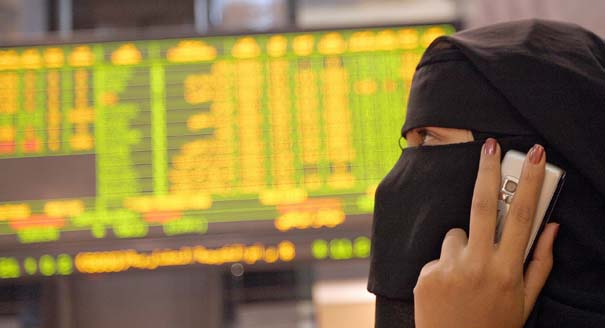
Source: Getty
Since the beginning of the Arab Spring, many citizens have been calling for a new and more representative equilibrium between economic actors and politicians.
Source: Daily Star

In many countries in the region, citizens are calling for a “new equilibrium” between economic actors and politicians. Non-oil producing states that suffer from budget deficits are witnessing growing domestic pressures to redefine the relationship between the state and large business (as well as other economic actors, such as labor and small private enterprises) and revise state policies on wage levels, labor conditions and price fixing.
Gulf oil countries do not share the same economic problems, but they must still face the repercussions of the former.
Looking back at the growth levels achieved over the past decade before the outbreak of protest movements, economic growth in the Middle East seemed high by all standard measures, and some countries – namely Tunisia and Jordan – were touted as economic “success stories.” Yet when countries like Egypt, Tunisia, Morocco and Jordan started applying economic reform programs in the early 1990s (Syria also witnessed economic transformations, though its policies came later than the other countries), an imbalanced formula emerged: Economic growth came to be combined with declining equality in education and basic services. Rather than stabilize the economic situations in countries, growth benefited only specific groups – becoming a source of tension that increased the frustration of those not reaping the benefits. What was missing from these growth estimates was an assessment of the impact of economic expansion on overall prosperity, the parity of basic services, and the effectiveness of social expenditures.
So what might change with the onset of the Arab Spring? One factor that must not be underestimated is the shift in economic ideology. The long-prevalent focus on growth and the disregard for its side effects – led by powerful global institutions like the World Bank, the International Monetary Fund, and the World Trade Organization – has been in full retreat since the second half of 2008. The economic policies of Western countries have been linked to the global financial crisis, leading the Arab countries that once considered these policies the best model to reconsider how to best achieve prosperity.
This applies just as much to countries that received economic growth packages as to the wealthy Gulf states that modeled their strategies on European and American markets – and that are now leading a hasty retreat from free market policies. Although no alternative visions exist yet, it is likely that considerations of income disparity and the lack of economic oversight will no longer be thought of as secondary. The concept of “inclusive growth” – which entails incorporating marginalized groups and granting diverse economic actors the opportunities to take part in economic decision-making – has now become an acceptable term in Arab policy-making circles.
Naturally, the change in transitioning countries’ political structures will also have a deep impact on the structure of their economies. The reform programs of the 1990s were able to disregard the interests of small and medium-sized enterprises and workers in the informal sector (who in Egypt, for example, comprise half of the actual workforce); the agricultural sector was also neglected, as evidenced in its declining share of GDP over the past decade in Morocco, Tunisia, Jordan and Egypt. Instead, reforms centered on major private stakeholders represented in the chambers of industry and commerce, as well as larger enterprises involved in banking and telecommunications. As a result, assessments of state performance by the World Economic Forum or in the World Bank’s business environment snapshots came to be based on the private sector’s degree of satisfaction with the status quo – or in other words, the private sector’s satisfaction with the government.
Given the political environment, these economic transformations were naturally accompanied by large-scale levels of corruption. As parliaments increasingly lost oversight over economic issues, the transfer of ownership from the public to the private sector was completed through deals that were led by a powerful alliance between individuals who were involved in the public sector and individuals in the private sector, serving their own narrow interests.
A major player in this process was the security sector. Under the guise of preserving stability and fear of the “Islamist alternative,” security institutions in Arab countries have not been subject to any form of regulatory oversight from legislatures or anti-corruption watchdogs. As a result they have been able to spread beyond the boundaries of security – becoming partners to business dealings in communications sectors, and occasionally in others, like health and education.
An undeclared alliance emerged between security apparatuses and business elites to facilitate the implementation of policies imposed by international institutions. Government bodies defending labor and consumer rights were stripped down, and the percentage of wages to GDP in the Arab countries during the 1990s and the 2000s fell. This meant that the largest share of economic growth strengthened only those who already owned assets. Given the combination of weak institutions, business-security collaboration, and feeble oversight, it was natural that corruption would spread, and economies would not diversify or become more competitive.
But over the past year, the security establishment has been gradually losing its grip on power, and its alliance with the business sector has begun to disintegrate. There is now room for civil liberties to flourish at least partially during the transitional period – so much so that trade unions and non-governmental organizations are emerging to defend the various groups that had once been marginalized.
In Egypt, for example, a new labor union federation was elected, and doctors and teachers organized strikes after President Hosni Mubarak’s fall to improve working conditions. In Tunisia, the General Labor Union has become an active political force in the country’s critical transition period. The newly active trade unions and workers’ movements in Tunisia and Egypt hint at the future role that organized labor can play.
Practically speaking, the Egyptian and Tunisian experiences so far represent a good model. Tunisian civil society has given birth to new movements with concrete demands, among which is a call for a new economic equilibrium. Importantly, these movements refuse to turn a blind eye to corruption, as had so long been the norm in economic decision-making. There are also political groups (such as Egypt’s April 6th and Jordan’s Social Left movements) which champion social justice without hesitation when it comes to policies pertaining to taxes and other economic matters.
In Morocco and Tunisia, the economic programs of the Islamist movements that have succeeded in gaining greater influence clearly differ from the mainstream. However, it remains to be seen how these slogans will be applied in practice. Should these groups make it to parliament, they will be tested on whether they can effectively defend the same mantras that they have put forth outside the legislature.
In the countries that are still weighing options – such as Morocco and Jordan – things look less promising. The demands for change in the Gulf are still coalescing, and it is unclear how the new equilibrium will unfold. Approaches have varied: in some Gulf states (namely Saudi Arabia and Qatar) expansion of public spending, rather than the adoption of radically different policies, has been the answer. However, this does not apply in the cases of Oman and Kuwait, which have been somewhat more open to reform. Bahrain, meanwhile, has resorted to a security approach to deal with protesters, for which it has received international rebuke.
The hard truth is that a more representative equilibrium is crystallizing in the Arab world. Numerous emerging parties are vying for status, while the traditional powers attempt to preserve the status quo. The challenge now is how the newcomers to the decision-making process can form a coalition, reach a new equilibrium, and achieve the economic growth that can help solve their countries’ problems.
Former Senior Associate, Middle East Center
Saif is an economist specializing in the political economy of the Middle East. His research focuses on international trade and structural adjustment programs in developing countries, with emphasis on Jordan and the Middle East.
Recent Work
Ibrahim Saif, Ahmed Ghoneim
Ibrahim Saif, Muhammad Abu Rumman
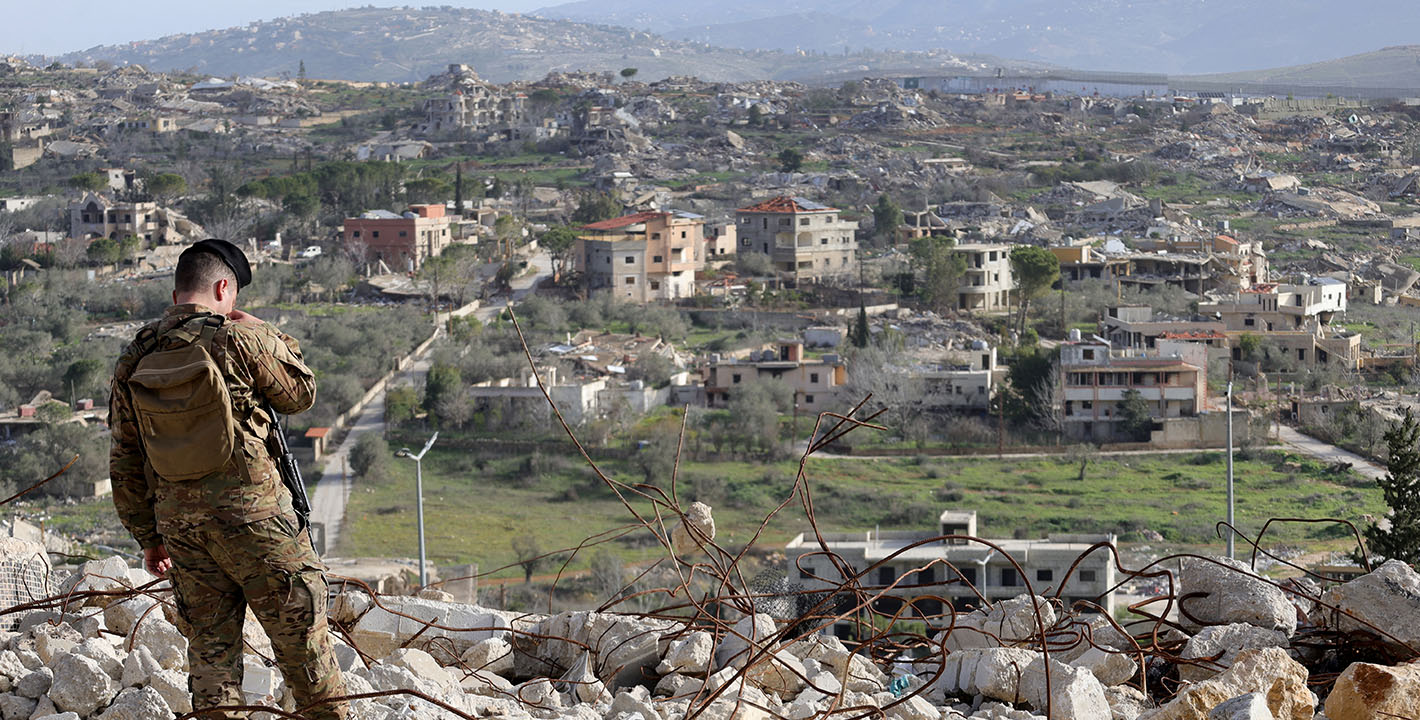
While armed forces commander Rudolph Haykal’s caution is understandable, he is in a position to act, and must.

Michael Young
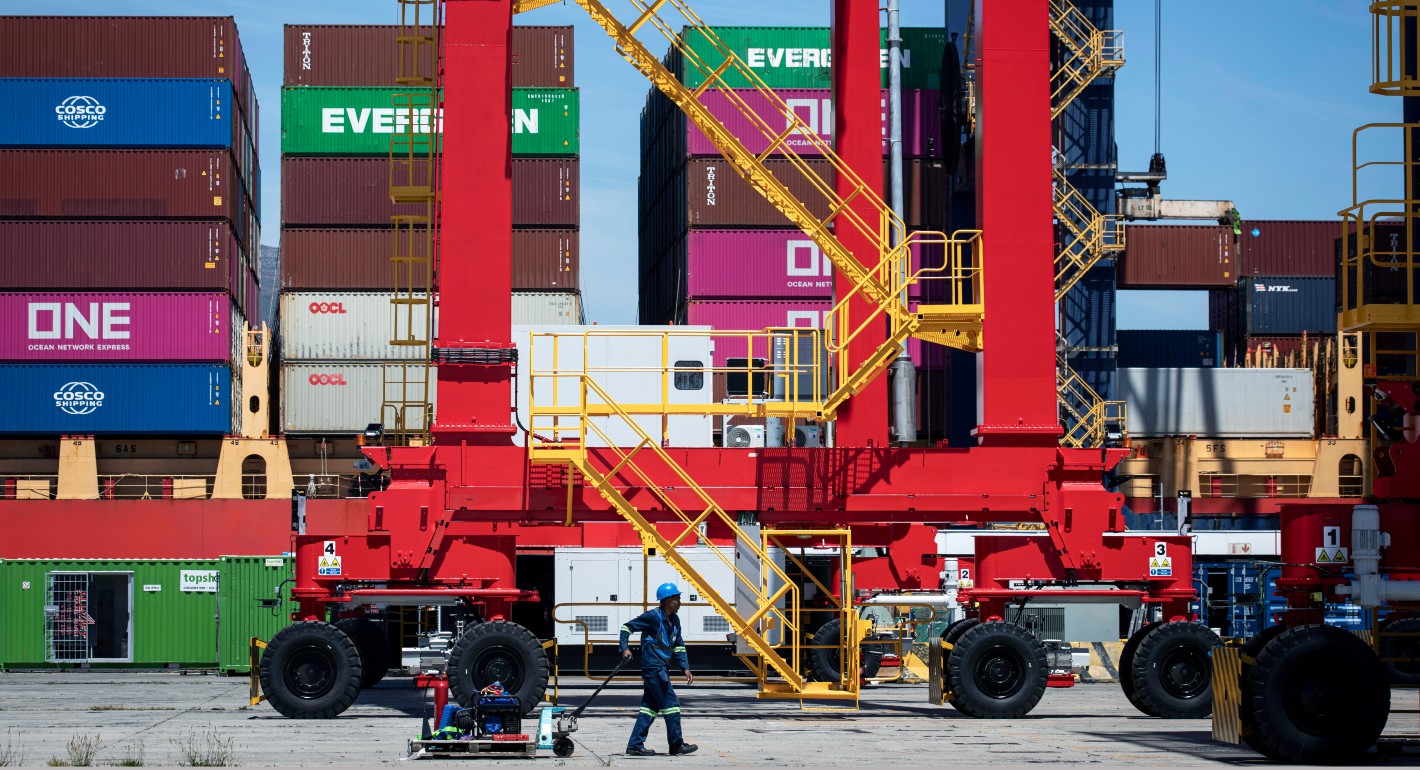
In key sectors such as critical minerals, specialty agriculture, and fintech, Africa can become a global powerhouse by investing more in manufacturing, value-add, and scaling.
Kholofelo Kugler, Georgia Schaefer-Brown

In the latest Five-Year Plan, the Chinese president cements the shift to an innovation-driven economy over a consumption-driven one.

Damien Ma
The simple conclusion is that the scheme will bring neither peace nor prosperity, but will institutionalize devastation.

Nathan J. Brown
Donald Trump has demanded that European allies send ships to the Strait of Hormuz while his war of choice in Iran rages on. He has constantly berated NATO while the alliance’s secretary-general has emphatically supported him.

Rym Momtaz, ed.