

Research
- +5
Alper Coşkun, Fatih Ceylan, Tacan İldem, …
{
  "authors": [
    "Sinan Ülgen"
  ],
  "type": "legacyinthemedia",
  "centerAffiliationAll": "",
  "centers": [
    "Carnegie Endowment for International Peace",
    "Carnegie Europe",
    "Malcolm H. Kerr Carnegie Middle East Center"
  ],
  "collections": [
    "Turkey’s Transformation"
  ],
  "englishNewsletterAll": "",
  "nonEnglishNewsletterAll": "",
  "primaryCenter": "Carnegie Europe",
  "programAffiliation": "",
  "programs": [],
  "projects": [],
  "regions": [
    "Middle East",
    "Europe",
    "Türkiye",
    "Levant"
  ],
  "topics": []
}
Source: Getty
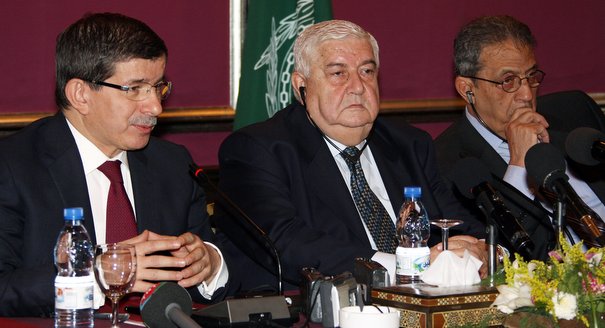
Turkey's zero problems with neighbors policy was successful and helped to enhance its regional influence. But with the onset of the Arab spring, this policy has become unsustainable.
Source: News.Az

The zero problems with neighbors policy was successful and helped Turkey to enhance its regional influence. But with the onset of the Arab spring it became unsustainable. Because zero problems with neighbors essentially meant having zero problems with regimes. As an influential regional player and a NATO member, Turkey could not continue to appear to give support to authoritarian regimes at a time of democratic upheaval. So today, for all practical purposes, this policy is dead.
Turkey’s relationship with Israel has been seriously downgraded as a result of the Mavi Marmara incident. The Turkish government stated 3 conditions for the normalization of the relationship with Israel. Turkey expects Israel to issue a public apology, to pay compensation to the families of the victims and finally to lift the embargo on Gazza.
Before the breakdown of the talks, the two sides came very close to an agreement fulfilling the first 2 conditions. But the negotiated text was ultimately rejected by the Netanyahu government. There is therefore little hope for the improvement in the relationship in the near future. The best hope is for a future government in Israel to adopt a more conciliatory approach to mend the relationship with Turkey.
The downgrading of Turkey’s relations with Israel will have regional implications. One of these implications is with regard to Turkey’s relations with Azerbaijan. Turkish policy makers will not ask Baku to follow the same policy of downgrading relations with Israel. But they will make their position known to their Azeri counterparts and ask for solidarity with the Turkish position.
The hosting of the early warning radar of the missile defense system on Turkish territory was a critical decision. But it was also an unsurprising decision to the extent that Turkey is a NATO member and this was a NATO project. Ankara did not want to find itself in the situation of blocking singlehandedly this important initiative. In this case, it was clear that the fundamental tenets of Turkish foreign policy fostering Turkey’s relations with the transatlantic community were deemed to be more important than the proclivity for Muslim solidarity.
The condition for the normalization of Turkish-Armenian relations are clear and remain the same. The protocols negotiated between Ankara and Erivan remain on the table. But Turkey conditions the ratification of these protocols to progress on Karabakh. In other words, unless Azerbaijan and Armenia reach an agreement on a roadmap on Karabakh, Turkey will not ratify the protocols and there will be no progress on normalizing relations with Armenia.

Senior Fellow, Carnegie Europe
Sinan Ülgen is a senior fellow at Carnegie Europe in Brussels, where his research focuses on Turkish foreign policy, transatlantic relations, international trade, economic security, and digital policy.
Recent Work

Alper Coşkun, Fatih Ceylan, Tacan İldem, …
Carnegie does not take institutional positions on public policy issues; the views represented herein are those of the author(s) and do not necessarily reflect the views of Carnegie, its staff, or its trustees.

Before the next wave of EU enlargement takes place, the union needs to grapple with thorny questions of how power is distributed among its members.


Emil Sondaj Hansen, Ditte Brasso Sørensen

The Horn of Africa countries are among those facing a new security calculus.


Andrew Leber, Lesley Anne Warner

The European far right might fail to steer EU policy in the direction Russia wants, but they will create enough chaos inside Europe to benefit the Kremlin.

Dimitar Bechev

The new U.S.–Denmark–Greenland agreement will help Washington exert political, economic, and financial dominance under the guise of security. Yet, it acknowledged Copenhagen’s and Nuuk’s sovereignty on the island.

Marc Pierini

A summer of escalation in the Black Sea has hurt Ukraine economically and is exacerbating world food security. A truce is needed—as is a broader reframing of Europe’s Ukraine strategy.

Thomas de Waal