

Commentary
It should address the shortcomings of previous crisis communication efforts and adapt to the demands of frontier AI.
Lucy Luo
{
  "authors": [
    "Deborah Gordon",
    "Shin-pei Tsay"
  ],
  "type": "legacyinthemedia",
  "centerAffiliationAll": "dc",
  "centers": [
    "Carnegie Endowment for International Peace",
    "Carnegie Europe"
  ],
  "collections": [],
  "englishNewsletterAll": "ctw",
  "nonEnglishNewsletterAll": "",
  "primaryCenter": "Carnegie Endowment for International Peace",
  "programAffiliation": "SCP",
  "programs": [
    "Sustainability, Climate, and Geopolitics"
  ],
  "projects": [],
  "regions": [
    "Western Europe",
    "Europe",
    "North America"
  ],
  "topics": [
    "Climate Change",
    "Foreign Policy"
  ]
}
Source: Getty
Europe is uniquely well-positioned to lead the world in reducing carbon emissions from transportation. There are four major ways this could be achieved.
Source: EurActiv

Even with an international agreement, official climate mitigation pledges amount to only half of what is needed to limit this temperature increase and there is a gap between climate policy targets and what the market seems committed to do. The reality is that global community has just five years to make a wholesale capital-investment shift from the production and use of carbon-intensive fuels to lower carbon energy.
If we fail, the International Energy Agency warns that carbon levels will be 'locked in,' raising average global temperatures 3.5 degrees within this century. Further delays to a global energy transition until 2035 will lock us into a 6-degree temperature rise over the same period. Exceeding a 2-degree rise threatens massive ecological and economic damage. Six degrees risks planetary suicide.
Every major emitting region – the US, China, India, and Russia - must act now. Each must choose its own promising emission-reduction path and pursue it flat out. Drastic carbon cuts are needed between now and 2017, even in Europe. Where will these immediate reductions come from?
Each region can take climate action by building on what is happening on the ground, and transport is the next place to turn. Between 1990 and 2008, EU27 transport greenhouse gas (GHG) emissions rose 24%. Europe must move to decarbonise its urban systems, with a focus on transportation.
This initiative will lay the groundwork for successfully meeting the 2050 Energy Efficiency Roadmap's zero-emission vehicle target in cities. Given the concentrated, mature nature of Europe's infrastructure and economy, and the fact that 80% of its population lives in cities, Europe has four clear and present opportunities to avoid transport carbon lock-in.
First, significant progress toward net zero-carbon vehicles in cities by 2050 can be made now. Decision-making in urban clusters can align more public transport investments with spatial planning, parking policies, and congestion pricing to promote low-carbon travel behaviour.
Regionally, low-carbon transport can be tied to zero traffic fatality targets as recommended by the European Parliament to double down on the benefits. Conventional theories of auto ownership must give way to car, ride and bike shares to save valuable space, time and expense. For the limited cars that remain, Europe's pursuit of innovation for low-carbon cars and high fuel taxes will aid in the goal to flatten regional growth trends in car use and urban sprawl to drive down carbon emissions.
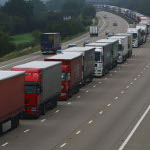
Second, regional freight movement must be decarbonised. This starts with trucks that haul 70% of EU freight. Long-haul trucks that account for 37% of EU diesel use - the vast majority of which is imported - offer the greatest reduction potential. Heavy-truck fuel economy and GHG standards will be key.
New low-carbon infrastructure investments must be made to shift long-distance freight movement to rail. Differentiated road charges, speed limits, and purchase incentives for heavy trucks should be uniformly adopted by member states. Arming shippers with new information technology applications and clear targets will optimise transport operations, supply chain management, and green logistics.
Third, member states should jump-start more low-carbon infrastructure investments through innovative financing and public-private partnerships that enable lagging states to keep up with green leaders. Currently, any regional tax increase to fund regional infrastructure investments requires a cumbersome process with a 'yes' from all 27 members. Given the strong economic linkages between countries, all states benefit from each individual country's efforts.
Fourth, Europe's initiative to price carbon through its emission trade system (ETS) is making headway. The World Bank estimated the global carbon market to be worth about $142 billion in 2010, 97% of which is accounted for by the EU's ETS. Europe's move to bring aviation into the ETS is a first step at pricing transport carbon. Future integration of carbon markets will extend to China, South Korea, Australia and California as they develop carbon markets. Fully integrating transport emissions in an expanded ETS system will be critical.
Europe's approach - underpinning individual, local and state actions with a collective response - shows how innovative systems of governance and strong climate policies can accelerate the transition to a low-carbon infrastructure. Beyond international agreements, this holds the key to combating climate change.

Former Director and Senior Fellow, Energy and Climate Program
Gordon was director of Carnegie’s Energy and Climate Program, where her research focuses on oil and climate change issues in North America and globally.

Former Nonresident Associate, Energy and Climate Program
Shin-pei Tsay was a nonresident associate in the Energy and Climate Program at the Carnegie Endowment for International Peace.
Carnegie does not take institutional positions on public policy issues; the views represented herein are those of the author(s) and do not necessarily reflect the views of Carnegie, its staff, or its trustees.

It should address the shortcomings of previous crisis communication efforts and adapt to the demands of frontier AI.

Lucy Luo

If the Russian-speaking community in Latvia cannot articulate their interests without being seen as disloyal, they could end up embracing a pro-Kremlin agenda.

Sergejs Potapkins
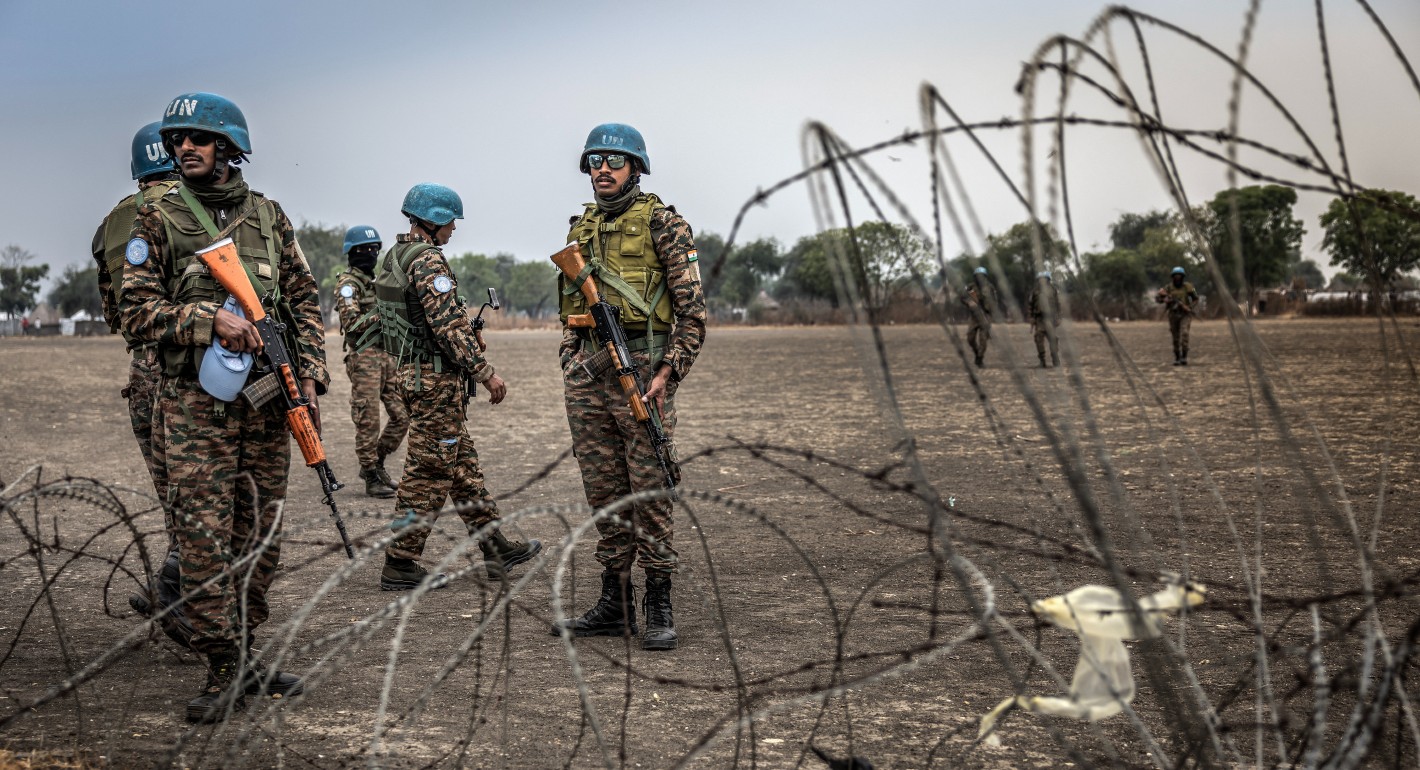
Washington’s decision to support some UN functions while letting others wither is pulling the organization apart at the seams.

Stewart Patrick, Theodore Zaritsky

Are Germany’s economic, industrial, and political struggles becoming a liability for the EU’s ability to rise to the geopolitical moment?

Rym Momtaz, ed.

China’s police training infrastructure construction projects provide benefits to recipient countries, promote China’s image as a major global security provider, and are likely to reinforce alignment between Beijing’s security priorities and those of countries in the Global South.


Cameron Waltz, Sheena Chestnut Greitens, Kim Nguyen, …