

Paper
Douglas H. Paal
{
  "authors": [
    "Douglas H. Paal"
  ],
  "type": "legacyinthemedia",
  "centerAffiliationAll": "dc",
  "centers": [
    "Carnegie Endowment for International Peace",
    "Carnegie China"
  ],
  "collections": [],
  "englishNewsletterAll": "asia",
  "nonEnglishNewsletterAll": "",
  "primaryCenter": "Carnegie China",
  "programAffiliation": "AP",
  "programs": [
    "Asia"
  ],
  "projects": [],
  "regions": [
    "North America",
    "United States",
    "East Asia",
    "China",
    "Taiwan"
  ],
  "topics": [
    "Security",
    "Foreign Policy"
  ]
}
Source: Getty
As Taiwan's elections approach, Beijing and Washington are quietly hoping for the re-election of Taiwan President Ma Ying-jeou and the maintenance of the status quo in cross-strait relations.
Source: Asia Pacific Brief

After China’s relations with the United States and many of its neighbors drifted into troubled waters in 2010, a U.S. diplomatic initiative to reset the relationship was met with a warily positive Chinese response that has seen those waters calm considerably over the intervening fifteen months. In recent encounters, top officials on both sides have emphasized their desire to maintain stability, despite the inevitable political countercurrents of the American election season and China’s party and state leadership transition.
Recently, Chinese official statements have been calm and positive, but have not completely muffled the sound of grinding jaws over President Obama’s tour of the Pacific in which “containing China” was the media theme. This is now true, as well, of China’s initial reaction to the repeated references to China in the Obama administration’s newly proclaimed defense “strategy.” An awkward transition to a DPP-led government in Taiwan could greatly complicate maintaining bilateral stability, and preventing a downslide remains a priority.
The presidential election in Taiwan appears to be tight, judging from the closing polls last week, with Ma enjoying a small lead in most. Traditionally, his Kuomintang party has enjoyed a structural advantage and the DPP a structural disadvantage, the latter rarely breaching a roughly 40 percent ceiling in cross-island voting. The presence of a third candidate, James Soong Chu-yu of the People’s First Party, further complicates the picture, although poll analysts generally conclude he takes votes about equally from both of the leading candidates.
Washington’s lips have formally and consistently supported the democratic process in Taiwan, and will automatically voice a desire to work with whoever wins the election, and it has been clear through its actions in recent months that it supports candidates who will maintain peace and stability in the Taiwan Strait. To reinforce its policy preference, the Obama administration has successively approved a $5.852 billion arms sales package for Taiwan that managed not to trigger a harsh Chinese reaction, arranged visits by American officials of five agencies at increasingly high levels that had not been seen in Taiwan in more than a decade, and signaled its intention to admit Taiwan to the valued visa waiver program next year—all in advance of the election.
Although these actions may redound to the benefit of the Ma administration, it is not to say that similar gestures could not be made to a hypothetical Tsai administration, presuming it can manage cross-strait relations in a peaceful and stable condition. Again, the American preference is for a policy outcome that fosters and does not endanger growing American cooperation with China across a range of interests, such as the pressing ones of North Korea, the South China Sea, and Iran.
The nub of the cross-strait issue is that candidate and DPP chairwoman Tsai has repeatedly and forcefully decried the underlying formula that has enabled China and Taiwan to find compromise solutions to practical problems despite their contest over sovereignty: the so-called “1992 consensus,” a phrase that allows both sides to acknowledge “one China” but to retain their respective and different interpretations of its meaning. Beijing has been consistently adamant that she must find a way to acknowledge the “one-China” principle if she hopes to maintain the status quo as president of Taiwan. Last year, Chinese officials showed signs of flexibility in how she might do this, but with her campaign statements and the party’s “ten-year platform” enshrining its rejection, Beijing’s attitude has hardened.
Tsai has emphasized privately and publicly that she is a moderate and pragmatic person, and wants to retain the benefits of the relaxation of the past three years, while improving the terms on which Taiwan cooperates with the mainland. She obviously wants to reassure voters that the rollercoaster turbulence of the days of former DPP president Chen Shui-bian is not in the offing if she is elected.
Beijing officials, for their part, have become increasingly vocal in saying that a Tsai victory will not perpetuate the status quo and that a price will be exacted. Absent a turnabout by Tsai on “one China,” if she is elected, Beijing can be expected to initially seek options that will demonstrate the need for her to adjust or close new opportunities for the island.
Presumably, Beijing will not want to alienate the constituencies it has been cultivating on the island, including farmers, educators, and professionals by hurting their newly developed economic and other interests. But it has a range of choices to express displeasure, running from ending the “diplomatic truce” under which China has deflected offers of diplomatic relations from Taiwan’s current partners, curtailing Taiwan’s “international space,” ceasing the flow of central, provincial, and local officials to Taiwan to write new deals, and suspending its acceptance of Taiwan officials in negotiating delegations to the mainland. There are probably other steps it can take as well.
China can announce these steps right after Tsai’s election, but would hesitate to implement them until May 20, when Taiwan’s inauguration ceremony occurs, so as not to punish Ma for the perceived sins of Tsai. It likely would use the unusually long four-month interregnum to pressure Tsai to adjust her pre-election stance. Beijing would undoubtedly press Washington to do the same.
If Ma is re-elected, Washington can be expected to breathe a sigh of relief and issue hearty congratulations. The chairman of the American Institute in Taiwan (AIT), Ray Burghardt, will fly to Taipei to congratulate the participants.
When Tsai was in the United States last September, she suggested vaguely that the four-month interregnum should give Americans some room to see that she will handle things smoothly. It was this vagueness, however, that prompted administration officials’ doubts and did not reassure them. Subsequently, officials let it be known widely, but anonymously, that on the basis of what she had to say, they lacked confidence in her ability to manage cross-strait relations effectively.
If Tsai Ing-wen wins, failing some intervening major development, the Obama administration can be expected to dispatch very quickly the AIT chairman to urge her at the very least to avoid saying things that will worsen the outlook, and to adjust her pre-election stance to a more promising one before she takes office. This was done in 2000, when Chen Shui-bian was elected, but importantly the AIT chairman was accompanied by a senior political figure, then chairman of the House Foreign Affairs Committee, Lee Hamilton. Officials today are aware that not sending a similarly high-level messenger of caution will lead Tsai, Taiwan, and China to believe the United States is not taking the matter seriously enough. Thus, a senior presidential-level envoy seems most likely, if the need arises.
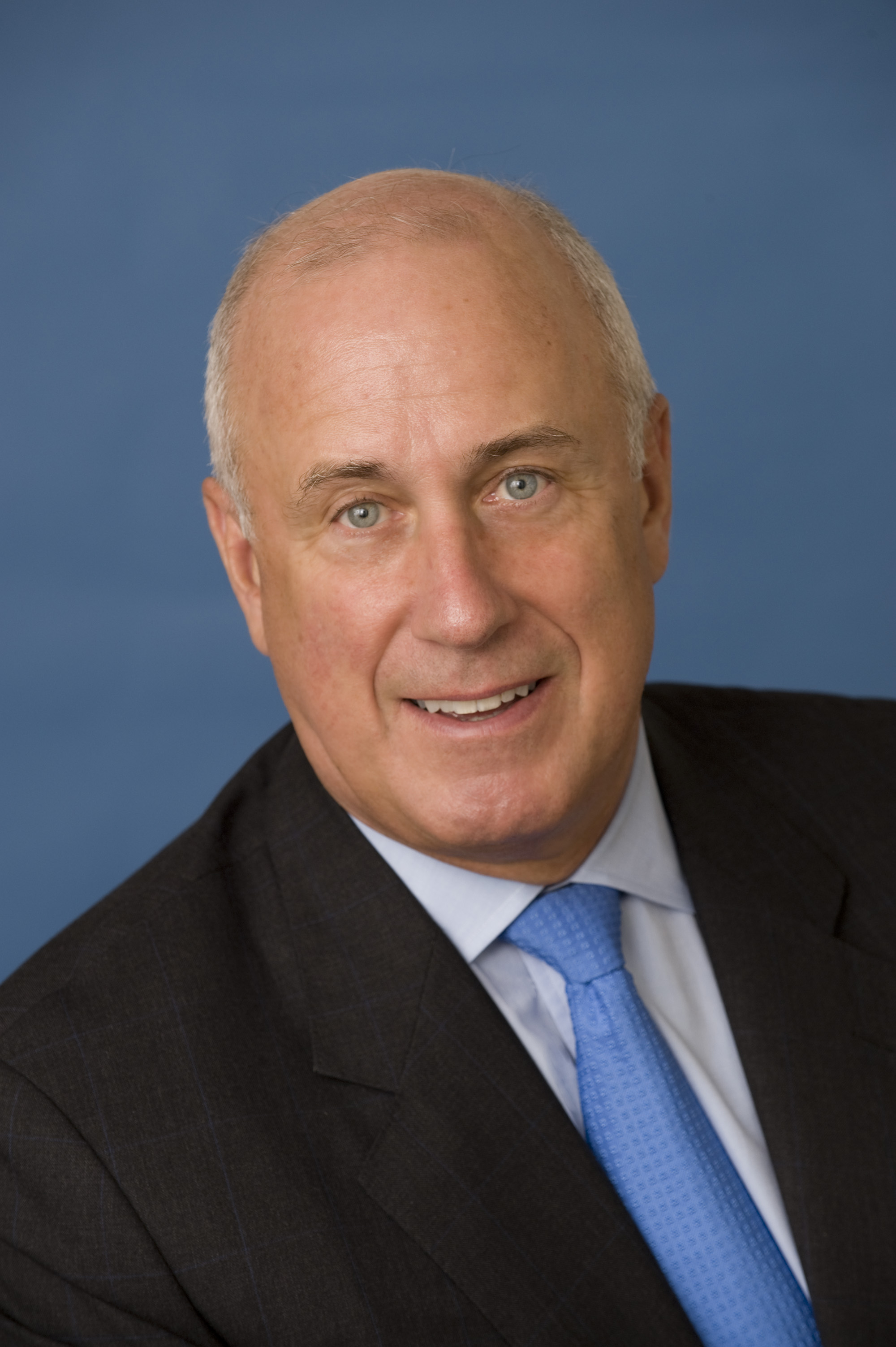
Distinguished Fellow, Asia Program
Paal previously served as vice chairman of JPMorgan Chase International and as unofficial U.S. representative to Taiwan as director of the American Institute in Taiwan.
Recent Work
Douglas H. Paal

Douglas H. Paal, Tong Zhao, Chen Qi, …
Carnegie does not take institutional positions on public policy issues; the views represented herein are those of the author(s) and do not necessarily reflect the views of Carnegie, its staff, or its trustees.

The acknowledgment has sparked fears of a new arms race with China and Russia.

Chris O’Meara
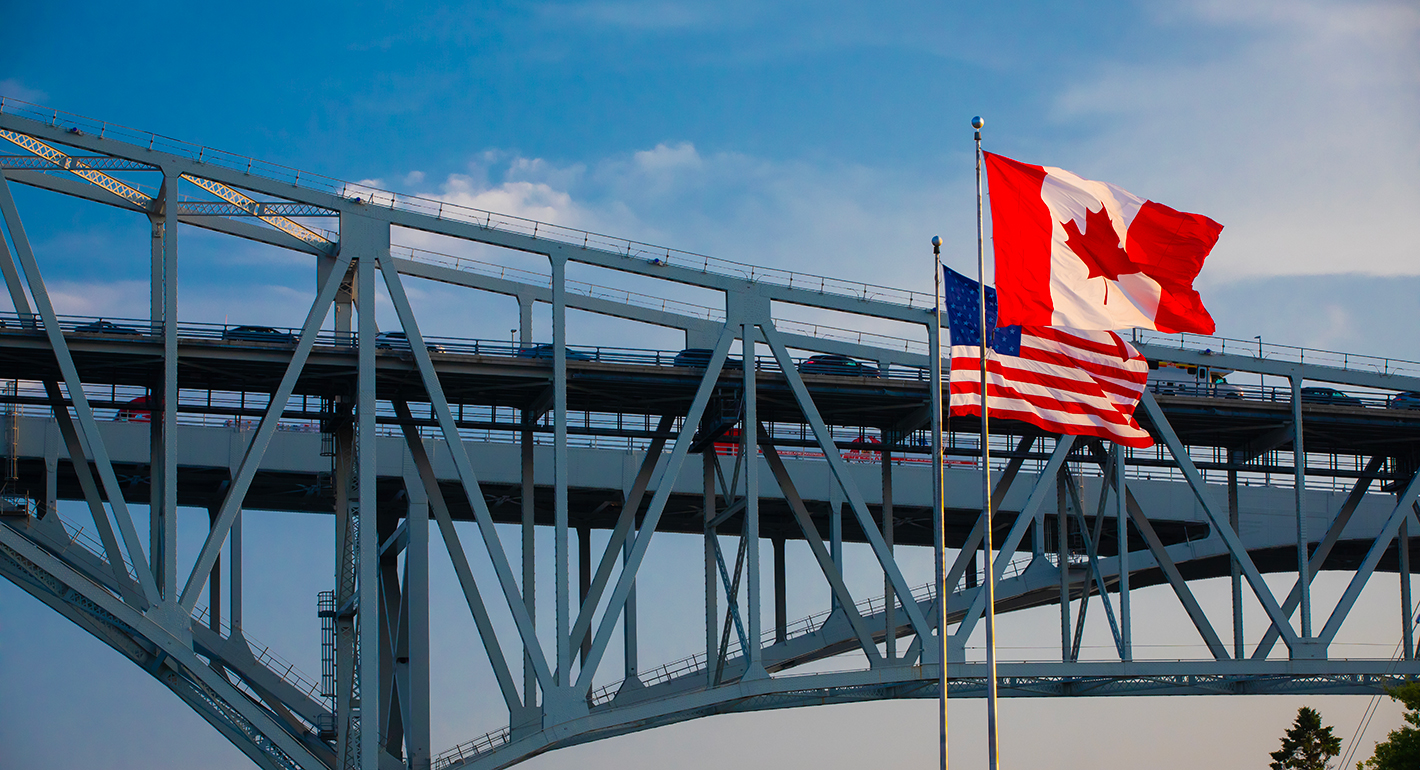
Smaller powers cannot go it alone, but Canadian history shows that integration with the United States will not always be benign.
Paul Samson

The European Commissioner for Trade is headed to China. But after President Xi’s bridge-building visit to Washington, can a more isolated EU overcome Beijing’s stranglehold on critical raw materials? Who will blink first?

Rym Momtaz, ed.
The summit may be remembered as a fatal blunder, when Washington, Beijing, and the AI industry collectively chose ceremony over action.
Jeffrey Prescott
European NATO countries are wrestling with the possibility of U.S. disengagement from the alliance. With the continent’s security increasingly uncertain, governments must restore the credibility of their collective defense.


Hans-Dieter Lucas, Adam Thomson, Pierre Vimont