

Commentary
Alexey Malashenko
{
  "authors": [
    "Alexey Malashenko"
  ],
  "type": "legacyinthemedia",
  "centerAffiliationAll": "",
  "centers": [
    "Carnegie Endowment for International Peace",
    "Carnegie Russia Eurasia Center"
  ],
  "collections": [],
  "englishNewsletterAll": "",
  "nonEnglishNewsletterAll": "",
  "primaryCenter": "Carnegie Russia Eurasia Center",
  "programAffiliation": "",
  "programs": [],
  "projects": [
    "Eurasia in Transition"
  ],
  "regions": [],
  "topics": []
}
Source: Getty
Uzbekistan, like other Central Asian states, shifts its foreign policy efforts between Moscow and Washington depending on circumstances. It seems that now Uzbekistan is pressing for an increased American military presence in the country.
Source: Institute for War and Peace Reporting’s News Briefing Central Asia

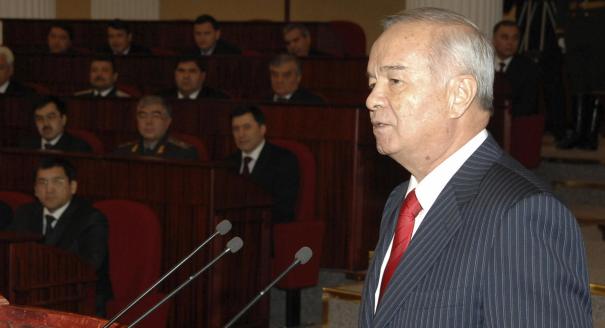
Speaking at the 20th anniversary of the founding of Uzbekistan’s armed forces – Central Asia’s largest military – Karimov said the US withdrawal could lead to an expansion of “terrorist and extremist activities” in Central Asia, creating “a permanent source of instability.”
In his January 13 speech, Karimov said the Uzbek military needed to be modernised. The nature of military operations was changing, he noted, with a need for small, mobile units able to mount swift strikes, and states developing increasingly high-precision weapons.The speech came less than a month after Karimov attended a Kremlin summit held by the Collective Security Treaty Organisation, or CSTO, a seven-member regional security bloc led by Russia, where members discussed the issue of foreign military bases on their territory.
Analysts suspect that Karimov is seeking new foreign backing to bolster national defence, and may be attempting to play Moscow and Washington against one other.
Uzbekistan has gravitated towards Russia in recent years, while relations with the US turned frosty following the 2005 Andijan massacre, when Uzbek security forces gunned down hundreds of protestors.
After Washington pushed for an international investigation, Tashkent formally evicted the US from a military base on its soil.
The two countries, however, have enjoyed a recent thaw in relations due to Uzbekistan’s increasing role as a supply route for NATO forces in Afghanistan.
NBCentralAsia asked Alexey Malashenko, a Central Asia expert with the Carnegie Centre in Moscow, to comment on Karimov’s speech and Uzbek security issues.
Alexey Malashenko: First of all, the CSTO is hardly going to be capable of maintaining security. Is there anybody who regards it as an effective organization? Only regional leaders and Russian politics describe it as such. Where was the CSTO during the slaughter in Kyrgyzstan [ethnic violence in June 2010]? Did Uzbekistan support Kyrgyzstan’s subsequent peacemaking efforts?
The CSTO is toothless, just like the Eurasian Economic Community and the Commonwealth of Independent States [other former Soviet groupings].
I think Tashkent really is pressing for an increased American military presence, for purely selfish reasons. A strong relationship with the US, including the opening of military bases, would come with financial assistance. Besides, an American-Uzbek rapprochement could serve as a trump card in a bid for Moscow’s favours.
Finally, by building good relations with Washington, Karimov is clearly hoping that it would back him in the event of a domestic crisis. I believe that would be unlikely, however.
Secondly, the Taleban are hardly likely to head northwards [into Central Asia]. They will have enough on their hands in Afghanistan after the Americans leave, and they start disagreeing among themselves and pressuring the Kabul government. Or – assuming they are sufficiently astute – they get involved in building a normal nation state.
Even if the worst were to happen and a Taleban battalion invaded Uzbekistan, it is difficult to imagine that it would be opposed by a military force drawn from [CSTO members] Russia, Kazakstan, Belarus and Armenia. Uzbekistan has its own armed forces that it could deploy in the event of a Taleban intervention.
Malashenko: American, Russian and also Chinese interests are omnipresent – they compete for influence, but also cooperate in some areas.
It’s to Tashkent’s advantage to have a diversity of external foreign policy directions, just as it is for all the Central Asian states that have multiple external relationships. They always have options.
Uzbekistan plays on this like no other country. It tilts towards Russian or American interests whenever necessary. Its hesitant attitude to the CSTO is a good example of this.
Even if the Uzbek authorities reach some agreement with the West, Moscow’s reaction is likely to be muted because it has no significant leverage for influencing Uzbek policy. For Washington, too, the CSTO isn’t an alarming bloc. It symbolises Russia’s presence in the region, but no one knows what real clout it has in security matters.
This article originally appeared in News Briefing Central Asia, produced by the Institute for War and Peace Reporting, iwpr.net
Former Scholar in Residence, Religion, Society, and Security Program
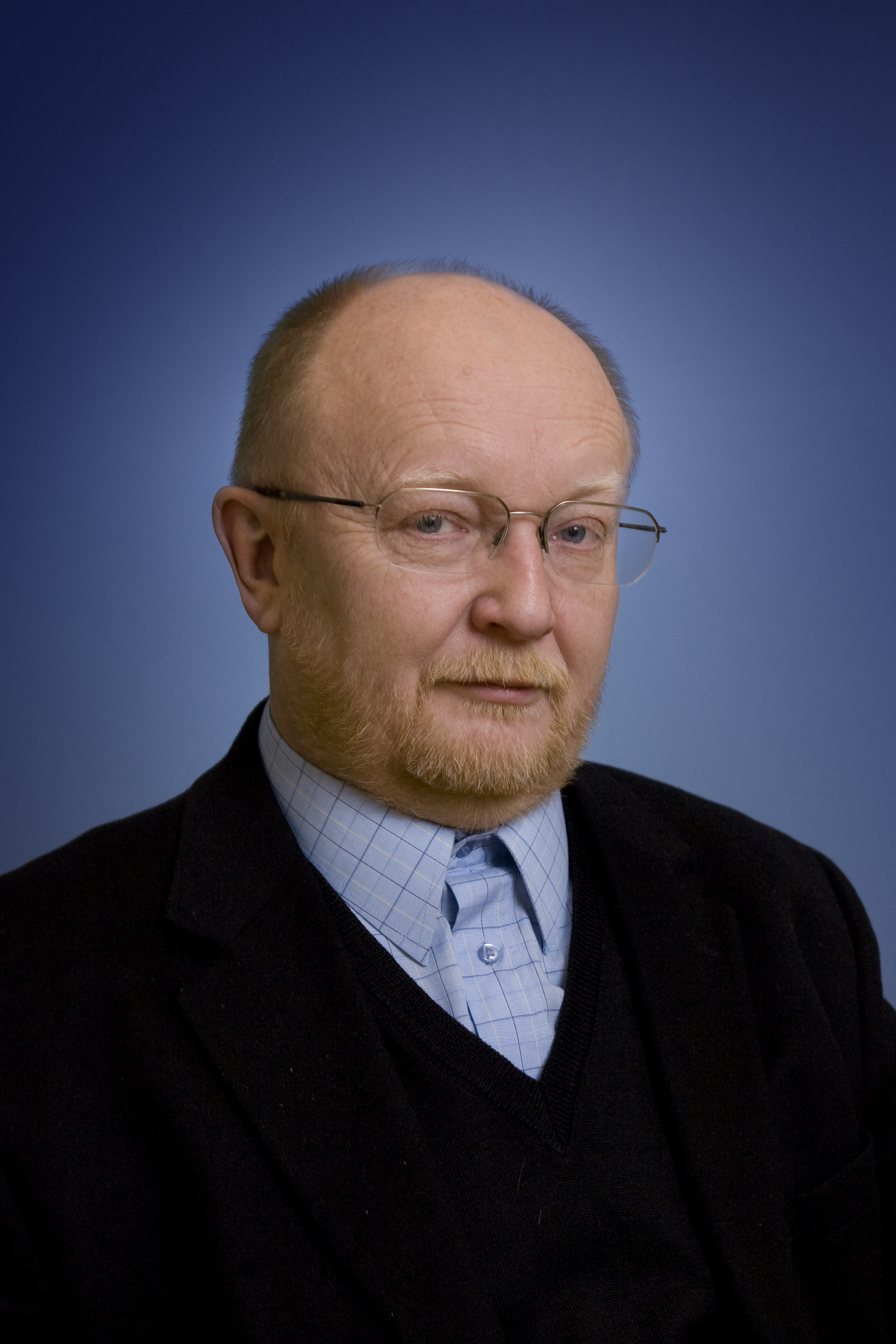
Malashenko is a former chair of the Carnegie Moscow Center’s Religion, Society, and Security Program.
Recent Work
Alexey Malashenko
Alexey Malashenko
Carnegie does not take institutional positions on public policy issues; the views represented herein are those of the author(s) and do not necessarily reflect the views of Carnegie, its staff, or its trustees.