• Research
  • Emissary
  • About
  • Experts
Carnegie Global logoCarnegie lettermark logo
DemocracyIran
  • Donate
{
  "authors": [
    "Karim Sadjadpour"
  ],
  "type": "legacyinthemedia",
  "centerAffiliationAll": "dc",
  "centers": [
    "Carnegie Endowment for International Peace",
    "Malcolm H. Kerr Carnegie Middle East Center"
  ],
  "collections": [],
  "englishNewsletterAll": "menaTransitions",
  "nonEnglishNewsletterAll": "",
  "primaryCenter": "Carnegie Endowment for International Peace",
  "programAffiliation": "MEP",
  "programs": [
    "Middle East"
  ],
  "projects": [],
  "regions": [
    "Middle East",
    "Iran",
    "Gulf",
    "Levant"
  ],
  "topics": [
    "Security",
    "Political Reform",
    "Nuclear Policy"
  ]
}
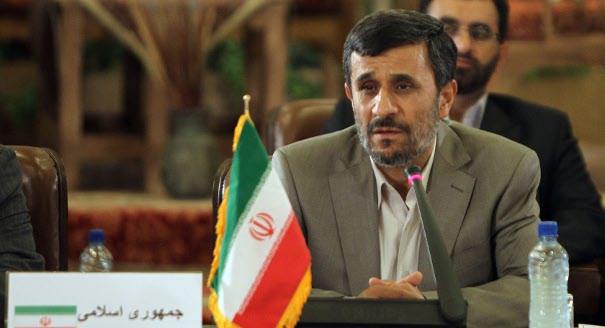
Source: Getty

In The Media

Concern Elevates That Israel Will Strike Iran

As speculation increases that Iran is inching closer to acquiring nuclear weapons, rhetoric regarding war may just be an effort to strengthen diplomacy.

Link Copied
By Karim Sadjadpour
Published on Feb 8, 2012
Program mobile hero image

Program

Middle East

The Middle East Program in Washington combines in-depth regional knowledge with incisive comparative analysis to provide deeply informed recommendations. With expertise in the Gulf, North Africa, Iran, and Israel/Palestine, we examine crosscutting themes of political, economic, and social change in both English and Arabic.

Learn More

Source: NPR's Morning Edition

As speculation that Iran is inching closer to acquiring nuclear weapons increases, talks of Israeli airstrikes continue to ratchet up. Speaking on NPR’s Morning Edition, Carnegie's Karim Sadjadpour asserted that Israel worries that Iran is moving close to reaching the threshold of a “zone of immunity” where airstrikes would be ineffective at setting the nuclear weapons program back. While the Obama administration worries about Iran actually having a nuclear weapon, Sadjadpour said that “in Israel, the redline is even more stringent. They don’t even want the Iranians to have the capability.” Much of the chatter regarding war may just be an effort to strengthen diplomacy, Sadjadpour added. While the Chinese view the sanctions against Iran as inimical to their energy interests, a war against Iran would affect their energy interests much more dramatically. 

This interview was originally aired on NPR's Morning Edition.

About the Author

Karim Sadjadpour

Senior Fellow, Middle East Program

Karim Sadjadpour is a senior fellow at the Carnegie Endowment for International Peace, where he focuses on Iran and U.S. foreign policy toward the Middle East.

    Recent Work

  • Q&A
    What’s Keeping the Iranian Regime in Power—for Now

      Aaron David Miller, Karim Sadjadpour, Robin Wright

  • Q&A
    How Washington and Tehran Are Assessing Their Next Steps

      Aaron David Miller, David Petraeus, Karim Sadjadpour

Karim Sadjadpour
Senior Fellow, Middle East Program
Karim Sadjadpour
SecurityPolitical ReformNuclear PolicyMiddle EastIranGulfLevant

Carnegie does not take institutional positions on public policy issues; the views represented herein are those of the author(s) and do not necessarily reflect the views of Carnegie, its staff, or its trustees.
More Work from Carnegie Endowment for International Peace

  • Article
    Afro-Iraqis, Climate Change, and Environmental Injustice in Basra

    Afro-Iraqis experience political, economic, and social marginalization and discrimination, which exposes the poorest members of the community to the harsh realities of the region’s climate disaster.

      Zeinab Shuker

  • Article
    Kuwait’s Bidun in the Face of Climate Change are Invisible, yet Exposed

    Mitigating the repercussions of climate change in Kuwait is crucial for lessening economic disparities and achieving social justice.

      Courtney Freer

  • Army personnel stand guard after a pro-monarchy protest turns violent in Kathmandu, Nepal, on March 28, 2025.
    Article
    The Shadow of the Military in Modern South Asia

    Military rule is now a defining political factor in South Asia. Here’s how analysts can understand and account for it.

      Paul Staniland

  • Commentary
    Diwan
    Realism and the Lebanon-Israel Talks

    Beirut’s desire to break free from Iranian hegemony may push it into a situation where it has to accept Israel’s hegemony.  

      Michael Young

  • Commentary
    Strategic Europe
    How to Join the EU in Three Easy Steps

    Montenegro and Albania are frontrunners for EU enlargement in the Western Balkans, but they can’t just sit back and wait. To meet their 2030 accession ambitions, they must make a strong positive case.

      Dimitar Bechev, Iliriana Gjoni

Get more news and analysis from
Carnegie Endowment for International Peace
Carnegie global logo, stacked
1779 Massachusetts Avenue NWWashington, DC, 20036-2103Phone: 202 483 7600Fax: 202 483 1840
  • Research
  • Emissary
  • About
  • Experts
  • Donate
  • Programs
  • Events
  • Blogs
  • Podcasts
  • Contact
  • Annual Reports
  • Careers
  • Privacy
  • For Media
  • Government Resources
Get more news and analysis from
Carnegie Endowment for International Peace
© 2026 Carnegie Endowment for International Peace. All rights reserved.