
• Research
  • Emissary
  • About
  • Experts
Carnegie Global logoCarnegie lettermark logo
DemocracyIran
  • Donate
{
  "authors": [
    "Alexey Malashenko"
  ],
  "type": "other",
  "centerAffiliationAll": "",
  "centers": [
    "Carnegie Endowment for International Peace",
    "Carnegie Russia Eurasia Center"
  ],
  "collections": [],
  "englishNewsletterAll": "",
  "nonEnglishNewsletterAll": "",
  "primaryCenter": "Carnegie Russia Eurasia Center",
  "programAffiliation": "",
  "programs": [],
  "projects": [
    "Eurasia in Transition"
  ],
  "regions": [
    "Central Asia",
    "Kazakhstan"
  ],
  "topics": []
}
Source: Getty

Other
Carnegie Russia Eurasia Center

Tough Times Ahead for Kazakhstan

The turbulent events of 2011 in Kazakhstan have forced the country's ruling elite to consider economic and even political change in order to enable their continued rule.

Link Copied
By Alexey Malashenko
Published on Feb 29, 2012
Project hero Image

Project

Eurasia in Transition

Learn More

There was never any shortage of attention paid to Kazakhstan by politicians and analysts. Interest in the country is on the increase today, due to changes looming on the horizon there and the emergence of new trends in its development. First in this context is the expected leadership change.

Alexey Malashenko analyzes the recent developments in Kazakhstan and the possible future of this country.
Key Conclusions:

  • All of Kazakhstan’s politicians recognize the need for change, even those who are happy with the way things are now, or who find change difficult to initiate. Kazakhstan’s political elite is firmly set on change because it is the most essential condition for ensuring the elite’s continued rule.
     
  • In 2011, Kazakhstan went through upheavals unprecedented in its independent history: an upsurge in Islamist activity, terrorist attacks, and the events in Zhanaozen, which claimed numerous lives. These events have all forced the ruling elite to give serious thought to economic and perhaps political change.
     
  • An opposition has not emerged in Kazakhstani society. Neither the events in Zhanaozen nor the Islamist groups’ activeness have received broad public support. This is as much due to the preventive measures taken by the authorities as to Kazakhstani society simply not yet being ready for protest.
     
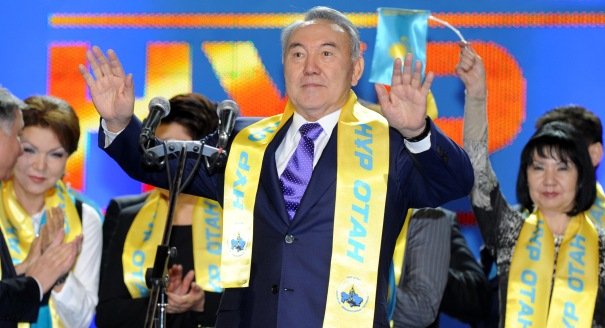
  • Nazarbayev’s Nur Otan party won a convincing victory in the parliamentary election, as was expected. The election results were unchallenged, despite the irregularities that took place during the election preparations and the election itself.
     
  • Although integration within the Eurasian Union seems to be progressing well, the future of Russia-Kazakhstan relations will depend in large part upon the domestic situation in both countries. There is the risk that in the event of crisis, Moscow (and Minsk) could resort to protectionist measures. Changes in domestic policy in Russia brought on by protests, as well as possible change in Kazakhstan, could also affect the two countries’ foreign policy and the development of their relations.

About the Author

Alexey Malashenko

Former Scholar in Residence, Religion, Society, and Security Program

Malashenko is a former chair of the Carnegie Moscow Center’s Religion, Society, and Security Program.

    Recent Work

  • Commentary
    What Will Uzbekistan’s New President Do?

      Alexey Malashenko

  • Commentary
    Preserving the Calm in Russia’s Muslim Community

      Alexey Malashenko

Alexey Malashenko
Former Scholar in Residence, Religion, Society, and Security Program
Alexey Malashenko
Central AsiaKazakhstan

Carnegie does not take institutional positions on public policy issues; the views represented herein are those of the author(s) and do not necessarily reflect the views of Carnegie, its staff, or its trustees.

More Work from Carnegie Endowment for International Peace

  • Commentary
    Carnegie Politika
    Ten Years After Karimov’s Death, How Much Has Uzbekistan Really Changed?

    In the tenth year of his presidency, President Mirziyoyev’s system is becoming even more personalized than that of his predecessor Karimov.

      Galiya Ibragimova

  • Commentary
    Carnegie Politika
    As It Turns 25, the Shanghai Cooperation Organization Reflects the New World Order

    With the growth in points of friction between the great powers, organizations like the SCO will continue to play a role in the strategic adaptation of the smaller powers caught between them.

      Temur Umarov
  • upward-facing view of ornately tiled buildings
    Commentary
    Emissary
    Is the Shanghai Cooperation Organisation Performance Art or Meaningful Collaboration?

    Xi, Putin, and other regional leaders are back-slapping in Bishkek, but the SCO has yet to answer the most serious questions about continental Asia's economic future.

      Evan A. Feigenbaum

  • Commentary
    Carnegie Politika
    Russia Is Exporting Its Fuel Crisis to Central Asia

    When faced with fuel shortages in the past, Central Asian governments could always count on additional supplies from Moscow. That safety net no longer exists.

      Galiya Ibragimova
  • Commentary
    Carnegie Politika
    Where Are President Tokayev’s Political Reforms Leading Kazakhstan?

    Tokayev’s predecessor, Nursultan Nazarbayev, outlined arrangements for a power transition too soon and in too much detail, ultimately losing control over the process. Tokayev is determined not to meet the same fate.

      Temur Umarov

Get more news and analysis from
Carnegie Endowment for International Peace
Carnegie global logo, stacked
1779 Massachusetts Avenue NWWashington, DC, 20036-2103Phone: 202 483 7600
  • Research
  • Emissary
  • About
  • Experts
  • Donate
  • Programs
  • Events
  • Blogs
  • Podcasts
  • Contact
  • Annual Reports
  • Careers
  • Privacy
  • For Media
  • Government Resources
Get more news and analysis from
Carnegie Endowment for International Peace
© 2026 Carnegie Endowment for International Peace. All rights reserved.