

Commentary
Uri Dadush
{
  "authors": [
    "Uri Dadush"
  ],
  "type": "legacyinthemedia",
  "centerAffiliationAll": "",
  "centers": [
    "Carnegie Endowment for International Peace"
  ],
  "collections": [],
  "englishNewsletterAll": "",
  "nonEnglishNewsletterAll": "",
  "primaryCenter": "Carnegie Endowment for International Peace",
  "programAffiliation": "",
  "programs": [],
  "projects": [],
  "regions": [
    "Western Europe",
    "North America"
  ],
  "topics": [
    "Economy"
  ]
}
Source: Getty
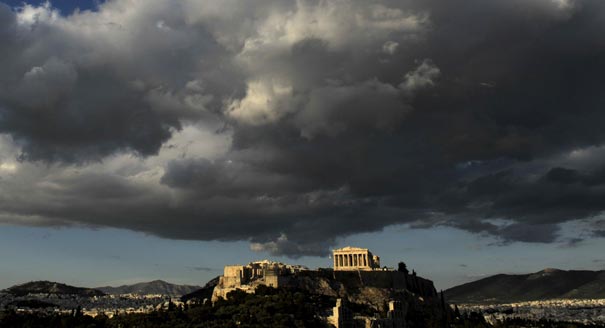
Despite delays, the Greek rescue package will almost certainly be approved in the coming days. Whether or not the deal will prove to be sustainable is a much more difficult question.
Source: BBC Radio 5

Nevertheless, the problems will not end once the agreement is signed. "The Greek program is a disaster," said Dadush. Not only has Greek unemployment increased sharply, but budget deficit is also not being reduced at the pace that was expected and the exports are showing no signs of turning around. Dadush concluded that the “big concern is not whether the deal will be signed, but whether the deal is in fact sustainable” because the severe cuts will push the economy even deeper into recession.

Former Senior Associate, International Economics Program
Dadush was a senior associate at the Carnegie Endowment for International Peace. He focuses on trends in the global economy and is currently tracking developments in the eurozone crisis.
Recent Work
Uri Dadush
Uri Dadush
Carnegie does not take institutional positions on public policy issues; the views represented herein are those of the author(s) and do not necessarily reflect the views of Carnegie, its staff, or its trustees.

The Plaza Accord was not an externally imposed punishment of Japan but part of a broader restructuring that Japanese economists and policymakers themselves recognized was necessary. Its effects were undermined, however, when Tokyo responded to the resulting slowdown with policies that exacerbated investment, credit expansion, and the very imbalances the adjustment was intended to resolve.

Michael Pettis

Before the next wave of EU enlargement takes place, the union needs to grapple with thorny questions of how power is distributed among its members.


Emil Sondaj Hansen, Ditte Brasso Sørensen

A summer of escalation in the Black Sea has hurt Ukraine economically and is exacerbating world food security. A truce is needed—as is a broader reframing of Europe’s Ukraine strategy.

Thomas de Waal

Are Germany’s economic, industrial, and political struggles becoming a liability for the EU’s ability to rise to the geopolitical moment?

Rym Momtaz, ed.

The Bureau of Industry and Security needs to adjust its focus and practices to maintain its position as the U.S. government’s primary champion of international technological competition.

Geoffrey Irving