

Q&A
Suzanne Maloney, Aaron David Miller, Karim Sadjadpour
{
  "authors": [
    "Karim Sadjadpour"
  ],
  "type": "legacyinthemedia",
  "centerAffiliationAll": "dc",
  "centers": [
    "Carnegie Endowment for International Peace"
  ],
  "collections": [],
  "englishNewsletterAll": "menaTransitions",
  "nonEnglishNewsletterAll": "",
  "primaryCenter": "Carnegie Endowment for International Peace",
  "programAffiliation": "MEP",
  "programs": [
    "Middle East"
  ],
  "projects": [],
  "regions": [
    "Middle East",
    "Iran"
  ],
  "topics": [
    "Political Reform",
    "Nuclear Policy"
  ]
}
Source: Getty
Dialing down the rhetoric between Israel, Iran, and the United States is an important component in allowing coercive sanctions and diplomacy to run its course.
Source: MSNBC's Andrea Mitchell Reports
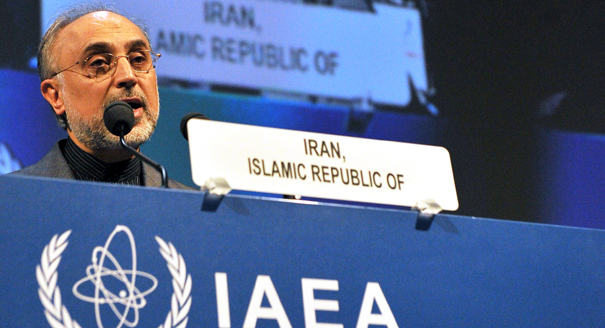
Speaking on MSNBC's Andrea Mitchell Reports, Carnegie's Karim Sadjadpour explained that the rhetoric between Iran and Israel has consistently escalated over the course of the last several months. However, both President Obama and Supreme Leader Ayatollah Khamenei have recently made conciliatory statements that have worked to dial down the temperature. Sadjadpour suggested that Iran sees little incentive to be transparent because transparency would just expose Tehran's illicit activities. “For a diplomatic solution to work, Iran must not feel as though it will be penalizing itself for being transparent,” noted Sadjadpour. For coercive sanctions and diplomacy to work, Sadjadpour argued that bellicose rhetoric must be kept to a minimum. “Whenever Prime Minister Netanyahu makes a statement about going to war with Iran, it causes speculation in the world oil market and spikes the price of oil,” said Sadjadpour. This inevitability blunts the power of any sanctions regime and demonstrates the importance of circumspect rhetoric.

Senior Fellow, Middle East Program
Karim Sadjadpour is a senior fellow at the Carnegie Endowment for International Peace, where he focuses on Iran and U.S. foreign policy toward the Middle East.
Recent Work


Suzanne Maloney, Aaron David Miller, Karim Sadjadpour

Aaron David Miller, Karim Sadjadpour, Robin Wright
Carnegie does not take institutional positions on public policy issues; the views represented herein are those of the author(s) and do not necessarily reflect the views of Carnegie, its staff, or its trustees.

Before the next wave of EU enlargement takes place, the union needs to grapple with thorny questions of how power is distributed among its members.


Emil Sondaj Hansen, Ditte Brasso Sørensen

The Horn of Africa countries are among those facing a new security calculus.


Andrew Leber, Lesley Anne Warner

The European far right might fail to steer EU policy in the direction Russia wants, but they will create enough chaos inside Europe to benefit the Kremlin.

Dimitar Bechev

The nuclear relationship between China and the United States is increasingly shaped by widening perception gaps rather than deliberate strategic design.

Tong Zhao

As the U.S. stumbles in its war with Iran, we are likely to see an acceleration of its disengagement from the region.

Michael Young