

Research
- +10
Rosa Balfour, Frances Z. Brown, Yasmine Farouk, …
{
  "authors": [
    "Moisés Naím"
  ],
  "type": "legacyinthemedia",
  "centerAffiliationAll": "",
  "centers": [
    "Carnegie Endowment for International Peace"
  ],
  "collections": [],
  "englishNewsletterAll": "",
  "nonEnglishNewsletterAll": "",
  "primaryCenter": "Carnegie Endowment for International Peace",
  "programAffiliation": "",
  "programs": [],
  "projects": [],
  "regions": [
    "Southern, Eastern, and Western Africa",
    "South Asia",
    "East Asia",
    "Southeast Asia"
  ],
  "topics": [
    "Economy"
  ]
}
Source: Getty
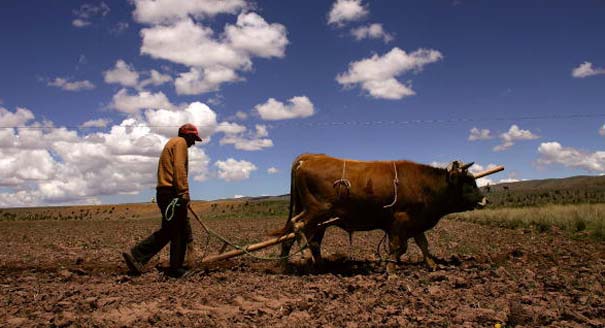
World poverty in 2010 was half of what it was in 1990, and the number of people living in poverty has fallen throughout the globe.
Source: El País

According to a report recently published by the World Bank, from 2005 to 2008, Sub-Saharan Africa, Latin America, Asia and Eastern Europe saw a decline in the ratio of people living in extreme poverty (on an income of under $1.25 a day). This is the first time that this has happened since the world’s poverty statistics began to be kept. The result is all the more surprising given that this fall in poverty is happening amid the deepest economic crisis the world has seen since the Great Depression of 1929. Indeed, in 2010, the president of the World Bank, Robert Zoellick, expressed his concern about the impact of the crisis on poverty. The experts anticipated that the number of poor would rise by tens of millions.
Fortunately, they were wrong. So much so that the world will reach the poverty reduction goals set in the Millennium Development Goals — signed by 193 UN member states in 2000 — ahead of time. One of these was that by 2015, extreme poverty in the world would be reduced by half. This goal has been reached five years early. The explanation is that in spite of the crisis, the economies of poor, highly populated countries have continued to grow and create jobs. This is a trend that began three decades ago — for example, since 1981, 660 million Chinese have emerged from poverty. In Asia, the extreme poverty in which 77 percent of the population lived in the 1980s fell to 14 percent in 1998. This is not happening only in China, India, Brazil and other successful emerging countries, but is also the case in Africa. According to another study, by economists Maxim Pinkoyskiy and Xavier Sala-i-Martin, poverty in Africa diminished rapidly from 1970 to 2006. Their conclusion is that in Africa “poverty reduction is remarkably general: it cannot be explained by a large country, or even by a single set of countries possessing some beneficial geographical or historical characteristic. All classes of countries, including those with disadvantageous geography and history, have experienced reductions in poverty.” In 1998, for the first time since data were available, there were more Africans living above the poverty line than below it.This doesn’t mean that there are not still millions of people in the world whose daily lives are unspeakably tragic. Or that having an income of $3 or $5 a day instead of the $1.25 that marks the extreme poverty line means an acceptable standard of living. Misery is still the normal condition for most of the people on this planet. But their situation is improving, and this is good news.
And there is another change that I would like to think is good news: humanity is getting smarter. IQ tests show that the worldwide average is inching up. This is highly controversial, since many critics claim that these tests are biased, or that there are many different forms of intelligence, or that it is impossible to measure it. But for those who believe that these figures reflect something concrete, the undeniable fact is that the test average is rising. While there is no agreement among experts on the cause of this rise, the data confirms this trend. It is easy to sniff at these results or to argue that, in view of the multiple crises that loom around us this rise in intelligence does not mean a better world. That may be so. But the data on the reduction of poverty and the improvement in many other indicators of wellbeing ought to put skeptics and pessimists on the defensive.

Distinguished Fellow
Moisés Naím is a distinguished fellow at the Carnegie Endowment for International Peace, a best-selling author, and an internationally syndicated columnist.
Recent Work



Rosa Balfour, Frances Z. Brown, Yasmine Farouk, …
Moisés Naím
Carnegie does not take institutional positions on public policy issues; the views represented herein are those of the author(s) and do not necessarily reflect the views of Carnegie, its staff, or its trustees.

AI could hollow out jobs, reshape them gradually, create entirely new ones—or do all three at once. The case for starting to act now doesn’t depend on knowing which.

Teddy Tawil

In the Philippines, Duterte-era discourse emphasizing sovereignty, anti-Western skepticism, and strongman diplomacy mirrors tenets of populist foreign policy around the world.

Aries A. Arugay

Powerful lobbyists and inertia led to Russia’s coal-mining sector missing an excellent opportunity to solve its structural problems.
Alexey Gusev

Five problems—and solutions—to make it actually work as a tool of great power competition.
Afreen Akhter
Military rule is now a defining political factor in South Asia. Here’s how analysts can understand and account for it.

Paul Staniland