

Article
Thomas Carothers
{
  "authors": [
    "Thomas Carothers"
  ],
  "type": "questionAnswer",
  "centerAffiliationAll": "dc",
  "centers": [
    "Carnegie Endowment for International Peace",
    "Carnegie Europe",
    "Carnegie China"
  ],
  "collections": [],
  "englishNewsletterAll": "democracy",
  "nonEnglishNewsletterAll": "",
  "primaryCenter": "Carnegie Endowment for International Peace",
  "programAffiliation": "DCG",
  "programs": [
    "Democracy, Conflict, and Governance"
  ],
  "projects": [],
  "regions": [
    "Southeast Asia"
  ],
  "topics": [
    "Political Reform",
    "Democracy"
  ]
}
Source: Getty
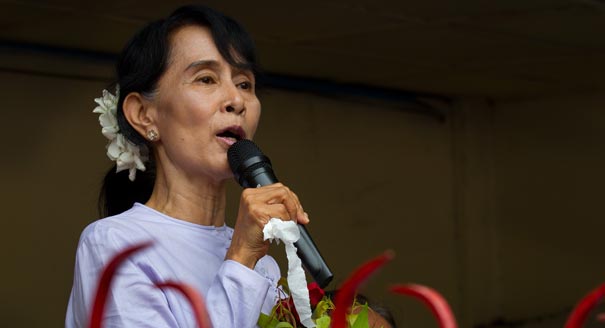
The victory of Aung San Suu Kyi and several dozen of her National League for Democracy colleagues in Burma’s April 1 legislative by-elections is a major event for the country.
The victory of Aung San Suu Kyi and several dozen of her National League for Democracy colleagues in Burma’s April 1 legislative by-elections is a major event for the country.
In a Q&A, Thomas Carothers, who visited Burma in the run-up to the elections, assesses the significance of the vote and the prospects for a democratic transition in Burma. Drawing on his extensive experience with political transitions around the world, Carothers compares the situation in Burma to other transitions away from authoritarian rule, highlighting major challenges but also reasons for hope.
Although the elections involved fewer than 7 percent of the seats in the country’s parliament, they were unquestionably a big step forward for a society that has experienced only manipulated or nullified elections for more than half a century.
Burma is experiencing a striking and largely unpredicted political opening, marked by the return to political life of Aung San Suu Kyi and the National League for Democracy, the release of many political prisoners, and the opening up of considerable space for political discussion and activity. President Thein Sein, although in power thanks to the military establishment and illegitimate elections in 2010, appears to have taken reform to heart. When I visited Burma last month, it was impossible not to be struck by the powerful sense among many Burmese that this is an enormous moment for the country, a political opportunity that many barely dared to hope for over the last twenty years.Encouraging as they are, however, these developments represent only a doorway to a possible democratic transition. The country’s power holders—a long-entrenched, antidemocratic military and the ruling Union Solidarity and Development Party (USDP)—have not yet given up any significant structural levers of power. Constitutional reform, essential to undoing the longstanding lock on power of the military and the USDP, is only just starting to be discussed seriously. The weight of the reformers in the government relative to those in the government and the military who oppose reforms is still highly uncertain.
While the government has initiated some encouraging economic reforms, notably the rationalization of currency exchange and reform of the banking system, it remains to be seen whether it can implement changes that would challenge the core prerogatives of the existing ruling establishment, an establishment whose economic approach defines the concept of crony capitalism.
So political opening? Yes. Economic reform? Likely. Democratic transition? Too early to tell.
Every political transition is of course unique, reflecting the almost unlimited variety of sociopolitical configurations and traditions around the world. At the same time, with over 100 attempted democratic transitions occurring during the past twenty-five years, certain patterns are identifiable and certain analogies, if approached cautiously, can be illuminating.
Burma’s reform-from-above process—in which softliners in a military-based authoritarian power establishment worried about its legitimacy are attempting an unfolding set of iterative political and economic reforms—is reminiscent of at least some of the transitions away from military rule in South America in the 1970s and 1980s, though these varied greatly even compared to each other.
In Brazil, for example, a military establishment concerned about its waning popularity—which had been undercut by poor economic management and florid corruption—broke into softliner and hardliner camps. The softliners gradually reintroduced civilian rule, followed by credible electoral processes, and kept peace with the hardliners by allowing them to retain many of their economic prerogatives and avoid prosecution for their past wrongs.
Most of the South American transitions look fairly good in retrospect, but it is important to note how long and turgid they mostly were in practice. In Brazil again, more than ten years elapsed from the opening of political reform in 1974 until a civilian president took power through credible elections. And it was almost another ten years after that until the system really worked through many of the toxic legacies of previous authoritarianism.
In addition, most of the South American militaries had only been in power for a decade or two when they returned their countries to civilian rule and these countries had at least some significant past experience with civilian rule and democratic pluralism. The Burmese military has been running the country for fifty of the country’s sixty-five years of independence, and there is no extended prior democratic experience to draw from.
One does hear in the country that the Arab Spring rattled the Burmese generals and also fueled the softliners’ determination to move ahead with reforms in an attempt to head off a potential explosion from below.
The top-down reform process in Burma, however, more closely resembles the political situation in many Arab countries in the decade leading up to the Arab Spring. In those years, various Arab governments carried out political and economic reforms—allowing opposition parties to gain representation in parliaments, permitting a certain space for independent civil society, and rationalizing some elements of economic life—in what analysts characterized as “defensive liberalization.”
The steps taken by Arab governments were not democratizing reforms, rather they were carefully circumscribed efforts designed precisely to head off the possibility of true democratization by alleviating popular dissatisfaction with regimes. Some regimes, such as those in Morocco and Jordan, have managed to stay in place by persisting with such a strategy. Others, like in Egypt, faltered in the reforms, stagnating until they faced an eventual explosion.
Difficulties certainly abound—a deeply entrenched, antidemocratic military internally divided over its commitment to reform, devastating legacies of political repression, atrocious governance, economic deprivation, and a politically challenging region.
But what is especially daunting is that the country is confronting the profound challenge of moving away from fifty years of harsh, haphazard authoritarian rule while also grappling with the need to resolve the multiple aggravated ethnic conflicts that have festered for decades. Trying to work simultaneously through two interrelated processes of the distribution of power—democratization at the core of the political system and greater regional autonomy in sizeable parts of the country—will be extremely difficult. It is a bit like trying to drive across a narrow, badly paved bridge with steep drops on either side while at the same time struggling to stop a fight with a whole set of angry passengers inside the car.
But it’s not impossible. If handled well, the two processes could be complementary. When Indonesia moved suddenly away from authoritarian rule in the late 1990s, many people worried that it would not be able to handle democratization while dealing with the push for greater autonomy in some of its provinces. Indonesia arguably faced greater internal problems at the time than Burma confronts today, as some of its internal territorial struggles were about secession whereas in Burma the demands from the ethnic areas are more limited. But Indonesia did make it through, and the end of the authoritarian regime actually facilitated a peaceful resolution with Timor-Leste.
Burma faces enormous challenges in undertaking democratization, but it is far from a lost cause. Few countries entering into a political opening do so with a vibrant, clearly pro-democratic opposition movement that has already proven its national appeal in prior elections, has a deeply respected leader of unquestionable national and international legitimacy, and has at least a certain amount of basic organizational capability.
Moreover, the reform wing in the power establishment contains some very credible figures, not the least of which is President Thein Sein himself. And although some countries in Burma’s neighborhood are not likely to be friends of the democratization process, a wide range of important international actors, including the United States, Europe, and various Asian democracies, are ready to help.

Harvey V. Fineberg Chair for Democracy Studies; Senior Fellow, Democracy, Conflict, and Governance Program
Thomas Carothers, a senior fellow in the Carnegie Endowment for International Peace’s Democracy, Conflict, and Governance Program, is a leading expert on comparative democratization and international support for democracy.
Recent Work
Thomas Carothers
Thomas Carothers
Carnegie does not take institutional positions on public policy issues; the views represented herein are those of the author(s) and do not necessarily reflect the views of Carnegie, its staff, or its trustees.

Ex-president Gurbanguly Berdimuhamedov remains interested in politics, but his son Serdar, Turkmenistan’s current president, is becoming increasingly independent and willing to break with his father’s legacy. If their covert rivalry goes too far, both risk losing power.

Galiya Ibragimova

A notable degree of participative democracy has firmly arrived in Europe. But to have more far-reaching impact, democratic deliberation needs to move into a radically new phase.

Richard Youngs
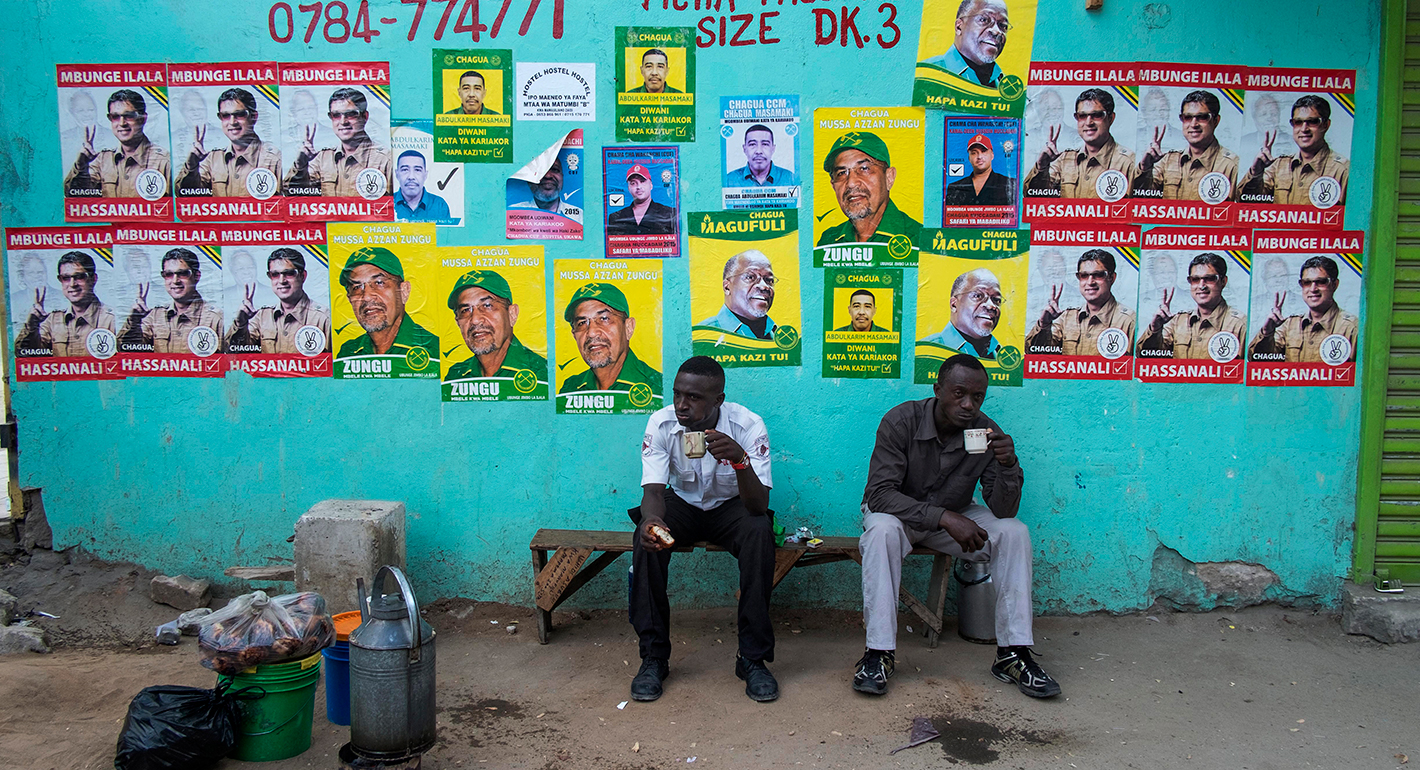
Today’s global democratic recession is partly rooted in a common perception that democracies have a delivery problem, with many citizens in both autocracies and democracies alike now believing that strongmen can achieve better governance outcomes. But a study of four countries in Africa reveals that democratic-leaning governments have demonstrated better governance performance than autocratic governments.


Sarah Yerkes, Natalie Triche, Amr Hamzawy
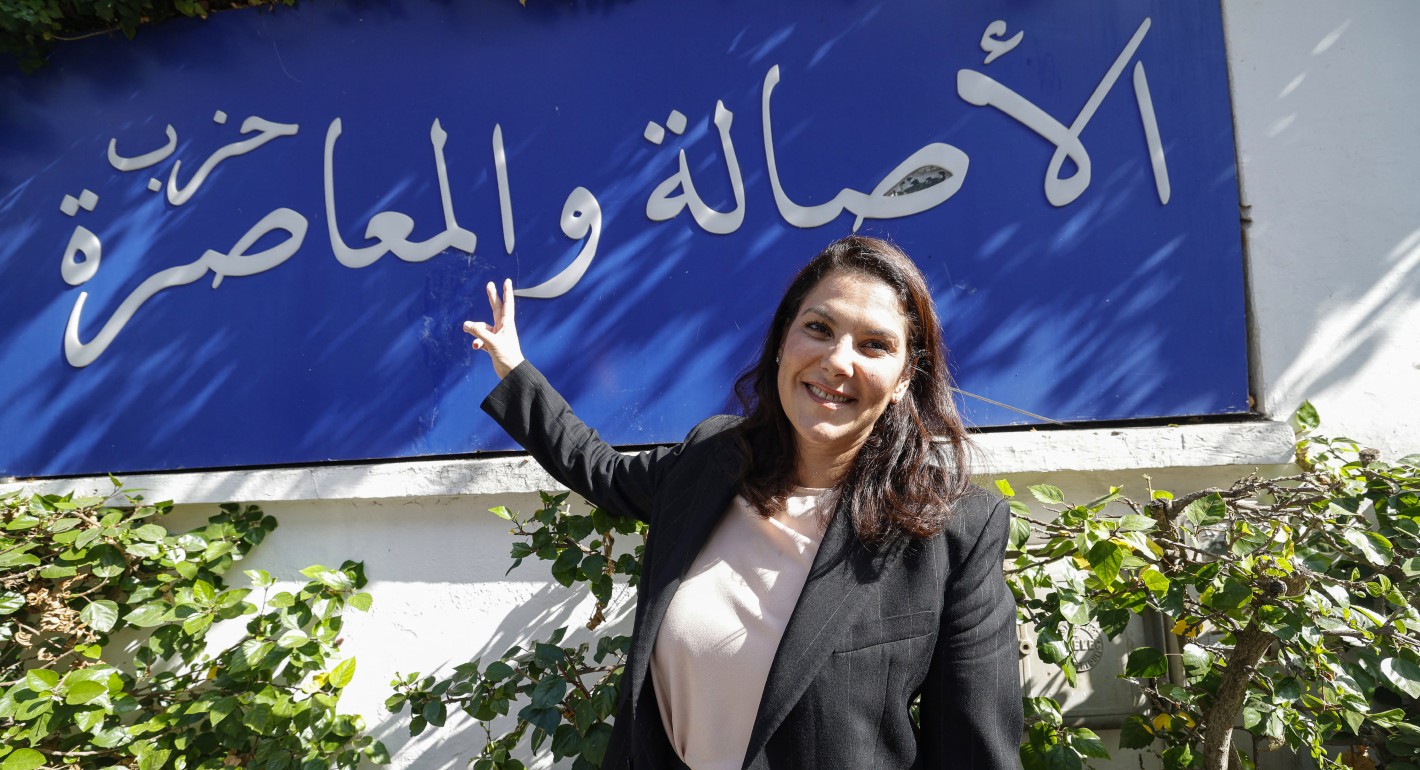
Fatima El Mansouri is the country’s first female prime minister. She’s also a privileged insider in a largely ceremonial position.
Sarah Yerkes

The domestic impacts of how long it is taking to end the war in Ukraine have pushed the French electorate to the political extremes and compromised the country’s diplomatic capacity.

Rym Momtaz