

Paper
Paul Salem
{
  "authors": [
    "Paul Salem"
  ],
  "type": "legacyinthemedia",
  "centerAffiliationAll": "",
  "centers": [
    "Carnegie Endowment for International Peace",
    "Malcolm H. Kerr Carnegie Middle East Center"
  ],
  "collections": [],
  "englishNewsletterAll": "",
  "nonEnglishNewsletterAll": "",
  "primaryCenter": "Malcolm H. Kerr Carnegie Middle East Center",
  "programAffiliation": "",
  "programs": [],
  "projects": [],
  "regions": [
    "Levant",
    "Syria"
  ],
  "topics": [
    "Political Reform"
  ]
}
Source: Getty
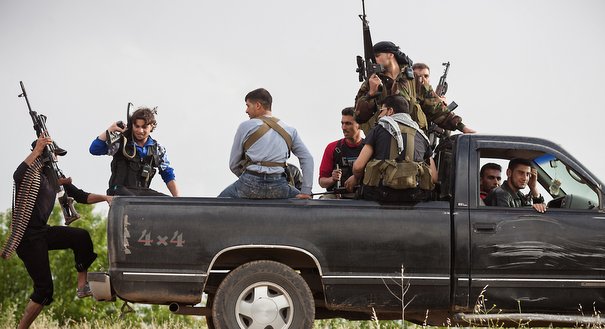
The Syrian crisis appears to be entering into its final phase. The opposition is becoming more armed and coordinated while the regime seems to be taking Syria into civil war.
Source: Al Monitor

The desperation of the Bashar al-Assad regime can be read in several developments. The massacres at Houla and Mazraat al-Kubeir and the further unleashing of the Shabbiha indicate that the government is no longer as dominant as it once was; it is now forced to resort to acts of terror. Reports that children have been used as human shields in confrontations between government forces and the opposition can be interpreted in the same way. Moreover, the regime has begun to use helicopter gunships, something which it had previously refrained from doing. By doing so, it is directly feeding the rhetoric of those calling for the imposition of a no-fly zone. This is reflective of its loss of dominance on the ground in several areas, as well as the rebels’ acquisition of anti-tank weapons.
The regime seems to be preparing for the possibility of its downfall. The attacks in Haffeh and other towns, as well as battles raging around the strategic city of Hama, indicate that it might be undertaking a campaign of ethnic cleansing north-western Syria in order to establish a heavily armed Alawite enclave there. The massacres have further inflamed Sunni public opinion, even among the business and middle classes that had previously remained neutral while reports of new protests and closures in urban areas flowed in. There are also reports of deep discontent within the Alawite community: Assad promised the community a quick military solution to the crisis; instead, he has led the minoritarian community into a civil war that they cannot win.As the regime appears to weaken, the armed rebel groups are displaying greater degrees of coordination and effectiveness. Reports indicate that they are receiving money and small arms from Saudi Arabia and Qatar, anti-tank weapons from Turkey and critical intelligence and possibly other soft support from the CIA and Britain’s MI6. In battles between government and rebel forces last week, the government suffered high casualties and lost around 20 tanks and armoured personnel carriers. The rebel forces show signs of being able to coordinate and implement attacks more effectively in various parts of the country, including the suburbs of Damascus.
On the external front, the political situation is also shifting. The Annan initiative is now widely being described within the region and the West as having failed. The debate now is over whether to wait until the end of the UN observer mission in mid-July, or to declare the initiative dead earlier. Annan himself has expressed extreme frustration at the regime’s violent escalations, and has warned that Syria is on the brink of “catastrophic civil war.” Head of UN peacekeeping operations, Herve Ladsous, went one step further by saying that Syria was already “in full scale civil war.”
Having failed to convince the Assad regime to comply, Annan’s latest strategy has been to try to engage both Russia and Iran as part of an international “Syria contact group” in the hope that Assad’s allies will be able to convince him to enter into negotiations and search for a political solution. Time however, appears to be running out, on both the domestic and international levels. It is not yet clear how many more months the embattled Assad regime will be able to hold out. Meanwhile, voices in the West declaring the Annan initiative dead are growing louder, as are those warning against a reliance on Vladimir Putin to save Syria from massacres and civil war.
The US and Russia are continuing their discussions — a meeting in Moscow last Friday included US special envoy to the Syrian opposition Fred Hof and two Russian deputy foreign ministers, Mikhail Bogdanov and Gennady Gatilov. However, their positions appear ever more divergent. Russia continues to support the Assad regime militarily, politically – even financially. It might be too late for Putin to change his bet on the Assad regime, even though this bet increasingly looks like a losing one. The US on the other hand is already providing soft support for the Syrian rebels, and acquiescing to the flow of arms and training being offered to the rebels by its friends and allies in the region. Indeed, as the Annan initiative collapses and the rebels gain credibility, the US is likely to gradually increase its avenues of indirect and direct support to the rebels. The US is signalling to Russia that it is still willing to give diplomacy a chance — particularly if Moscow can pull a political solution out of the hat — as it begins to lean towards the option of indirect military engagement. The US position might evolve quickly, especially because the republican presidential candidate Mitt Romney is calling for tougher US action in Syria and Obama might find a stronger response toward Syria necessary to boost his electoral chances. It is also important that key Israeli leaders like Netanyahu, Mofaz and Peres have suddenly begun to speak out, calling for the US and the West to act decisively in the Syrian crisis; this Israeli position will have strong echoes in the pro-Israel lobby in the US.
In Europe, both British Foreign Secretary William Hague and NATO Secretary-General Anders Rasmussen have stated that the Syrian crisis is beginning to resemble the Bosnian crisis of the early 1990s. In that crisis, the world initially stood by while a politicized army conducted massacres and ethnic cleansing on a massive scale. That crisis ended only after NATO conducted an intensive aerial bombing campaign against the forces of then Serbian President Slobodan Milosevic. The European statements indicate that despite their reluctance, western governments might feel compelled to intervene in Syria in the not too distant future. This has already begun in terms of indirect military support to the rebels, but in the months ahead this might escalate into discussions of a no-fly zone, safe corridors or safe cities inside Syria.
Indeed, the Syrian crisis appears to be entering into its final phase. It is uncertain whether the Assad regime will be able to survive what remains of this year. What is clear though is that the regime has chosen the bloodiest of paths, taking Syria into a period of devastation and civil war, consequently putting its own Alawite community in great existential peril. One can only hope that the end will come soon, and that the costs of regime collapse and the establishment of a new political order in Syria will not include tens of thousands of more victims.
Senior Fellow at the Middle East Institute
Paul Salem is a senior fellow at the Middle East Institute.
Recent Work
Paul Salem
Paul Salem
Carnegie does not take institutional positions on public policy issues; the views represented herein are those of the author(s) and do not necessarily reflect the views of Carnegie, its staff, or its trustees.

If the Russian-speaking community in Latvia cannot articulate their interests without being seen as disloyal, they could end up embracing a pro-Kremlin agenda.

Sergejs Potapkins

The Zaidi government’s objective to collect weapons is constrained by regional conflict, but it can take certain measures at home.
Ali Al-Mawlawi

Russia’s ruling party would have benefited from Putin appearing as its distant patron, but as an active frontman imposing his views on the public, he has done nothing but harm both the party’s election campaign and the ruling system overall.

Andrey Pertsev

In the tenth year of his presidency, President Mirziyoyev’s system is becoming even more personalized than that of his predecessor Karimov.

Galiya Ibragimova
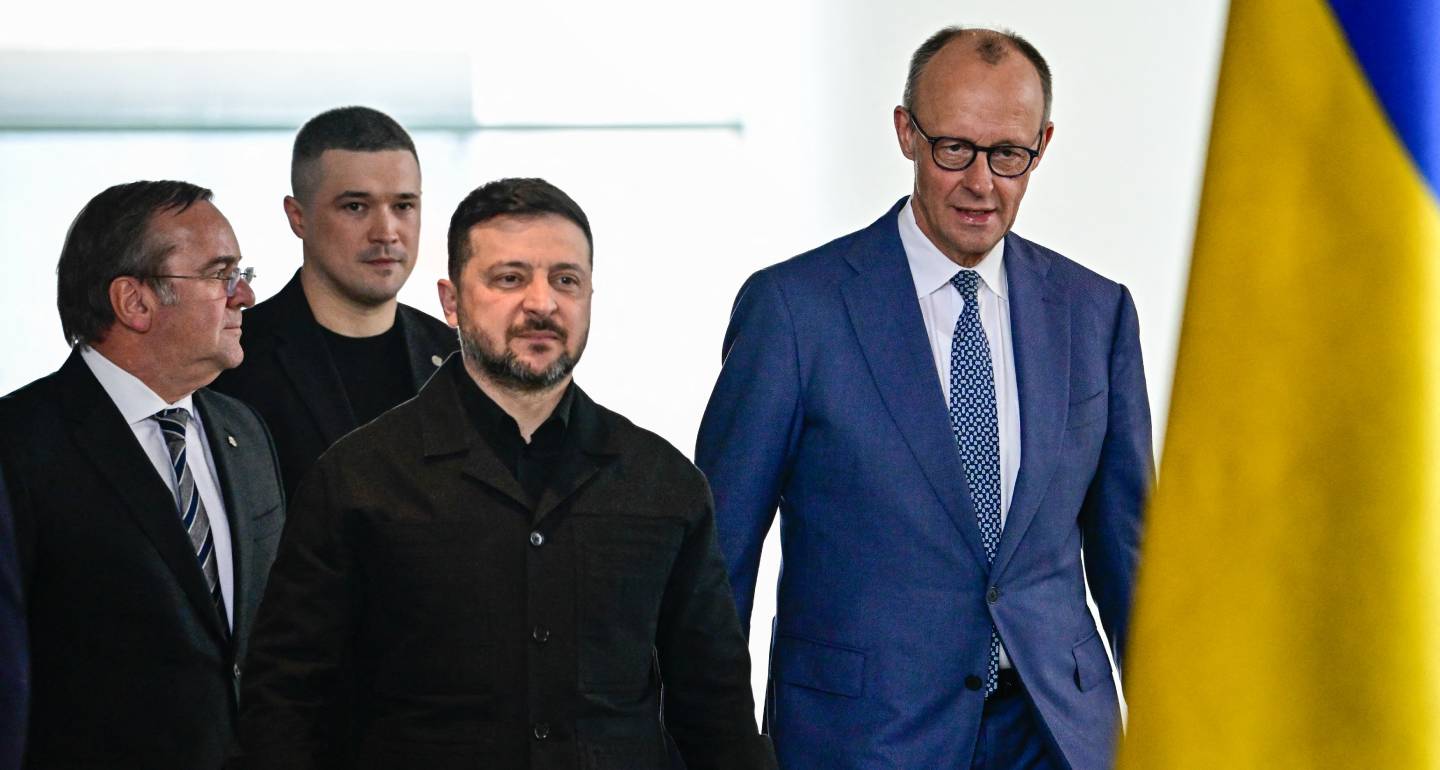
The greater threat to Zelensky comes not from Fedorov alone, but from the convergence between the former defense minister’s political campaign and the anti-corruption investigations moving ever closer to the presidential administration.

Balázs Jarábik