Despite Mohamed Morsi's victory in Egypt's presidential election, a long and difficult struggle lies ahead before democratically elected civilian leaders can assert meaningful authority over the country’s armed forces.
The victory of the Muslim Brotherhood’s candidate, Mohamed Morsi, in the presidential election widens Egypt’s democratic opening by a crucial, if narrow, margin. But a long and difficult struggle lies ahead before democratically elected civilian leaders can assert meaningful authority over the country’s armed forces. Without this, future governments will lack the genuine autonomy to devise and implement policies, and will remain chronically unstable. Yet former regime supporters, illiberal secular politicians, and even some liberal figures are confident that Morsi will last no more than a year, let alone a full four-year term. They further expect the ruling Supreme Council of the Armed Forces (SCAF) to manipulate the drafting of the new constitution and the election of a new parliament in the coming months so as to ensure that Morsi will be no more than an interim president. Should the SCAF succeed, Egypt will come under indefinite military custodianship.
The publication of the amended constitutional declaration by the SCAF on June 17, 2012, shows what lies ahead. For all intents and purposes, the SCAF pressed the “reset” button, cancelling all transitional arrangements, timetables, and outcomes of the preceding sixteen months – except for the presidential election – and decreeing a second interim phase that will extend for at least the first six months of Morsi’s presidency. Moreover, the SCAF acted unilaterally, without any attempt to consult the political parties and presidential candidates, as it had done in the past. This underlines its special position as the most powerful political actor in Egypt, but also suggests that it believes it is approaching the endgame and must start laying its cards on the table regarding the constitutional prerogatives and exceptional status it seeks to perpetuate.
The manner in which the SCAF has constructed the second interim phase awards it two significant levers over the coming process. First, the constitution must be ratified before parliament – ordered dissolved by the Supreme Constitutional Court on June 14 – can be re-elected. Parliamentary leaders have applied to the State Administrative Court to reverse this decision, but if it stands Morsi will be denied the support of an important political ally and major institutional player in shaping the new constitution. And without a parliament in session, it is unclear who now has the authority to confirm the next government: Morsi has the power to appoint the prime minister, but the SCAF will probably once more claim the right to confirm the council of ministers, further extending its leverage.
Second, the SCAF has awarded itself the right to object to any draft constitutional articles it does not like, referring them for a final decision to the Supreme Constitutional Court, which has so far been stacked in its favour. The terms of reference are extraordinarily vague, to the point of being meaningless: articles may be challenged on the grounds that they conflict with undefined “goals and basic principles of the revolution or of previous constitutions”, which on the face of it could encompass the Mubarak, socialist, and monarchic eras. True, the amended constitutional declaration awards the same right of objection to Morsi, the prime minister, the Supreme Council of the Judiciary, or any bloc comprising at least one-fifth of the constituent assembly that will draft the new constitution. But what matters most is that the SCAF has the power to significantly delay the entire process.
The SCAF is clearly in a powerful position, but faces a dilemma. It does not seek full replication of the authoritarian provisions of past constitutions, since it can no longer ensure that either a military man or a civilian ally will occupy the presidency in the future and wield his concentrated executive powers on its behalf. But by asserting its terms in advance, the SCAF has placed the question of civil-military relations squarely on the public agenda. It may eventually succeed in wresting from civilians certain constitutional powers that would normally belong to them in a democratic system: the right to declare war, oversee and control the defence budget and U.S. military assistance, and appoint top commanders or approve major weapons procurements. But the SCAF will have greater difficulty openly challenging the right of Egypt’s new civilian authorities to roll back military penetration of local government, the civilian bureaucracy, state-owned commercial enterprises and other areas of the economy, the interior ministry and police, and the Directorate of General Intelligence.
The SCAF also has a new challenger in Morsi. The amended constitutional declaration has trimmed his powers for the duration of the remaining interim period, however long that may prove to be; but he will convert the legitimacy conferred by his office into political advantage during the coming struggle to determine the shape of the new constitution. Once this is ratified –no matter what balance of powers it establishes between the presidency and parliament – Morsi can reasonably expect to work with parliament to consolidate meaningful civilian authority. This is unlikely to change much even if new parliamentary elections are held and the Muslim Brotherhood’s representation is reduced, since many of those who supported Morsi’s rival in the presidential election, former Prime Minister Ahmad Shafiq, do not seek restoration of the old regime and may support democratic reforms in future.
Nor can the SCAF delay ratification of a new constitution or the election of a new parliament – if this is decreed – indefinitely. The prerogatives and exceptions it seeks to enshrine in the new constitution place it above any civilian authority, but it is also keen to relinquish its direct role in governing and to substitute sweeping military rule for more subtle military custodianship of the Egyptian state. To achieve this it will have to balance the residual sovereign powers it claims with the need to make substantive concessions to those pursuing meaningful civilian rule. While Egypt’s democratic transition is by no means guaranteed to deepen, the election results have created a space that Morsi and other political parties and players must seek to capitalize on.
Senior Fellow, Malcolm H. Kerr Carnegie Middle East Center
Yezid Sayigh is a senior fellow at the Malcolm H. Kerr Carnegie Middle East Center in Beirut, where he leads the program on Civil-Military Relations in Arab States (CMRAS). His work focuses on the comparative political and economic roles of Arab armed forces, the impact of war on states and societies, the politics of postconflict reconstruction and security sector transformation in Arab transitions, and authoritarian resurgence.
Carnegie does not take institutional positions on public policy issues; the views represented herein are those of the author(s) and do not necessarily reflect the views of Carnegie, its staff, or its trustees.
More Work from Carnegie Endowment for International Peace
China’s political future will be shaped between now and next October. As the Communist Party enters its intense “campaign season” to prepare for a major political transition in 2027, reading Beijing's actions and responses may become more difficult as domestic politics weigh on its behavior more than usual.
Putin’s conservative staffing policies and search for ever greater control have cemented parliament’s transformation into a bureaucratic appendage of the executive branch.
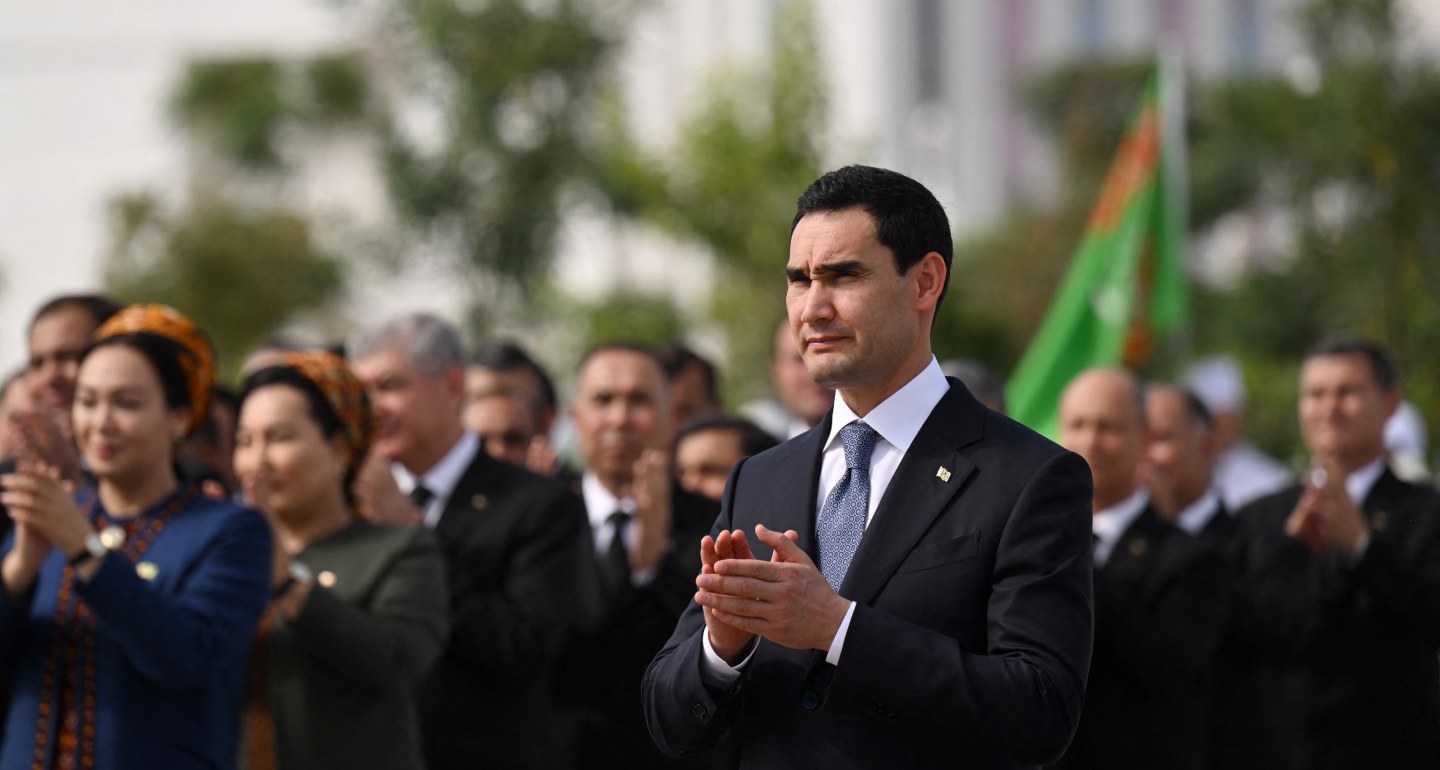
Ex-president Gurbanguly Berdimuhamedov remains interested in politics, but his son Serdar, Turkmenistan’s current president, is becoming increasingly independent and willing to break with his father’s legacy. If their covert rivalry goes too far, both risk losing power.
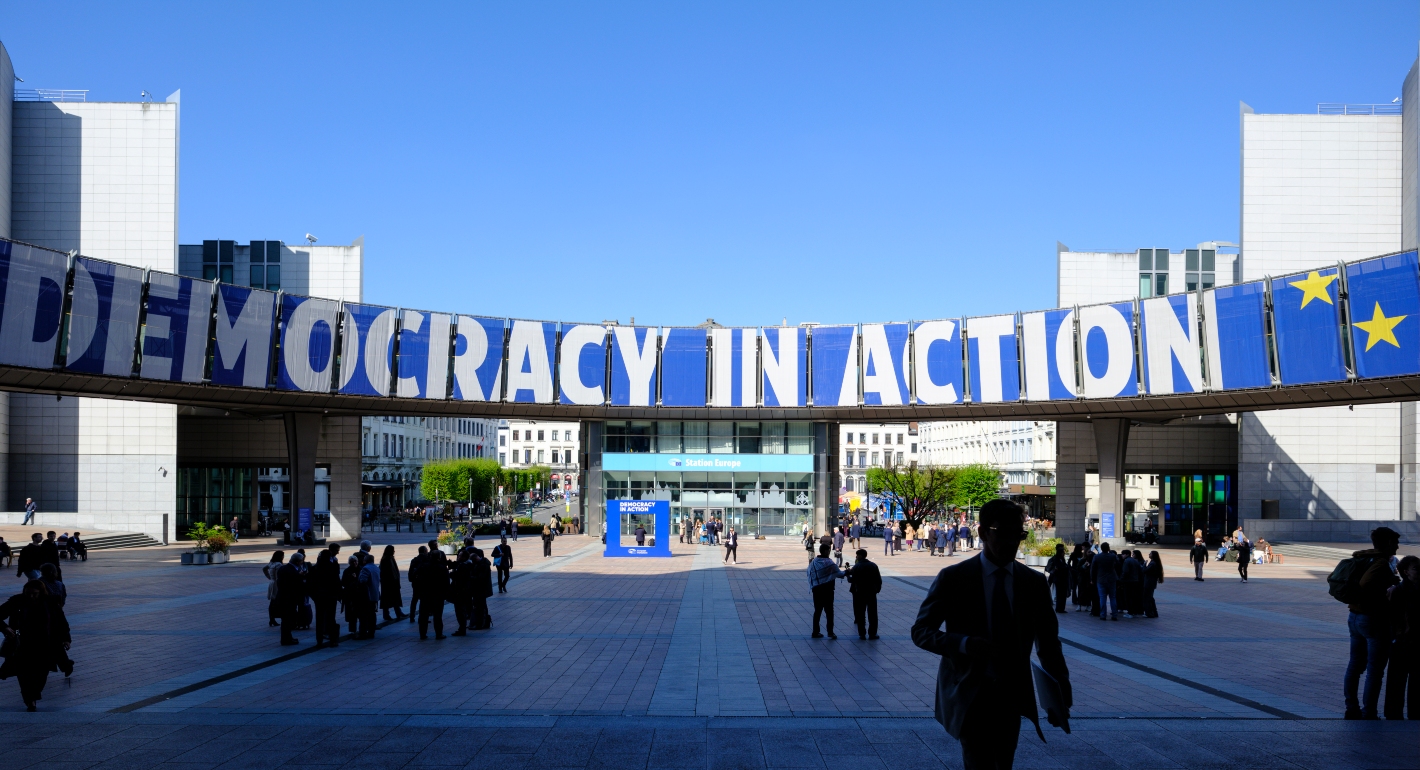
A notable degree of participative democracy has firmly arrived in Europe. But to have more far-reaching impact, democratic deliberation needs to move into a radically new phase.