

Research
- +10
Rosa Balfour, Frances Z. Brown, Yasmine Farouk, …
{
  "authors": [
    "Moisés Naím"
  ],
  "type": "legacyinthemedia",
  "centerAffiliationAll": "",
  "centers": [
    "Carnegie Endowment for International Peace",
    "Carnegie Europe"
  ],
  "collections": [],
  "englishNewsletterAll": "",
  "nonEnglishNewsletterAll": "",
  "primaryCenter": "Carnegie Endowment for International Peace",
  "programAffiliation": "",
  "programs": [],
  "projects": [],
  "regions": [
    "Western Europe",
    "United Kingdom",
    "France",
    "Germany",
    "Europe",
    "North America"
  ],
  "topics": [
    "Economy",
    "Trade",
    "Foreign Policy",
    "EU"
  ]
}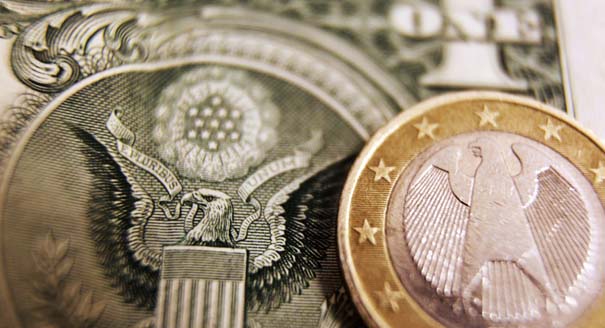
Source: Getty
The deepening economic crisis in Europe can be attributed to ignorance and the increasingly unbalanced concentration of the power to make critical decisions.
Source: Huffington Post

Ignorance. It is clear that neither governments nor experts agree on what is the best course of action to deal with the crisis. The debate between the proponents of fiscal austerity and those who favor expansionary measures to reignite growth and stimulate job creation dominates the headlines. As the crisis worsens, this debate heats up into a crossfire of clichés and superficial assertions.
After all, austerity is rarely an optional behavior. The poor do not live austerely because, having thought it over, they decided they prefer frugality to big spending. For many countries -- and families -- austerity is a fierce, unavoidable reality. On the other hand, to impose more austerity on those who are already unable to make ends meet is not a valid or sustainable option either.In any case, the debate goes on, and the confidence with which renowned economists offer their recommendations stands in sharp contrast with their analytical performance or their predictive skills before and during the crisis. Andrew Lo, an economist at MIT, has just published in the prestigious Journal of Economic Literature a review of 21 of the most widely commented-on books on the crisis. His conclusion:
"No single narrative emerges from this broad and often contradictory collection of interpretations, but the sheer variety of conclusions is informative, and underscores the desperate need for the economics profession to establish a single set of facts from which more accurate inferences and narratives can be constructed."
In other words, if the best economists and commentators cannot even agree on what the relevant facts and data are to explain the crisis, we shouldn't be surprised if they disagree on what to do to get out of it. Not that they seem to care. The crisis has revealed that intellectual arrogance is one of the occupational hazards of economic fame.
Too much power in too few hands. It is obvious that bad politics is as much a culprit of Europe's policy inaction as are the disagreements among economists. Politics is about power and it is evident that a few governments and financial institutions have acquired a lot of it -- Germany and Angela Merkel or the European Central Bank, for example. Or even a few large global banks and large hedge funds. Yet, their power has so far not been sufficient to impose widely accepted and durable solutions. Or effective ones.
In fact, the more these powerful actors push their policy preferences, the worse the crisis gets. Their power has worked best to stop or water down initiatives that do not suit their interests. Angela Merkel and Germany do not have the power to maintain their position and the big banks are only being reactive, hedging their bets and profiting from the opportunities created by the crisis.
The decision-making process in Europe is strangled by a multitude of actors with the power to veto, constrain, push back, or derail the decisions of the most powerful actors.
Too little power in too many hands. This dilution of power is, in fact, a paradoxical and contradictory aspect of power in our time. Power is becoming harder to use and easier to lose; it is therefore more precarious and ephemeral. Even the most powerful actors face huge limitations in how they can exert it. Besides, they have learned that they can lose it with surprising frequency, and have seen how erstwhile powerful players have been suddenly replaced by other well established rivals or even strange and unexpected newcomers.
Again: Angela Merkel cannot do everything she would like to do, and her options are restricted by a myriad of micro-powers which, while without the strength to impose their own preferences, do have enough power to truncate the range of options available to the more powerful players. Not even the current masters of the financial universe with unimaginable resources at their command can relax and assume that they and their institutions are immune to the strong winds that have upturned leaders and institutions that seemed unassailable and secure.
In today's world, power is greatly fragmented, and the European crisis is the clearest evidence of this trend. Even those who have the most power can influence the course of events only tenuously and indirectly. The crisis keeps going on, because in Europe, nobody has the power to contain it.

Distinguished Fellow
Moisés Naím is a distinguished fellow at the Carnegie Endowment for International Peace, a best-selling author, and an internationally syndicated columnist.
Recent Work



Rosa Balfour, Frances Z. Brown, Yasmine Farouk, …
Moisés Naím
Carnegie does not take institutional positions on public policy issues; the views represented herein are those of the author(s) and do not necessarily reflect the views of Carnegie, its staff, or its trustees.
Congress should ask tough questions about the agreement’s more unique features and whether they advance U.S. interests or compromise them.

Jane Darby Menton
An overwhelming victory by a far-right-wing party in a small state in eastern Germany will have major repercussions for Chancellor Friedrich Merz’s coalition.

Judy Dempsey
Congress needs to step up and make EXIM a low-carbon financing powerhouse.
Jesse Young
The ninety-three-year-old Biya’s absence and refusal to name a vice president threaten to upend domestic and regional stability.

Lesley Anne Warner

With the growth in points of friction between the great powers, organizations like the SCO will continue to play a role in the strategic adaptation of the smaller powers caught between them.

Temur Umarov