

Research
- +10
Rosa Balfour, Frances Z. Brown, Yasmine Farouk, …
{
  "authors": [
    "Moisés Naím"
  ],
  "type": "legacyinthemedia",
  "centerAffiliationAll": "",
  "centers": [
    "Carnegie Endowment for International Peace"
  ],
  "collections": [],
  "englishNewsletterAll": "",
  "nonEnglishNewsletterAll": "",
  "primaryCenter": "Carnegie Endowment for International Peace",
  "programAffiliation": "",
  "programs": [],
  "projects": [],
  "regions": [
    "North America",
    "South America"
  ],
  "topics": [
    "Economy"
  ]
}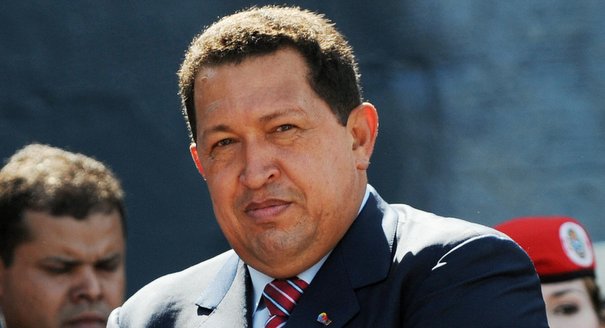
Source: Getty
The two best known former presidents of Brazil recently took part in events that clearly illustrate very different ways of living the ex-presidential life.
Source: Financial Times

Recently, the two best known former presidents of Brazil took part, almost simultaneously, in events that clearly illustrate very different ways of living the ex-presidential life. Fernando Henrique Cardoso won the Kluge Prize, one of the world’s most important awards in the social sciences. This $1m prize is awarded by the Library of Congress of the United States and has a nomination and selection process as rigorous as that of the Nobel prizes.
The jury emphasised that the award recognised Mr Cardoso’s intellectual achievements. Before entering politics he was an internationally recognised sociologist who made pioneering contributions on the relationship of inequality and racism to under-development. He was also the father of the once popular “dependency theory”, which holds that under-development is partly caused by the richest countries as a result of the exploitative relations they established with poor countries. This idea is no longer in favour and Mr Cardoso himself recognises that the world has changed and that its conclusions are no longer valid.About the same time that Mr Cardoso was being feted at the US Library of Congress, Luiz Inácio Lula da Silva spoke by video conference to the participants of the Sao Paolo Forum who were meeting in Caracas. The Forum is a gathering of Latin American leftist organisations that meets periodically since it was launched by Mr Lula’s political party, the PT (The Workers Party) back in 1990.
In his televised address Lula said, “Only thanks to [Hugo] Chavez’s leadership, the people have had extraordinary achievements. The poor were never treated with such respect, affection and dignity. These achievements should be preserved and consolidated. Chavez, count on me, count on the PT, count on the solidarity and support of every leftist militant, every democrat and every Latin American. Your victory is our victory. ”
It is perfectly legitimate for Mr Lula to express his affection and admiration for Mr Chavez. Affects – like love – are blind and deserve respect. But it is not legitimate for Mr Lula to intervene in another country’s elections. That’s not what democrats do. And Mr Lula knows it. Or he should know it. But he seems oblivious to this and in fact it is not the first time that he bluntly intervenes in Mr Chavez’s favor during a Venezuelan election. In 2008, on the eve of a critical referendum, he also intervened in the process, claiming that Mr Chavez was “the best president the country has had in 100 years”.
Nor is it legitimate to distort, as Mr Lula did, the Venezuelan reality – especially that of the poor. Mr Chavez has had a devastating effect on Venezuela and the poor are the main victims. It is they who pay the consequences of living in one of the world’s most inflationary economies; they are the ones having to make ends meet with a real wage that has fallen to its 1966 level (yes, 1966). It is they who cannot get jobs unless it is in the public sector and only if they are deemed loyal to the revolution and are willing to display publicly and often their unwavering support for el comandante. It is they who see their sons and daughters killed at one of the highest rates of homicides in the world.
No wonder, therefore, that in the last parliamentary elections in 2010 more than half of the votes were against Mr Chavez. In Venezuela it is impossible to reach that percentage without the votes of millions of the poorest – the very people that according to Mr Lula are doing better than ever thanks to Mr Chavez. And, finally, it is not legitimate for Lula to applaud and encourage in another country public policies that are diametrically opposite to those he implemented with great success as Brazil’s president.
In this sense, perhaps Lula would be well advised to do as former president what he did as president: follow Mr Cardoso’s example. After all, Mr Lula knows that his success as president owed a great deal to his decision to continue and even expand his predecessor’s economic and social policies. Mr Lula should take his post-presidential clues from Cardoso and understand that a true democrat does not use his prestige and influence as a former president to improperly intervene in another country’s elections.
This article was originally published in the Financial Times.

Distinguished Fellow
Moisés Naím is a distinguished fellow at the Carnegie Endowment for International Peace, a best-selling author, and an internationally syndicated columnist.
Recent Work



Rosa Balfour, Frances Z. Brown, Yasmine Farouk, …
Moisés Naím
Carnegie does not take institutional positions on public policy issues; the views represented herein are those of the author(s) and do not necessarily reflect the views of Carnegie, its staff, or its trustees.

Russian strikes are weakening the economy sustaining Ukraine’s war effort. Closing the growing funding gap will require more European support and politically contentious reforms in Kyiv.

Balázs Jarábik
Economic recovery has brought Sri Lanka a modicum of stability, but domestic strains and great-power rivalry could test how long it lasts.
Avinash Paliwal

Policy proposals on sovereign debt must both match the scale of the challenge and be implementable within existing political constraints.
David McNair

For every ruble allocated to social policy, health, and education in 2027, double that amount is earmarked for the army, the police, and the security services.

Alexandra Prokopenko

The European Commissioner for Trade is headed to China. But after President Xi’s bridge-building visit to Washington, can a more isolated EU overcome Beijing’s stranglehold on critical raw materials? Who will blink first?

Rym Momtaz, ed.