

Commentary
Thomas de Waal
{
  "authors": [
    "Thomas de Waal"
  ],
  "type": "legacyinthemedia",
  "centerAffiliationAll": "dc",
  "centers": [
    "Carnegie Endowment for International Peace",
    "Carnegie Europe",
    "Carnegie Russia Eurasia Center"
  ],
  "collections": [],
  "englishNewsletterAll": "ctw",
  "nonEnglishNewsletterAll": "",
  "primaryCenter": "Carnegie Europe",
  "programAffiliation": "russia",
  "programs": [
    "Russia and Eurasia"
  ],
  "projects": [],
  "regions": [
    "Caucasus",
    "Georgia"
  ],
  "topics": [
    "Political Reform"
  ]
}
Source: Getty
Georgia's legislative election has brought something unprecedented to most of the post-Soviet republics: political change through the ballot box.
Source: Bloomberg

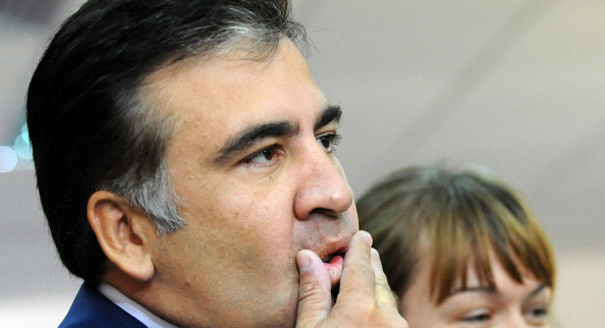
The Oct. 1 parliamentary election in Georgia produced the kind of result that we don’t expect from elections in post- Soviet countries. The opposition won. The governing party of Mikheil Saakashvili, who came to power in the country’s peaceful Rose Revolution of 2003, has been defeated by the Georgian Dream coalition, led by Georgia’s wealthiest man, Bidzina Ivanishvili.
This is the first time in 20 years that Georgia -- or indeed any of its post-Soviet neighbors -- has seen political change through the ballot box rather than from crowds on the streets, and Georgia should be congratulated for that. We should be clear that this wasn’t an election fought by European rules: Saakashvili and his government did everything in their power to ensure a victory, deploying state resources and a loyal media to buttress support for the ruling party.Yet, under heavy Western pressure, they allowed the opposition to compete. To his credit, Saakashvili recognized a result that went against him.
Broadly speaking, Saakashvili and his government lost for two reasons. Over the past nine years they have made impressive reforms, modernizing the bureaucracy, eliminating petty corruption and tackling organized crime.
But their economic policies have produced very uneven benefits. Georgia’s unemployment rate is, by conservative estimates, 34 percent. Also, the small group governing the country had developed a sense of entitlement bordering on arrogance. Saakashvili declared major initiatives -- such as the incredible idea of building an entire new city of a half-million people on the Black Sea coast -- without bothering to consult the wider public.
The officials who have ruled Georgia for the past nine years have been called the “liberal Bolsheviks.” They governed by revolutionary fiat, without building a proper rule of law. We saw the dark side of this with the revelations about systematic torture in Georgian prisons, which helped turn the election in the opposition’s favor.
This means that the country is now entering a phase of messy French-style political co-habitation between a president and parliament in opposition to each other, only without a robust legal framework or European-style institutions as a buffer from political turbulence.
Ivanishvili is already calling for Saakashvili to step down. But under Georgia’s electoral rules, he is allowed to serve out the entire calendar year of 2013 as president, retaining his strong executive powers. Only when that term ends does a new constitution take effect under which the opposition- majority parliament chooses a new prime minister who will inherit most of the president’s executive powers. Ivanishvili has declared his intention to take that job.
How will this play out? We still know too little about the plans of Ivanishvili, a man who entered politics less than a year ago after a decade when he lived as a virtual recluse and engaged in tremendous philanthropy without appearing in public.
The coalition he has built hangs together mainly for what it is against -- Saakashvili -- rather than what it is for. It consists of three main parts. There are democratically minded urban residents (in the main the people of Tbilisi) who wanted more freedoms and an end to Saakashvili’s monopoly on power.
There are economically deprived Georgians, mainly in the countryside, who felt bypassed by the government’s reforms and who hope that Ivanishvili will give them jobs. Many of these people frame their hopes in a somewhat xenophobic way, accusing the current government of having sold out the Georgian economy to Turks and other foreigners. Their agenda also overlaps with the socially conservative world view of the Georgian Orthodox Church.
Finally, there is a generation of middle-aged Georgians who were passed over by the 20-somethings now in government and who see Georgian Dream as their best route to getting a state job back.
Ivanishvili will try to mold these diverse groups into a single whole, but in the long run they can’t hold together. As a Georgian journalist remarked to me, “Georgian Dream will end up being a dream.”
The other doubt Ivanishvili has to address is on the Russia question. Saakashvili, who went to war with Russia in 2008, has accused his rival of being a stalking horse for the Kremlin. It is a valid criticism but Ivanishvili has so far done a good job of rebutting it. He did make a fortune -- estimated by Forbes to be worth more than $6 billion -- in Russia in the 1990s. But so did many other Georgian tycoons, including the favorite reformer of the Saakashvili government, Kakha Bendukidze. At the time, that was where the money was. Ivanishvili points out that he moved back to Georgia in 2003, has sold off his Russian assets over the past year and has appointed leading pro-Western politicians to his team, affirming Georgia’s orientation to the West.
The bigger point here is that Georgian voters have had a year to hear the government’s case that Ivanishvili is a Russian agent -- and rejected it. Most Georgians have a more pragmatic attitude to Russia than the current government has and are able to make a distinction between Vladimir Putin and Russia as a whole. It should not be forgotten that hundreds of thousands of Georgians work in Russia and that Russia used to be Georgia’s biggest market.
So there need not be a contradiction in resisting Russia’s de facto annexation of the breakaway territories of Abkhazia and South Ossetia, while pushing for a resumption of trade with their big neighbor -- although it is Moscow, which imposed a trade embargo on Georgia in 2006, and not Tbilisi that needs to make the first step here.
One way of seeing Georgia’s election result is as a rejection of geopolitics. Voters were more interested in retail issues than in big strategic questions such as the North Atlantic Treaty Organization versus Russia. That is probably a healthy development. Ivanishvili will stand or fall by his promise to turn around the Georgian economy and bring down unemployment.
The electoral process itself is a testament to what close Western scrutiny can do. And the hope must be that Georgia is now acquiring a genuine two-party system, rather than merely replacing one one-party system with another.

Senior Fellow, Carnegie Europe
Thomas de Waal is a senior fellow at Carnegie Europe, specializing in Eastern Europe and the Caucasus.
Recent Work
Thomas de Waal
Thomas de Waal
Carnegie does not take institutional positions on public policy issues; the views represented herein are those of the author(s) and do not necessarily reflect the views of Carnegie, its staff, or its trustees.

Putin’s conservative staffing policies and search for ever greater control have cemented parliament’s transformation into a bureaucratic appendage of the executive branch.

Andrey Pertsev

Ex-president Gurbanguly Berdimuhamedov remains interested in politics, but his son Serdar, Turkmenistan’s current president, is becoming increasingly independent and willing to break with his father’s legacy. If their covert rivalry goes too far, both risk losing power.

Galiya Ibragimova

A notable degree of participative democracy has firmly arrived in Europe. But to have more far-reaching impact, democratic deliberation needs to move into a radically new phase.

Richard Youngs
Much has been said of the changes Brussels is trying to make to the EU enlargement process. Here’s why gradual integration might—or might not—be the answer.

Dimitar Bechev

Sergei Kiriyenko used Russia’s parliamentary vote to further hone his strategy of corporate mobilization that is designed to maximize votes for United Russia.
Andrey Pertsev