• Research
  • Emissary
  • About
  • Experts
Carnegie Global logoCarnegie lettermark logo
DemocracyIran
  • Donate
{
  "authors": [
    "Michael Pettis"
  ],
  "type": "legacyinthemedia",
  "centerAffiliationAll": "dc",
  "centers": [
    "Carnegie Endowment for International Peace"
  ],
  "collections": [],
  "englishNewsletterAll": "asia",
  "nonEnglishNewsletterAll": "",
  "primaryCenter": "Carnegie Endowment for International Peace",
  "programAffiliation": "AP",
  "programs": [
    "Asia"
  ],
  "projects": [],
  "regions": [
    "East Asia",
    "China"
  ],
  "topics": [
    "Economy"
  ]
}
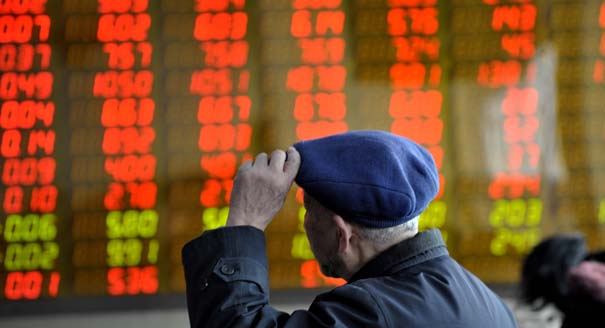
Source: Getty

In The Media

Cautious Optimism About China

China's new political leadership knows that economic reform is necessary, but has difficulty gathering the political will to enact such reforms.

Link Copied
By Michael Pettis
Published on Nov 13, 2012
Program mobile hero image

Program

Asia

The Asia Program in Washington studies disruptive security, governance, and technological risks that threaten peace, growth, and opportunity in the Asia-Pacific region, including a focus on China, Japan, and the Korean peninsula.

Learn More

Source: CNBC's Worldwide Exchange

Speaking on CNBC's Worldwide Exchange, Carnegie's Michael Pettis noted that he believes China's new leardership understands the urgency of implementing economic reforms. However, he explained that he is only cautiously optimistic that reforms will actually be enforced, given that the groups who have benefitted from China's investment-driven miracle are unwillingly to see adjustments to China's economy. 

About the Author

Michael Pettis

Nonresident Senior Fellow, Carnegie China

Michael Pettis is a nonresident senior fellow at the Carnegie Endowment for International Peace. An expert on China’s economy, Pettis is professor of finance at Peking University’s Guanghua School of Management, where he specializes in Chinese financial markets. 

    Recent Work

  • Commentary
    The Plaza Accord and Its Relevance for China

      Michael Pettis

  • Commentary
    Who Paid for China’s Last Debt Cleanup, and Who Will Pay for the Next?

      Michael Pettis

Michael Pettis
Nonresident Senior Fellow, Carnegie China
Michael Pettis
EconomyEast AsiaChina

Carnegie does not take institutional positions on public policy issues; the views represented herein are those of the author(s) and do not necessarily reflect the views of Carnegie, its staff, or its trustees.

More Work from Carnegie Endowment for International Peace

  • A view of a bus shelter at 18th and K St's NW where a poster and electronic billboard displays the current U.S. National debt per person and as a nation at 40 Trillion dollars on August 30, 2026 in Washington, DC.
    Paper
    The Debt Toll Booth: A Modular Solution to Addressing Sovereign Debt Crises

    Policy proposals on sovereign debt must both match the scale of the challenge and be implementable within existing political constraints. 
      David McNair

  • Commentary
    Carnegie Politika
    Who Is Funding Russia’s War in the 2027 Budget?

    For every ruble allocated to social policy, health, and education in 2027, double that amount is earmarked for the army, the police, and the security services.

      Alexandra Prokopenko

  • Satellite in space
    Commentary
    Emissary
    The U.S. Has Weapons in Space. Now What?

    The acknowledgment has sparked fears of a new arms race with China and Russia.

      • Chris  O'Meara ​​​​

      Chris O’Meara

  • Commentary
    Strategic Europe
    Taking the Pulse: Can the EU Stare Down China on Trade?

    The European Commissioner for Trade is headed to China. But after President Xi’s bridge-building visit to Washington, can a more isolated EU overcome Beijing’s stranglehold on critical raw materials? Who will blink first?

      • Rym Momtaz

      Rym Momtaz, ed.

  • Trump holding a glass of champagne up in a toast, with a table of guests in the foreground
    Commentary
    Emissary
    Trump Had the Chance to Address U.S.-China AI Safety. He Threw Xi a Party Instead.

    The summit may be remembered as a fatal blunder, when Washington, Beijing, and the AI industry collectively chose ceremony over action.
      • Jeffrey Prescott

      Jeffrey Prescott

Get more news and analysis from
Carnegie Endowment for International Peace
Carnegie global logo, stacked
1779 Massachusetts Avenue NWWashington, DC, 20036-2103Phone: 202 483 7600
  • Research
  • Emissary
  • About
  • Experts
  • Donate
  • Programs
  • Events
  • Blogs
  • Podcasts
  • Contact
  • Annual Reports
  • Careers
  • Privacy
  • For Media
  • Government Resources
Get more news and analysis from
Carnegie Endowment for International Peace
© 2026 Carnegie Endowment for International Peace. All rights reserved.