

Paper
James M. Acton, Ankit Panda
{
  "authors": [
    "James M. Acton"
  ],
  "type": "legacyinthemedia",
  "centerAffiliationAll": "dc",
  "centers": [
    "Carnegie Endowment for International Peace"
  ],
  "collections": [
    "U.S. Nuclear Policy",
    "Korean Peninsula"
  ],
  "englishNewsletterAll": "ctw",
  "nonEnglishNewsletterAll": "",
  "primaryCenter": "Carnegie Endowment for International Peace",
  "programAffiliation": "NPP",
  "programs": [
    "Nuclear Policy"
  ],
  "projects": [],
  "regions": [
    "North America",
    "United States",
    "East Asia",
    "North Korea"
  ],
  "topics": [
    "Nuclear Policy",
    "Arms Control"
  ]
}
Source: Getty
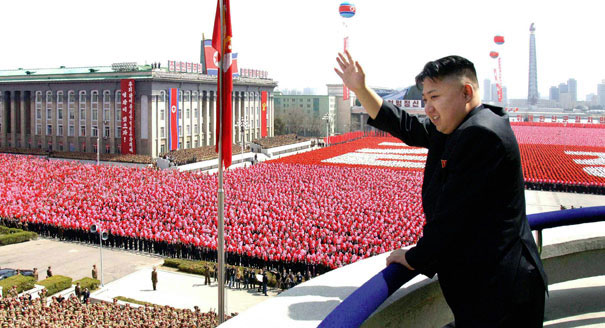
North Korea carried out a third nuclear test underground at a remote location in the northeastern part of the country, prompting new fears and international condemnation.
Source: PBS NewsHour
IMGXYZ15964IMGZYXAppearing on PBS's NewsHour, Carnegie's James Acton said that most people believe that Pyongyang's long term goal is developing a ballistic missile armed with a nuclear warhead that can threaten the United States. "In order to do that," said Acton, "you need a miniaturized, physically smaller and lighter nuclear device, so Pyongyang is claiming that is has successfully done that."
North Korea carried out a nuclear test underground at a remote location in the northeastern part of the country, prompting new fears and international condemnation. This is third nuclear test by North Korea since 2006 and the first test under the new leader, Kim Jong-un.
The U.N. Security Council voted just weeks ago to impose additional sanctions on North Korea. This latest test forced the Council into an emergency session where members condemned the actions and discuss more sanctions. Even China, North Korea’s sole ally, condemned the act, Acton said.
Acton clarified that the size of the device tested and the material it was made from remain unknown. "In fact, we don't even know definitively that this was larger than the previous two tests," said Acton. However, he went on to say that this test demonstrates North Korea is "moving along its arc of developing nuclear weapons that can threaten the United States."

Jessica T. Mathews Chair, Co-director, Nuclear Policy Program
Acton holds the Jessica T. Mathews Chair and is co-director of the Nuclear Policy Program at the Carnegie Endowment for International Peace.
Recent Work

James M. Acton, Ankit Panda
James M. Acton
Carnegie does not take institutional positions on public policy issues; the views represented herein are those of the author(s) and do not necessarily reflect the views of Carnegie, its staff, or its trustees.

Despite public disputes over trade and immigration, the strategic partnership’s foundations remain sturdy.

Sameer Lalwani

It signals a new era of tech diffusion and warfare.

Steve Feldstein

Ahead of a tough winter for Ukraine, Donald Trump’s swing back toward Russia bodes ill. But instead of panicking, Kyiv’s European allies are focusing on action.

Rym Momtaz

Despite its flop at the box office, the film raises important questions for the climate community to answer.

Leonardo Martinez-Diaz

In an interview, Rozina Ali discusses her new book on the rise and manifestations of Islamophobia in the United States.

Michael Young