

In The Media
Vikram Nehru
{
  "authors": [
    "Vikram Nehru"
  ],
  "type": "legacyinthemedia",
  "centerAffiliationAll": "dc",
  "centers": [
    "Carnegie Endowment for International Peace",
    "Carnegie China"
  ],
  "collections": [],
  "englishNewsletterAll": "asia",
  "nonEnglishNewsletterAll": "",
  "primaryCenter": "Carnegie China",
  "programAffiliation": "AP",
  "programs": [
    "Asia"
  ],
  "projects": [],
  "regions": [
    "Southeast Asia",
    "Myanmar"
  ],
  "topics": [
    "Political Reform",
    "Democracy",
    "Economy",
    "Religion",
    "Security"
  ]
}
Source: Getty
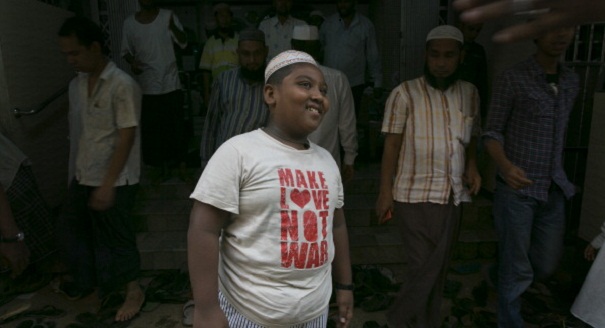
In light of the most recent bout of violence in Myanmar, it is vital that the government act quickly to heal the nation's new wounds, protect ethnic minorities, and continue the important task of nation building.
Source: East Asia Forum
The last three months have been a roller coaster for Myanmar as a steady trend of positive economic news was eclipsed by ethnic bloodletting.
The most recent bout of violence, this time in the country’s central region, highlights the complexity of the challenges facing the government of President Thein Sein and the need to ensure law and order during a period of political change. It is vital that the government acts quickly to heal the nation’s new wounds, protect ethnic minorities and continue the important task of nation building, on which it had so promisingly embarked last year.
The latest anti-Muslim riots in the Buddhist heartland left 43 dead, 93 hospitalised and displaced over 13,000 people, mostly from Meiktila, the epicentre of the troubles. Now the worst of the violence seems to have abated. But the speed at which it spread and its proximity to Yangon drove home to both domestic and international policymakers the sectarian fault lines that divide the country. The resurgence in violence came hard on the heels of the attack on the Rohingya Muslim community in Arakan State last year, in which 180 people died and around 100,000 were displaced — many of whom remain in refugee camps.
To prevent a third wave of violence, the government must ensure that protection is afforded to the Muslim minority throughout the country — before rather than after violence erupts. President Thein Sein has issued a warning that he is prepared to use force to quell any further trouble. If it comes to that, he should make sure that the security forces proactively protect those being persecuted — irrespective of ethnicity or religion. At the same time, action should be taken against those fanning the flames of religious animosity; free speech should not mean a licence to incite violence.
The government should proactively support dialogue between the Buddhist and Muslim communities (as was called for by an interfaith meeting organised by the Myanmar Peace Institute and the National Economic and Social Advisory Council in Yangon recently) and assist in the reconstruction of private and public property destroyed in the violence. It should also ensure the rehabilitation of those displaced and permit them freedom of movement to seek jobs. It should welcome the financial and organisational support of the international community and give international humanitarian organisations access to the affected areas.
The government also needs to resolve the root cause of the violence — the lack of legal status of Muslims, most of whose families have been living in Myanmar for generations, if not centuries. Minorities tend to be attacked with impunity when they are not recognised by the state and possess no legal rights. Ensuring that minorities are recognised and have legal rights is the first step in the long-run process of reconciliation and peaceful coexistence.
Myanmar is on the way to answering this concern. A 27-member Rakhine Investigation Commission was set up in August 2012. The commission is to investigate the causes of the violence against the Rohingya Muslims in Rakhine State last year and put forward recommendations on how such violence can be avoided in the future. The commission’s chairman has just submitted his final report to the president.
The report is likely to address many dimensions of the crisis, two of which deserve special scrutiny. The first is identifying a process by which eligible Muslims in Myanmar are provided a legal path toward permanent residency and citizenship. Requirements for this process should recognise that residents of Myanmar do not have the sort of documentation that would normally be used in other countries to establish proof of residency (such as birth certificates). Those seeking residency or citizenship should be asked to meet a lower standard of documentation that could include evidence such as school records or even affidavits from citizens.
Another important aspect of the report will be the proposed measures to accelerate economic development in areas where the violence occurred. It is no accident that violence erupted in less developed areas. Despair and deprivation offer fertile ground for frustration and anger which can often turn into mob violence. The target is those least able to protect themselves — in Myanmar’s case, the minority Muslims. Developing these areas will be a long-term and difficult task, in part because the country is so poor and resources are limited. A good way to speed up the process could be to connect these regions to commercial centres through transport and communications infrastructure. Another would be to allow people to move freely within the country to seek employment.
But none of this can be achieved if the country is wracked by ethnic strife. Preserving peace among Myanmar’s ethnic communities is the highest priority for the country today. The country’s ethnic diversity is a precious asset, but not one that can be taken for granted. By creating a level playing field for all communities the country can lay the foundations for a peaceful and prosperous future.
Former Nonresident Senior Fellow, Asia Program
Nehru was a nonresident senior fellow in the Carnegie Asia Program. An expert on development economics, growth, poverty reduction, debt sustainability, governance, and the performance and prospects of East Asia, his research focuses on the economic, political, and strategic issues confronting Asia, particularly Southeast Asia.
Recent Work
Vikram Nehru
Vikram Nehru
Carnegie does not take institutional positions on public policy issues; the views represented herein are those of the author(s) and do not necessarily reflect the views of Carnegie, its staff, or its trustees.
Understanding the climatic pain points is necessary for policymakers hoping to minimize the war’s negative environmental consequences.



Alejandro Martin Rodriguez, Joy Arkeh, Sarah Yerkes

Radical-right parties are expected to do well in upcoming elections in four of the EU's biggest member states. If successful, they could prevent the union from addressing key challenges ahead.

Stefan Lehne

The books, podcasts, and films that explain the world it made.

Andrew Leber
U.S. trading partners in Asia are closely watching the dispute for signs of how it may affect their own interests.

Barbara Weisel
By abandoning past U.S. pro-democracy policies and adopting several lines of pro-autocratic action, the Trump administration has fundamentally repositioned the United States vis-à-vis democracy in the world.

Thomas Carothers