

Paper
James M. Acton, Ankit Panda
{
  "authors": [
    "James M. Acton"
  ],
  "type": "legacyinthemedia",
  "centerAffiliationAll": "dc",
  "centers": [
    "Carnegie Endowment for International Peace"
  ],
  "collections": [
    "U.S. Nuclear Policy"
  ],
  "englishNewsletterAll": "ctw",
  "nonEnglishNewsletterAll": "",
  "primaryCenter": "Carnegie Endowment for International Peace",
  "programAffiliation": "NPP",
  "programs": [
    "Nuclear Policy"
  ],
  "projects": [],
  "regions": [
    "North America",
    "United States"
  ],
  "topics": [
    "Nuclear Policy",
    "Nuclear Energy"
  ]
}
Source: Getty
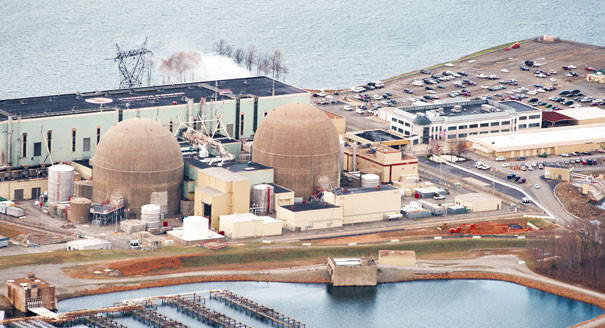
The former chairman of the U.S. Nuclear Regulatory Commission, Gregory Jaczko, is back in the news with a story that’s causing a stir in the nuclear industry.
Source: Platts Energy Week
The former chairman of the U.S. Nuclear Regulatory Commission is back in the news with a story that’s causing a stir in the nuclear industry. At a Washington conference, Gregory Jaczko said all 104 nuclear power reactors in the U.S. are fundamentally flawed and should be phased out. What will be the fallout of his remarks in the industry and the public? Carnegie's James Acton spoke with Platts Energy Week host Bill Loveless.
"The chairman made remarks about the problem of decay heat and there is no question that the problems of mismanaging decay heat were vividly demonstrated in the Fukushima accident," Acton said, adding that he thinks that opposing the filtered, hardened venting, which is an issue that is going before the NRC at the moment, is a mistake on behalf of the industry.
"I think that had the industry been pro-active about this issue, as they had been very pro-active about the so-called FLEX approach for managing a severe accident should one occur, the industry would have done itself a much greater service than by trying to oppose the particular step of filtered, hardened venting," Acton said.
"My interpretation of the chairman's comments was that he was saying that there are issues with current reactors and that they should be phased out over time, that is something that I fundamentally disagree with," concluded Acton.

Jessica T. Mathews Chair, Co-director, Nuclear Policy Program
Acton holds the Jessica T. Mathews Chair and is co-director of the Nuclear Policy Program at the Carnegie Endowment for International Peace.
Recent Work

James M. Acton, Ankit Panda
James M. Acton
Carnegie does not take institutional positions on public policy issues; the views represented herein are those of the author(s) and do not necessarily reflect the views of Carnegie, its staff, or its trustees.

The acknowledgment has sparked fears of a new arms race with China and Russia.

Chris O’Meara

Smaller powers cannot go it alone, but Canadian history shows that integration with the United States will not always be benign.
Paul Samson

The summit may be remembered as a fatal blunder, when Washington, Beijing, and the AI industry collectively chose ceremony over action.

Jeffrey Prescott

European NATO countries are wrestling with the possibility of U.S. disengagement from the alliance. With the continent’s security increasingly uncertain, governments must restore the credibility of their collective defense.



Hans-Dieter Lucas, Adam Thomson, Pierre Vimont

Soft power on its own is insufficient to meet U.S. national security needs, but hard power also has its limits. Soft power allows for more effective and efficient use of hard power than hard power alone, as it encourages cooperation and compliance which deters the need for hard power.

Sarah Yerkes