

Commentary
AI capabilities are moving fast. Most institutions—including governments—can’t keep up.
Anton Leicht, Scott Singer
{
  "authors": [
    "Thomas Carothers",
    "Nathan J. Brown"
  ],
  "type": "legacyinthemedia",
  "centerAffiliationAll": "dc",
  "centers": [
    "Carnegie Endowment for International Peace",
    "Malcolm H. Kerr Carnegie Middle East Center"
  ],
  "collections": [
    "Democracy and Governance"
  ],
  "englishNewsletterAll": "democracy",
  "nonEnglishNewsletterAll": "",
  "primaryCenter": "Carnegie Endowment for International Peace",
  "programAffiliation": "DCG",
  "programs": [
    "Democracy, Conflict, and Governance",
    "Middle East"
  ],
  "projects": [],
  "regions": [
    "North America",
    "United States",
    "North Africa",
    "Egypt"
  ],
  "topics": [
    "Political Reform",
    "Democracy",
    "Foreign Policy"
  ]
}
Source: Getty
Showing that Washington is serious about democratic standards with new Islamist actors in power is ultimately a greater sign of respect for them than excusing their shortcomings and lowering U.S. expectations.
Source: Washington Post
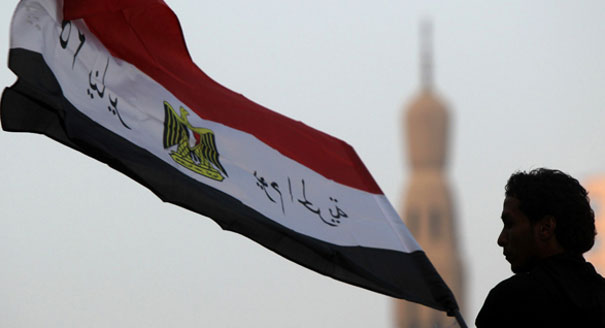
After Egypt’s presidential elections last summer, the Obama administration adopted a pragmatic policy toward the new Muslim Brotherhood-led government. The basic message to Egyptian President Mohamed Morsi was straightforward: Respect Egypt’s peace treaty with Israel and basic democratic norms, and the U.S. government will be a helpful, productive partner. By sincerely putting forward this line, the administration put to rest the long-held Arab suspicion that the United States would never accept Islamist electoral victories.
This approach fit the situation well enough for some months. Morsi showed no signs of questioning the peace treaty with Israel and even worked closely with the United States to end a flare-up of Israeli-Palestinian violence. Domestically, the new government showed an inexperienced (and heavy) hand on many occasions but still seemed to steer the country in a vaguely democratic direction.
Yet in the past five months, Egyptian politics has taken a seriously troubling turn. Egypt is wracked by harsh street protests, an angry impasse and utter distrust between the government and the main opposition parties, massive public disaffection, growing sectarian tension and increasing murmurings of a possible military coup.The Muslim Brotherhood did not create all of these problems. It faced a difficult political landscape upon taking power — a brooding military, a fractious and often unrealistic opposition and a resistant, stagnant state. Yet its actions have aggravated the conditions. Although some of its complaints about an implacable opposition and resistant state apparatus are legitimate, the Brotherhood controls the presidency, giving it tools and responsibilities that other actors don’t share. The Brotherhood has shown a willingness to deploy, rather than reform, authoritarian mechanisms inherited from Hosni Mubarak and is, in some ways, deepening authoritarian practices. Examples include rushing through a new constitution and appointing a new prosecutor general, despite strenuous judicial objections firmly anchored in Egyptian law. Brotherhood parliamentarians are pushing to impose new restrictions on independent civic organizations. And supporters of the Brotherhood have gone to court to harass their critics and sometimes have taken to the streets to violently confront opponents.
Meanwhile, Egypt is approaching a buzz saw of economic woes: Either the government reaches a deal with the International Monetary Fund and has to impose painful cuts on public spending, or it fails to reach a deal and faces a devastating fiscal shortfall.The Obama administration is commendably trying to help Egypt avoid the buzz saw and has promised significant new aid if a deal is reached with the fund. Yet Obama officials are clinging to their earlier narrative in which the Brotherhood is politically well-intentioned, even if inexperienced and sometimes heavy-handed. That narrative no longer fits the facts: The administration’s habit of playing down the severity of the Egyptian government’s anti-democratic actions risks making the United States look not flexible and reasonable but self-delusional or deeply cynical.
The U.S. message to Morsi should no longer be “We’re with you, watch out for some details around the edges.” Instead, Obama officials should be telling Egyptian leaders: We’re extremely concerned about your violations of core political and legal principles; we can’t be the partner we would like to be, and the partner Egypt needs, if you undermine the fulfillment of Egyptians’ democratic aspirations.
Putting this message into practice will require much sharper, clearer public responses by the White House and State Department to violations of basic democratic and rule-of-law norms. It will mean an end to justifying the Brotherhood’s negative political steps. And the United States should indicate that the possibility of new aid is not isolated from domestic Egyptian political realities.
This tougher line should not be coupled with an embrace of the opposition. U.S. policy should be based on firm support of core democratic principles, not on playing favorites.
Recalibrating the current policy line will require careful nuance. It has to be clear that the United States is not turning against the Brotherhood but is siding more decisively with democracy. The Obama administration must also make it well known to all that it adamantly opposes any military intervention in Egypt’s politics. The United States is understandably sensitive about being accused of an anti-Islamist stance in an Arab world roiling with Islamist activism. Yet showing that Washington is serious about democratic standards with new Islamist actors in power is ultimately a greater sign of respect for them than excusing their shortcomings and lowering our expectations.

Harvey V. Fineberg Chair for Democracy Studies; Senior Fellow, Democracy, Conflict, and Governance Program
Thomas Carothers, a senior fellow in the Carnegie Endowment for International Peace’s Democracy, Conflict, and Governance Program, is a leading expert on comparative democratization and international support for democracy.

Nonresident Senior Fellow, Middle East Program
Nathan J. Brown, a professor of political science and international affairs at George Washington University, is a distinguished scholar and author of nine books on Arab politics and governance, as well as editor of five books.
Carnegie does not take institutional positions on public policy issues; the views represented herein are those of the author(s) and do not necessarily reflect the views of Carnegie, its staff, or its trustees.

AI capabilities are moving fast. Most institutions—including governments—can’t keep up.


Anton Leicht, Scott Singer

The Bureau of Industry and Security needs to adjust its focus and practices to maintain its position as the U.S. government’s primary champion of international technological competition.

Geoffrey Irving
Despite myriad challenges and occasional stumbles, the new Hungarian government is moving ahead with energy and conviction to uproot years of illiberalism and corruption and rebuild Hungarian democracy.
Thomas Carothers

European Commission President Ursula von der Leyen is about to give her annual address on the state of the EU. Here’s what she won’t—but should—say.

Rym Momtaz

Understanding the climatic pain points is necessary for policymakers hoping to minimize the war’s negative environmental consequences.



Alejandro Martin Rodriguez, Joy Arkeh, Sarah Yerkes