

Paper
James L. Schoff, Douglas E. Rake, Joshua Levy
{
  "authors": [
    "James L. Schoff"
  ],
  "type": "commentary",
  "centerAffiliationAll": "",
  "centers": [
    "Carnegie Endowment for International Peace",
    "Carnegie Russia Eurasia Center"
  ],
  "collections": [],
  "englishNewsletterAll": "",
  "nonEnglishNewsletterAll": "",
  "primaryCenter": "Carnegie Endowment for International Peace",
  "programAffiliation": "",
  "programs": [],
  "projects": [],
  "regions": [],
  "topics": []
}
Source: Getty
Critics worry that Japan could stoke an arms race in East Asia with a policy of “remilitarization” and right-wing nationalism, but we should avoid exaggerating what the Japanese people will allow.
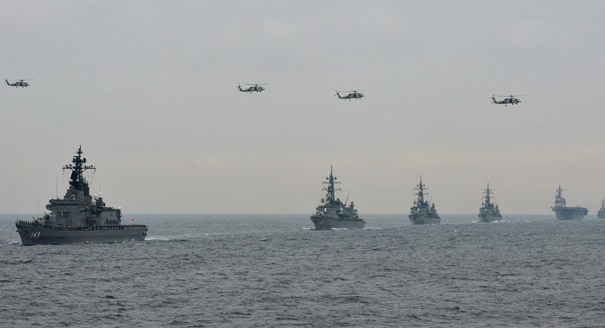
As Japanese Prime Minister Shinzo Abe settles into what most expect will be a multi-year term in office (something not realized in a decade), attention turns to his ambitious defense reform agenda including more spending, a new National Security Council apparatus, loosening legal restrictions on the use of troops and weapons, and possibly revising Japan’s “war-renouncing” constitution. Critics worry that Japan could stoke an arms race in East Asia with a policy of “remilitarization” and right-wing nationalism, but we should avoid exaggerating what the Japanese people will allow.
Concerns about Japanese remilitarization and nationalism are not new, as they have surfaced almost every decade since the 1970s, whether it was a push by Yasuhiro Nakasone for big defense budget increases (1970s and 1980s), Japan’s first post-WWII dispatch of military personnel (1990s), or Prime Minister Junichiro Koizumi’s visits to Yasukuni Shrine and active support of the Iraq War (2000s). Abe’s efforts, like the others, will result only in incremental changes that primarily compensate for new defense realities.
By some measures, Japan already has a potent military. It has the world’s fifth largest defense budget (in US$) and is looking to increase spending and personnel in coming years. In yen terms, however, Japan’s budget remains below where it was in 2000, and the proposed personnel increase is only 300 soldiers. Given recent yen weakness, expect Japan’s defense budget to fall to number eight next year, behind India. Overall, with a two percent inflation target and only a plan for one percent defense spending increases, Japan’s policy is for real defense spending decline.
In addition, Japan does not get much for money spent on defense, due to an inefficient procurement system and an addiction to high-end gadgets. Japan will spend over $500 million in 2013, for example, for just two F-35 fighter aircraft. That is almost ten percent of its overall procurement budget and one-third of the aircraft acquisition budget.
Japan does have high-level military capabilities, but a myriad of laws restrict when and how they can be used. Japan continues to rule out any use of force beyond the minimum necessary for self-defense. What restrains Japan on this front is a combination of history (past wars and the Constitution), politics (voter sentiment and regional opposition), and strategic choice (prioritizing economic growth and trade).
The Abe Cabinet might want to make different strategic choices, but increased voter concern about North Korean or Chinese threats is marginal, and legal restrictions on Japanese remilitarization are rigid. Moreover, budget constraints are real, with almost one-quarter of the general account spent on debt servicing: Japan cannot afford to make drastic changes to its defense policy.
So, prepare to see steady defense funding without large increases, but with more focus on intelligence, surveillance, and the island’s outer defense. We might even see a loosening of restrictions on Japan exercising its right of collective self-defense, which could make it a better partner in multilateral (primarily UN) security cooperation missions. We are unlikely to see constitutional revision or a significantly more potent Japanese military. Even this modest outcome, however, will elicit complaints from neighboring countries, so careful explanation is required.

Former Senior Fellow, Asia Program
James L. Schoff was a senior fellow in the Carnegie Asia Program. His research focuses on U.S.-Japan relations and regional engagement, Japanese technology innovation, and regional trade and security dynamics.
Recent Work
James L. Schoff, Douglas E. Rake, Joshua Levy
James L. Schoff
Carnegie does not take institutional positions on public policy issues; the views represented herein are those of the author(s) and do not necessarily reflect the views of Carnegie, its staff, or its trustees.