

Research
- +5
Alper Coşkun, Fatih Ceylan, Tacan İldem, …
{
  "authors": [
    "Sinan Ülgen"
  ],
  "type": "legacyinthemedia",
  "centerAffiliationAll": "",
  "centers": [
    "Carnegie Endowment for International Peace",
    "Carnegie Europe",
    "Malcolm H. Kerr Carnegie Middle East Center"
  ],
  "collections": [
    "Turkey’s Transformation",
    "Europe’s Southern Neighborhood"
  ],
  "englishNewsletterAll": "",
  "nonEnglishNewsletterAll": "",
  "primaryCenter": "Carnegie Europe",
  "programAffiliation": "",
  "programs": [],
  "projects": [],
  "regions": [
    "Middle East",
    "Europe",
    "Türkiye",
    "Levant",
    "Syria"
  ],
  "topics": [
    "Security",
    "Military"
  ]
}
Source: Getty
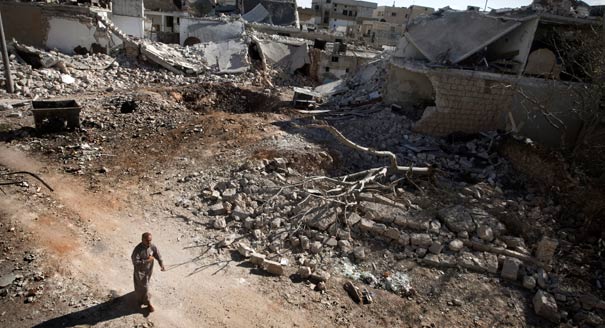
There are serious concerns in Ankara that Turkey’s security could be put at risk by a U.S.-led strike that is too limited in scope.
Source: CNN GPS
Democracy can get in the way of a good war in the Middle East, a reality underscored by the diminishing U.S. public support for intervention in Syria. But the ongoing discussions in Washington over how to respond to Syria’s alleged use of chemical weapons aren’t just being watched closely in Washington and Damascus. In Turkey – Syria’s neighbor and in the vanguard of the struggle against the al-Assad regime – the outcome of deliberations on an attack are critical. Indeed, while the West looks increasingly wary of military action, there are serious concerns in Ankara that Turkey’s security could be put at risk by a U.S.-led strike that is too limited in scope.
Turkey has diligently defended the idea of regime change in Syria prior to the alleged chemical weapons attack. Having rightfully desisted from a unilateral intervention, Turkey has focused its efforts on strengthening the opposition.

Senior Fellow, Carnegie Europe
Sinan Ülgen is a senior fellow at Carnegie Europe in Brussels, where his research focuses on Turkish foreign policy, transatlantic relations, international trade, economic security, and digital policy.
Recent Work

Alper Coşkun, Fatih Ceylan, Tacan İldem, …

Before the next wave of EU enlargement takes place, the union needs to grapple with thorny questions of how power is distributed among its members.


Emil Sondaj Hansen, Ditte Brasso Sørensen

The Horn of Africa countries are among those facing a new security calculus.


Andrew Leber, Lesley Anne Warner

The European far right might fail to steer EU policy in the direction Russia wants, but they will create enough chaos inside Europe to benefit the Kremlin.

Dimitar Bechev

The new U.S.–Denmark–Greenland agreement will help Washington exert political, economic, and financial dominance under the guise of security. Yet, it acknowledged Copenhagen’s and Nuuk’s sovereignty on the island.

Marc Pierini

A summer of escalation in the Black Sea has hurt Ukraine economically and is exacerbating world food security. A truce is needed—as is a broader reframing of Europe’s Ukraine strategy.

Thomas de Waal