

Commentary
Evan A. Feigenbaum
{
  "authors": [
    "Evan A. Feigenbaum"
  ],
  "type": "legacyinthemedia",
  "centerAffiliationAll": "dc",
  "centers": [
    "Carnegie Endowment for International Peace"
  ],
  "collections": [],
  "englishNewsletterAll": "asia",
  "nonEnglishNewsletterAll": "",
  "primaryCenter": "Carnegie Endowment for International Peace",
  "programAffiliation": "AP",
  "programs": [
    "Asia"
  ],
  "projects": [],
  "regions": [
    "East Asia",
    "China"
  ],
  "topics": [
    "Economy"
  ]
}
Source: Getty
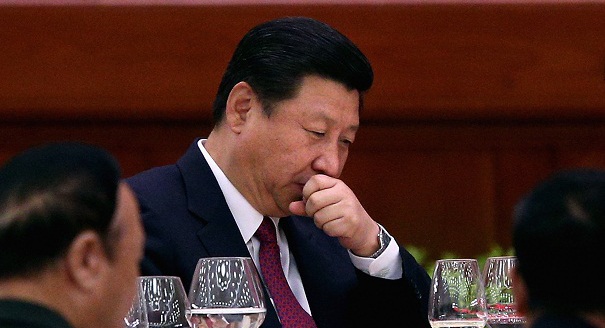
The central issue to be addressed by the Third Plenum is the proper role of the state in China, including the organization of the state and the relations of the state to markets and to citizens.
Source: CNBC
Carnegie’s Evan Feigenbaum appeared on CNBC to discuss what to look for from the Third Plenum of the 18th Chinese Communist Party Congress, which is expected to launch wide-ranging economic reforms. Feigenbaum pointed out that reform is best viewed as a process rather than an event, and that the most important thing to come out of the Plenum will be a sense of the broad direction in which reforms over the coming five years will move. He asserted that the highest priority for the Plenum should be to outline what the role of the state is going to be in the coming years, particularly in three areas: the state's relationship to markets, its relationship to its citizens, and the way in which it is organized. These three areas correspond to three high priority reforms: reducing energy and other factor price distortions, rural land reform to give peasants stronger property rights, and restructuring of the fiscal relationship between the central and local governments. Overall, Feigenbaum said that he sees reason for optimism about the coming reform announcement.

Vice President for Studies
Evan A. Feigenbaum is vice president for studies at the Carnegie Endowment for International Peace, where he oversees work at its offices in Washington, New Delhi, and Singapore on a dynamic region encompassing both East Asia and South Asia. He served twice as Deputy Assistant Secretary of State and advised two Secretaries of State and a former Treasury Secretary on Asia.
Recent Work
Evan A. Feigenbaum
Evan A. Feigenbaum

Rubio’s recent visit brought welcome attention, but more capital requires governance changes that may be a hard sell for regional governments.

Jennifer B. Murtazashvili

China has showcased its engineering prowess with small modular reactor demonstration projects. But turning these technological achievements into commercial success will be a greater challenge.

Tong Zhao

Despite public disputes over trade and immigration, the strategic partnership’s foundations remain sturdy.

Sameer Lalwani

With its public finances in shambles, the far right polling at 35 percent ahead of the 2027 presidential election, and a growing protest movement, is France’s crisis a threat to the EU’s geopolitical awakening?

Rym Momtaz, ed.

Russian strikes are weakening the economy sustaining Ukraine’s war effort. Closing the growing funding gap will require more European support and politically contentious reforms in Kyiv.

Balázs Jarábik