

Commentary
- +8
Sophia Besch, Eric Ciaramella, Steve Feldstein, …
{
  "authors": [
    "Milan Vaishnav"
  ],
  "type": "legacyinthemedia",
  "centerAffiliationAll": "dc",
  "centers": [
    "Carnegie Endowment for International Peace"
  ],
  "collections": [],
  "englishNewsletterAll": "ctw",
  "nonEnglishNewsletterAll": "",
  "primaryCenter": "Carnegie Endowment for International Peace",
  "programAffiliation": "SAP",
  "programs": [
    "South Asia"
  ],
  "projects": [
    "India Decides 2014"
  ],
  "regions": [
    "South Asia",
    "India"
  ],
  "topics": [
    "Political Reform",
    "Democracy"
  ]
}
Source: Getty
It remains to be seen whether negative voting will influence the quality of politicians in Indian elections.
Source: Deutsche Welle
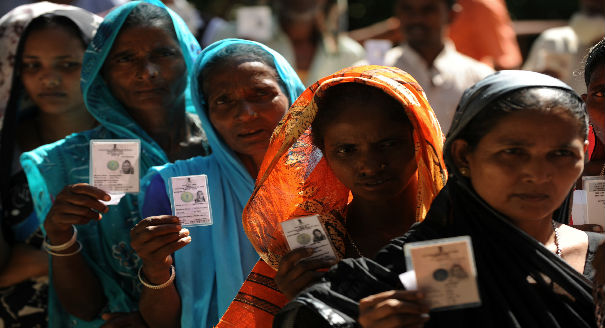
India is currently holding key polls in five states - Chattisgarh, Madhya Pradesh, Delhi, Rajasthan, and Mizoram. For the first time, voters have the option of rejecting all the candidates standing in the elections by choosing the "none of the above" or NOTA option.
Many hoped the provision, which was introduced after Supreme Court ruling, would lead to the parties fielding to “better” candidates to the polls. However, political analyst Milan Vaishnav says in a DW interview that NOTA has had zero impact on the quality of politicians selected for the current state elections.Milan Vaishnav: One of the principal motives behind this provision was to allow voters to exercise the right to participate in the electoral process without feeling compelled to vote for a candidate or party they do not support, for lack of an alternative option. It affords each and every voter the right to register his or her "negative vote" against all candidates standing for election in a particular constituency.
NOTA is not the same as "right-to-reject" system, whereby, if the majority of voters opt for "none of the above" option, no candidate will be declared the winner and a fresh election will be called.
Under the system introduced in India, even if the NOTA wins more votes than the candidates running for office, the contestant with the greatest number of votes will still be counted as the victor. In this way, this provision is a disappointment to many good government campaigners as it will not have a substantial impact on "cleaning up" political outcomes.
It is hard to predict whether there will be a "right-to-reject" in the future. However, the Supreme Court's recent ruling certainly increases the possibility this will happen. NOTA is only a half-step in that direction.
Given the way in which the Court has tried to fill a governance vacuum in India - one that was created by parliament and politicians - it seems likely that civil society will keep up the pressure. If India's politicians do not take electoral reforms seriously, the judges may be under some pressure to take matters into their own hands.
It has had zero impact on the quality of politicians selected by parties for these state elections. In fact, in several states we see that the number of candidates with criminal records is higher in 2013 than it was in the past election in 2008.
In the state of Rajasthan, an analysis by the Association for Democratic Reforms (ADR) has shown that 15 percent of major party candidates in 2008 faced criminal cases; in 2013, the number remains 15 percent. However, the number of candidates with "serious" cases has gone up in 2013. The trend is similar in other states such as Madhya Pradesh and Chhattisgarh.
They are important for two main reasons. First, when state elections occur less than two years before national elections, the verdicts are typically the same. That is, the parties winning the majority of seats at the state level usually end up repeating the feat at the national level.
Second, although the contest will be determined largely by local factors, there is no doubt that the election outcomes will be interpreted as referenda on the two leading prime ministerial candidates, Rahul Gandhi of the ruling Congress Party and Narendra Modi of the opposition BJP.
It might only have a small impact. For starters, many voters are not aware of the option. There hasn't been much time for authorities and civic activists to inform nearly 800 million Indian voters. However, to the extent voters do become informed, it might help increase the turnout in the upcoming national elections. Now there is a mechanism for conscientious voters to participate even if they are turned off by the individual candidates standing for election. NOTA is their own personal form of protest.

Director and Senior Fellow, South Asia Program
Milan Vaishnav is a senior fellow and director of the South Asia Program and the host of the Grand Tamasha podcast at the Carnegie Endowment for International Peace. His primary research focus is the political economy of India, and he examines issues such as corruption and governance, state capacity, federalism, and electoral behavior. He also conducts research on the Indian diaspora.
Recent Work



Sophia Besch, Eric Ciaramella, Steve Feldstein, …
Louise Tillin, Milan Vaishnav, Andy Robaina
Carnegie does not take institutional positions on public policy issues; the views represented herein are those of the author(s) and do not necessarily reflect the views of Carnegie, its staff, or its trustees.
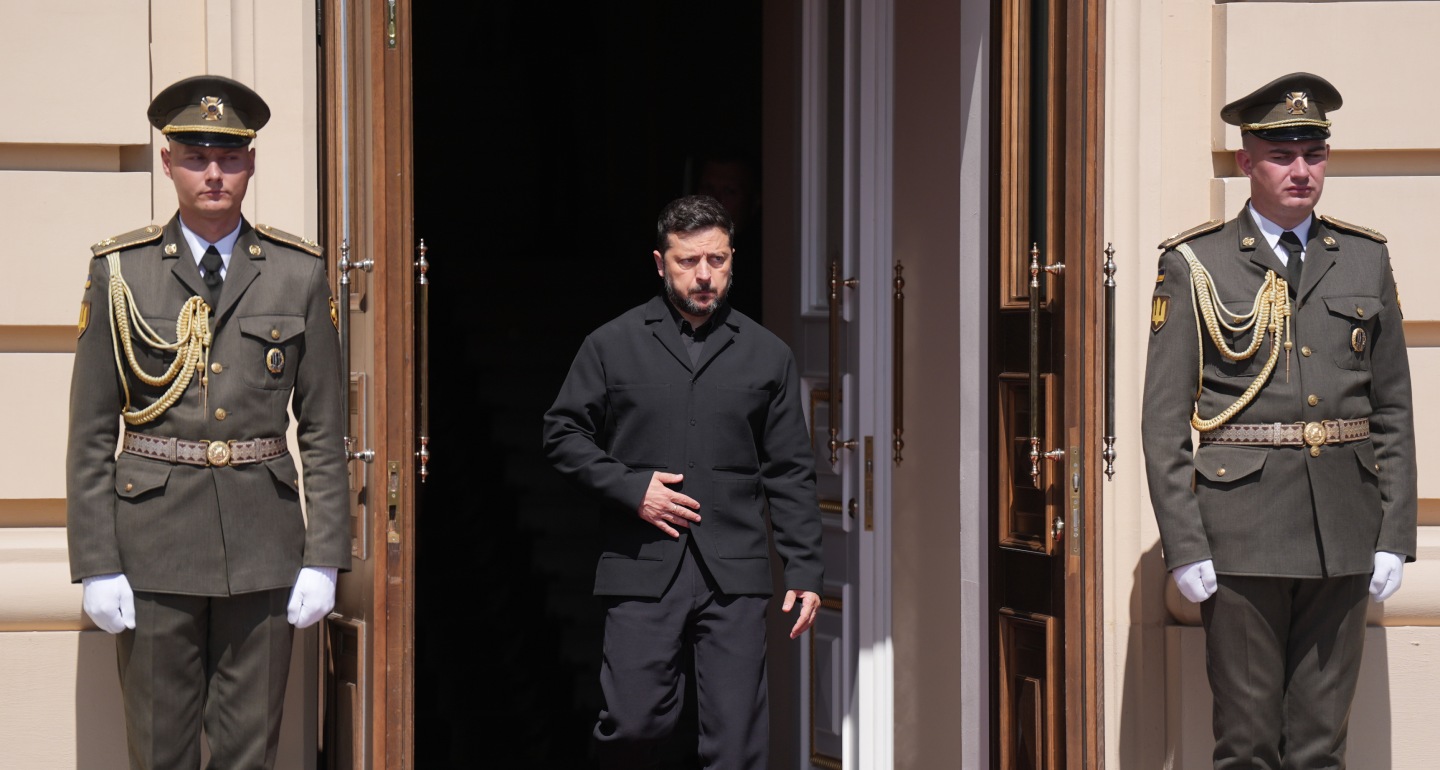
Ultimately, Zelensky sided neither with the reform camp nor with the military establishment as such, but with political control.

Balázs Jarábik

The Indian Ocean Region hosts one of the densest concentrations of subsea cables in the world. Yet, despite accounting for a significant share of global internet traffic, India’s participation remains limited.

Charukeshi Bhatt
Tokayev’s predecessor, Nursultan Nazarbayev, outlined arrangements for a power transition too soon and in too much detail, ultimately losing control over the process. Tokayev is determined not to meet the same fate.

Temur Umarov

As the EU confronts profound challenges, several leaders have called for fundamental reform to the union’s model—but only modest, superficial changes have resulted. What if Europe really could be reimagined from zero today: What should such a redesigned European order look like?

Richard Youngs, ed.

How is AI reshaping space security, creating governance challenges, and where does international diplomacy stand today?


Tejas Bharadwaj, Almudena Azcárate Ortega