

Article
C. Raja Mohan, Darshana M. Baruah
{
  "authors": [
    "C. Raja Mohan"
  ],
  "type": "legacyinthemedia",
  "centerAffiliationAll": "dc",
  "centers": [
    "Carnegie Endowment for International Peace",
    "Carnegie India"
  ],
  "collections": [],
  "englishNewsletterAll": "ctw",
  "nonEnglishNewsletterAll": "",
  "primaryCenter": "Carnegie India",
  "programAffiliation": "SAP",
  "programs": [
    "South Asia"
  ],
  "projects": [],
  "regions": [
    "South Asia",
    "India"
  ],
  "topics": [
    "Political Reform",
    "Foreign Policy"
  ]
}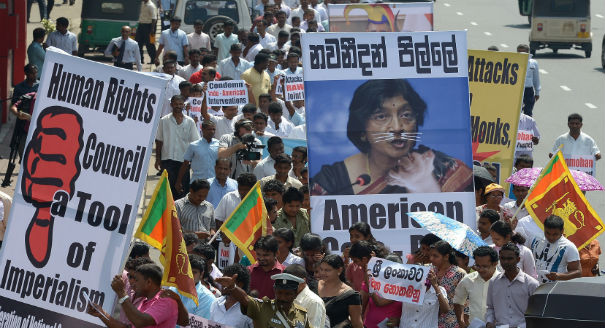
Source: Getty
India’s decision to abstain on a resolution against Sri Lanka at the UN Human Rights Council in Geneva last week was unexpected.
Source: Indian Express
The UPA government’s decision to abstain on a resolution against Sri Lanka at the UN Human Rights Council in Geneva last week was indeed unexpected. In the last two years, India had backed the West-sponsored resolutions on Sri Lanka’s human rights violations during Colombo’s victorious war against the Liberation Tigers of Tamil Eelam, which ended in 2009.
If India’s earlier position was about pandering to the Congress party’s allies in Chennai, its reversal this year has come amid the ruling party’s political isolation in Tamil Nadu. With apparently little to gain from further appeasement, the UPA government has chosen to do the right thing.
In a terrible irony, the more Delhi bowed to the Tamil parties in Chennai, the less clout it had in promoting the rights of the Tamil minorities in Sri Lanka. The about turn in Geneva on Sri Lanka, then, is a belated but welcome corrective to one of the UPA’s worst foreign policy legacies — of putting the Congress party’s narrow political considerations above the national interest.In its first term, the UPA, under pressure from the CPM, made heavy weather of the historic civil nuclear initiative with the United States unveiled in 2005. Instead of vigorously defending the deal — which sought to end India’s prolonged global nuclear isolation — Congress president Sonia Gandhi pulled the plug in 2007. It was Prime Minister Manmohan Singh’s apparent threat to resign in mid-2008 that allowed the clinching of the deal, with great political difficulty.
The reluctance to pursue what was in plain national interest became even more telling in the second term of the UPA. In 2010, Manmohan Singh boldly decided to transform the bilateral relationship with Bangladesh by resolving all outstanding issues, including cross-border terrorism, market access, transit, river water sharing and the cleaning up of a messy boundary inherited from the partition of the subcontinent.
When the big moment for signing the agreements came in September 2011, during Manmohan Singh’s visit to Dhaka, the prime minister held back on the Teesta waters agreement as West Bengal Chief Minister Mamata Banerjee threw a tantrum. Although the prime minister went ahead and signed the land boundary agreement with Dhaka, UPA 2 found it difficult to mobilise political support at home for its ratification in Parliament.
The second term also saw the Congress party becoming more wobbly towards Sri Lanka. Recall the prime ministers’s decision to skip the Commonwealth summit in Colombo last year. The pressure came not just from the Tamil parties, but also from senior Congress leaders in the state, including Finance Minister P. Chidambaram. While the PM saw the negative consequences of snubbing Colombo, the Congress party leadership had the last word.
The UPA’s policy failures on Bangladesh and Sri Lanka have generated much bemoaning in Delhi’s national security establishment about the breakdown of the rules of the republic that made the conduct of foreign policy the sole responsibility of the Centre. A closer look, however, reveals that it is not the states that have got stronger and are exercising a veto over foreign policy decisions. The real source of trouble has been the lack of policy conviction and political will in the UPA.
This, in turn, stemmed from the Congress party’s temptation to take the path of least resistance when confronted with difficult political challenges. If Prakash Karat did not like the nuclear initiative, Sonia Gandhi was ready to drop it. If Mamata Banerjee does not like the agreements with Dhaka, Delhi is ready to put them on hold. If Chennai does not like the prime minister going to Colombo, then so be it.
That Delhi has to take into account the views of the states, regions and communities on foreign policy issues that affect them directly is a matter of political common sense. It is not a matter of constitutional principle. In a large and diverse democratic state like India, conflict between the national and the local is frequent and inevitable. Resolving these tensions is the job of the political leadership at the Centre.
The UPA government has fallen woefully short, thanks to the deliberate weakening of the prime minister’s role in the management of national affairs during the last 10 years. With neither political primacy in the party nor full administrative authority over his government, the prime minister did not, or could not, defend what he thought was in the national interest.
But the problem of reconciling the tension between the national and the regional in foreign policy-making is not going to disappear after the elections. The next prime minister, most likely heading another coalition, will need considerable political skill in managing the disparate pressures on all national issues. In the few remarks on foreign policy that he has made during the election season, the BJP’s prime ministerial candidate, Narendra Modi, has declared that he would promote a greater role for states in the making of India’s foreign policy. Modi’s words are vague at the moment, but they certainly open the door for a debate on the role of states in Indian diplomacy. But in the end, it is all about competence in political management and the effective exercise of power by the national leadership.
If Modi does become prime minister, he will indeed face pressures from the BJP’s regional allies and sections of his own party on the policies towards Sri Lanka and Bangladesh. If Sonia Gandhi and Manmohan Singh have set a negative example that must be avoided at all costs, the next prime minister could learn a thing or two from Atal Bihari Vajpayee, who artfully dodged pressures from his regional coalition partners and resisted those from the ideologues in the BJP and RSS during his six-year tenure as prime minister.
This article was originally published in the Indian Express.
Former Nonresident Senior Fellow, Carnegie India
A leading analyst of India’s foreign policy, Mohan is also an expert on South Asian security, great-power relations in Asia, and arms control.
Recent Work

C. Raja Mohan, Darshana M. Baruah


Alexander Gabuev, Paul Haenle, C. Raja Mohan, …
Carnegie does not take institutional positions on public policy issues; the views represented herein are those of the author(s) and do not necessarily reflect the views of Carnegie, its staff, or its trustees.

In the discussions made possible by the State Duma election campaign, one question is being asked more and more loudly. “What next?”

Andrey Pertsev
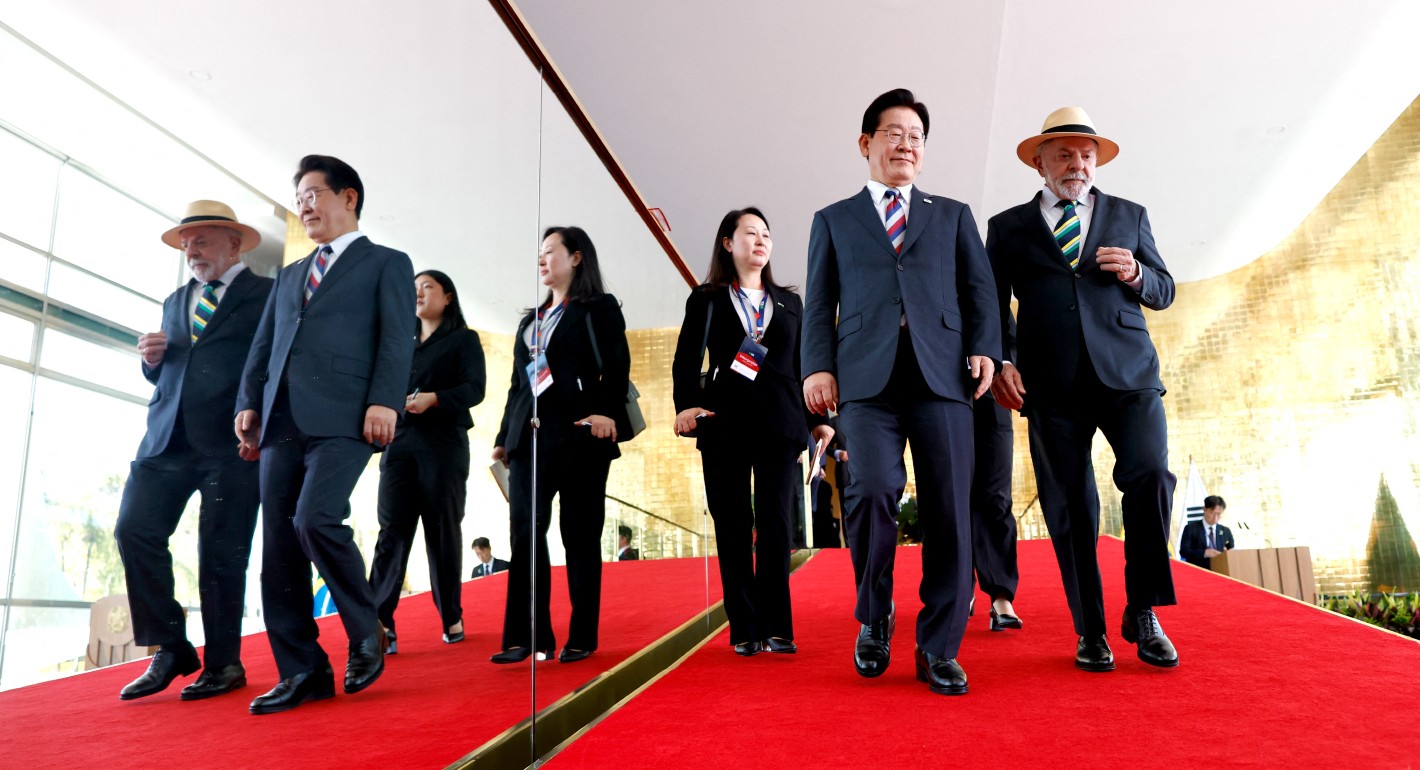
Lee’s tour shows how Seoul is reorganizing its diplomacy away from Pyongyang and toward industrial networks and the geography of the compute economy.

Darcie Draudt-Véjares
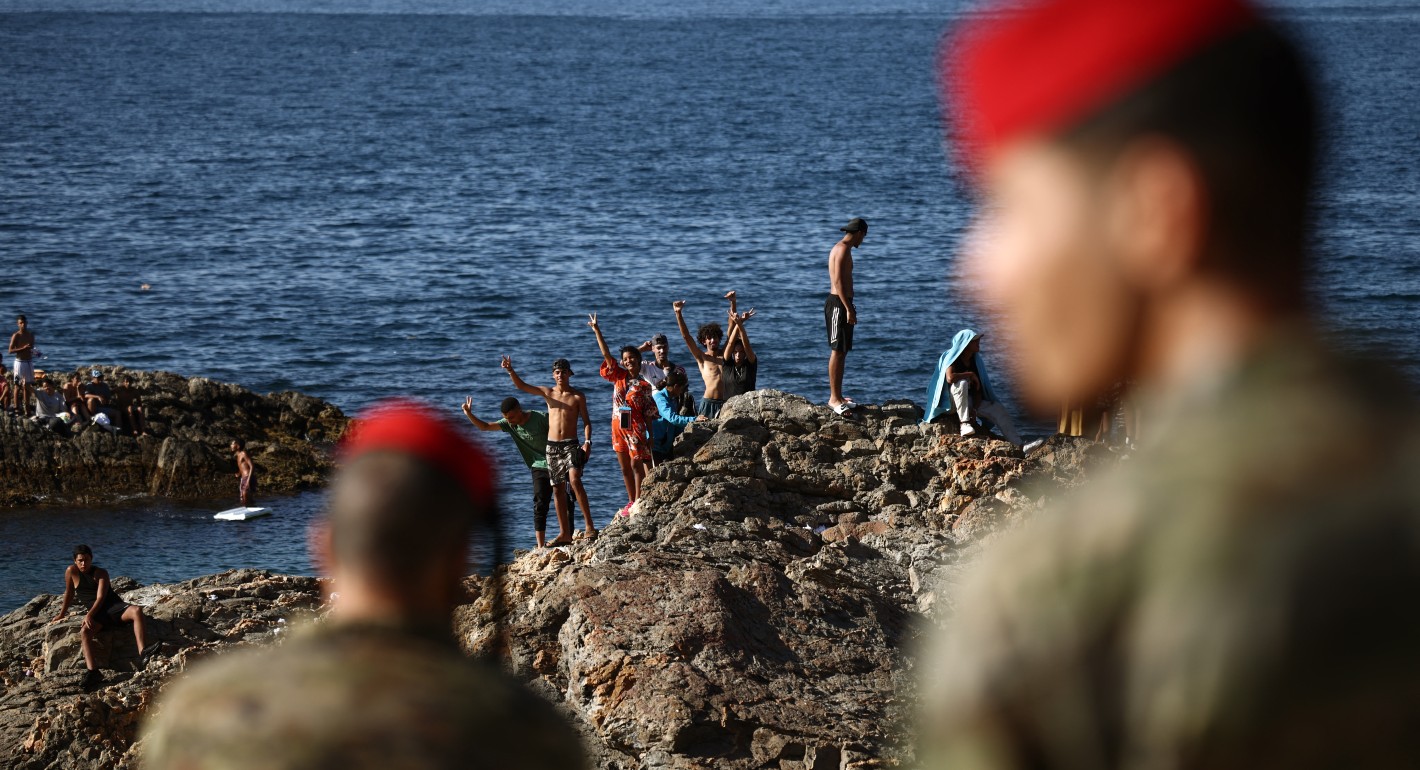
Most migrants may have left Ceuta, but the effects may linger.


Alejandro Martin Rodriguez, Sarah Yerkes

There is a transnational far-right populist movement that links middle powers in a global movement that extends well beyond Trump.



Christopher S. Chivvis, Rohan Mukherjee, Milan Vaishnav

When faced with fuel shortages in the past, Central Asian governments could always count on additional supplies from Moscow. That safety net no longer exists.

Galiya Ibragimova