

Paper
Christopher S. Chivvis, Rohan Mukherjee, Milan Vaishnav
{
  "authors": [
    "Milan Vaishnav"
  ],
  "type": "legacyinthemedia",
  "centerAffiliationAll": "dc",
  "centers": [
    "Carnegie Endowment for International Peace"
  ],
  "collections": [],
  "englishNewsletterAll": "ctw",
  "nonEnglishNewsletterAll": "",
  "primaryCenter": "Carnegie Endowment for International Peace",
  "programAffiliation": "SAP",
  "programs": [
    "South Asia"
  ],
  "projects": [
    "India Decides 2014"
  ],
  "regions": [
    "South Asia",
    "India"
  ],
  "topics": []
}
Source: Getty
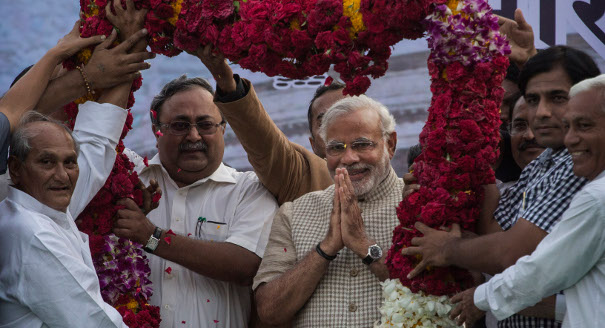
This election is the first time since 1984 that a single party has succeeded in winning a clear majority and the first time a non-Congress party has been able to achieve this feat on its own.
Source: Deutsche Welle
The Bharatiya Janata Party (BJP), led by its prime ministerial candidate Narendra Modi, won an absolute majority in India's parliamentary polls, according to early vote counts by the Election Commission. If confirmed, this would be the first parliamentary majority by a single party in 30 years.
The poll which was staggered over five weeks, showed the BJP on track to win the 272 seats needed for a parliamentary majority, while the left-leaning Congress party, led by Rahul Gandhi, the scion of the Gandhi dynasty, was headed for its worst-ever defeat.
In a DW interview, Milan Vaishnav, political analyst and associate in the South Asia Program at the Washington-based Carnegie Endowment for International Peace, says that while the BJP victory is truly historic, its ability to govern will face several constraints which may pose a threat to its legislative agenda.
Milan Vaishnav: The BJP victory is truly historic. The fact that the BJP managed to secure an outright majority in parliament is totally unprecedented. It is the first time since 1984 that a single party has succeeded in winning a clear majority in parliament. Furthermore, it is the first time since post-independence India that a non-Congress party has been able to achieve this feat on its own.
Expectations are set very high for an incoming Modi-led BJP government. Modi has relentlessly criss-crossed the country promising, if elected, to revive India's economy, create millions of new jobs and tame persistently high inflation. Now that he is set to take office with an overwhelming majority and a clear mandate, he will be expected to deliver a quick economic turn-around.
On the economic front, Modi faces several constraints. The first one is that the BJP only controls the lower house of parliament, the Lok Sabha, but lacks a majority in the upper house, known as the Rajya Sabha. The absence of a majority in the upper house poses a threat to the BJP's legislative agenda. But there is a second constraint, which is that India is increasingly governed through its states rather than by the central government in New Delhi. This means that as prime minister, Modi will have less leverage than some of his predecessors in setting the agenda for economy policy reform.
On the social and political fronts, Modi will have to send a clear signal that he is in fact the prime minister of all of India, not just of its Hindu majority. Many minorities will view him with great skepticism because of his association with the BJP and the Sangh Parivar, not to mention the 2002 riots which took place in Gujarat on his watch. Furthermore, only one-third of voters who turned out actually voted for the BJP, with the remainder of votes going to the Congress and a host of smaller regional parties. He will have to win over these non-BJP voters as well.
The main animating issues of this election were primarily economic in nature. Election surveys, both conducted in advance of the polls as well as after the voting concluded, suggest that voters were most influenced by the sagging state of the economy. Voters identified the lack of development, jobs, corruption, and high inflation as their top concerns virtually across the board. Issues related to law and order, communal harmony or identity issues were less salient, although hardly negligible either.
The BJP's path to victory was built around three factors. First, the party presented Modi early on as its PM candidate, which allowed it to project an aura of leadership and credibility. This was in contrast to the Congress, which did not name Rahul Gandhi (the party vice president and heir to the Nehru-Gandhi dynasty) as its candidate.
Second, the BJP message, at least in the national theater of politics, focused on governance and development. At the local level, we did see mobilization on caste or communal lines - in the north and northeast in particular. However, the overarching narrative around development aligned well with voters' concerns.
Third, Modi took great care to tailor the party message to India's youth and its growing urban population. These were demographics which the Congress had ignored and, to the extent they paid them heed, emphasized social welfare and entitlements rather than growth, jobs, and social mobility.
The roots of the Congress party's defeat are myriad. The party was fighting an uphill battle against its own decade-long incumbency. There was an overwhelming mood for change in India. Furthermore, the souring economy - particularly over the past two years - badly hurt the prospects of the Congress.
The party was not able to construct a coherent, forward-looking narrative during the course of the campaign to convince voters it had solutions to what ailed India's economy. Then, of course, there was the leadership question. Rahul Gandhi refused to put himself forward for the Prime Minister's job. In a context where the BJP backed a leader and quite early on, the Congress was unable to effectively push back.
Modi, who until now has been chief minister of Gujarat, has been praised for the economic success of the state. But can the Gujarat model really be implemented throughout India?
It will be extremely challenging, if not impossible, for Modi to implement the Gujarat model on an all-India scale. Because of New Delhi's limited levers of power over the states, the sprawling central bureaucracy and the need to forge coalitions, Modi will have to make compromises he simply did not have to bother with when he ran Gujarat for the past twelve years.
Modi's mandate is fundamentally a domestic one. I think on foreign policy, at least in the short run, we can expect more continuity than change. Modi recognizes that hostility with China or Pakistan would be bad for markets, which would undermine his own domestic agenda. Rhetorically, he has struck a more hawkish tone on both countries but, when in the Prime Minister's chair, I suspect his posture will be more measured.
The BJP will still have coalition partners who are part of its National Democratic Alliance (NDA). However, Modi will be in a much stronger position to dictate cabinet appointments and policy priorities. However, I would not be surprised if the BJP sought to expand its alliance, either by taking on new partners or accepting "outside support," in order to facilitate the BJP's agenda in the Rajya Sabha, not to mention in the states.

Director and Senior Fellow, South Asia Program
Milan Vaishnav is a senior fellow and director of the South Asia Program and the host of the Grand Tamasha podcast at the Carnegie Endowment for International Peace. His primary research focus is the political economy of India, and he examines issues such as corruption and governance, state capacity, federalism, and electoral behavior. He also conducts research on the Indian diaspora.
Recent Work
Christopher S. Chivvis, Rohan Mukherjee, Milan Vaishnav



Sophia Besch, Eric Ciaramella, Steve Feldstein, …
Carnegie does not take institutional positions on public policy issues; the views represented herein are those of the author(s) and do not necessarily reflect the views of Carnegie, its staff, or its trustees.

With the growth in points of friction between the great powers, organizations like the SCO will continue to play a role in the strategic adaptation of the smaller powers caught between them.

Temur Umarov
Xi, Putin, and other regional leaders are back-slapping in Bishkek, but the SCO has yet to answer the most serious questions about continental Asia's economic future.

Evan A. Feigenbaum

In any defense establishment, change is an ongoing process. However, despite the best of intentions, existing bureaucracies, bound by habit and years of socialization, have their limits in implementing transformative change.

Anit Mukherjee

As AI grows more sophisticated, as the supply chains that power it become more contested, and as access to frontier models becomes geopolitically charged, India must begin to ask a different set of questions. Not what applications it can build on someone else’s infrastructure but what the world needs.

Konark Bhandari
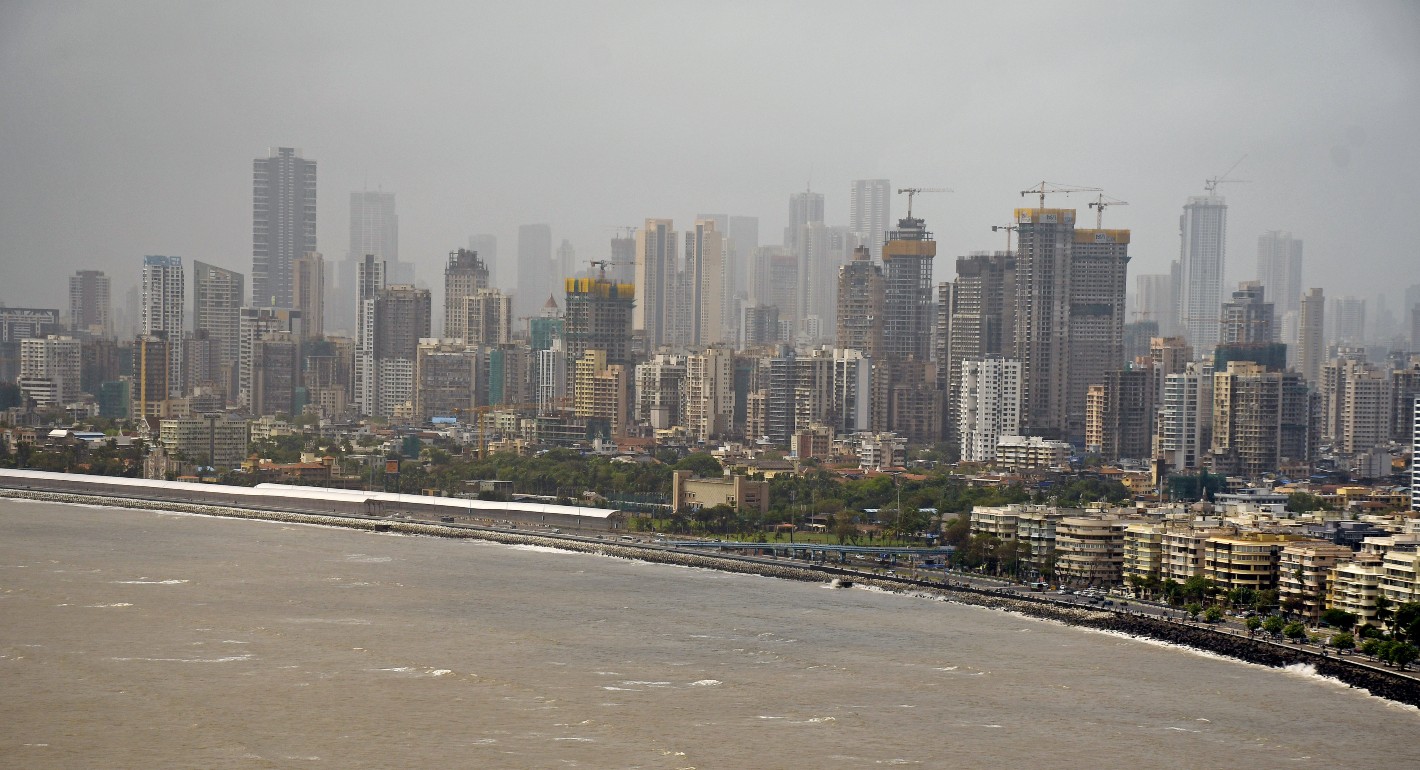
As India undergoes a demographic transition, its cities will be its economic powerhouse—but only if it accurately captures city growth and empowers cities to support their citizens.
Apoorva Jadhav