

In The Media
Vikram Nehru
{
  "authors": [
    "Vikram Nehru"
  ],
  "type": "legacyinthemedia",
  "centerAffiliationAll": "dc",
  "centers": [
    "Carnegie Endowment for International Peace"
  ],
  "collections": [],
  "englishNewsletterAll": "asia",
  "nonEnglishNewsletterAll": "",
  "primaryCenter": "Carnegie Endowment for International Peace",
  "programAffiliation": "AP",
  "programs": [
    "Asia"
  ],
  "projects": [],
  "regions": [
    "Southeast Asia",
    "Myanmar"
  ],
  "topics": [
    "Economy"
  ]
}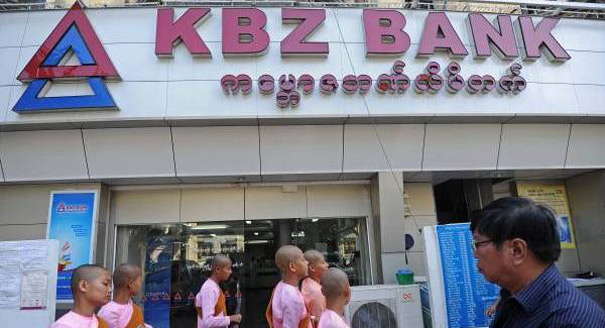
Source: Getty
Opening its financial system to foreign participation can bring many benefits to Myanmar, but a phased approach would be better than rapidly opening the floodgates to foreign investment in banking.
Source: Nikkei Asian Review
Myanmar is considering opening its doors to foreign banks as part of its ambitious plans to overhaul the financial sector. That is terrific news.
More worrying is that some of these banks are pressing for immediate majority foreign ownership in retail banking. There may be a time for that, but it is not now. Instead, Myanmar should cautiously encourage overseas involvement in its banking sector, and allow the banks to expand in phases.
Currently, foreign banks can only have representative offices in Myanmar. The law on financial institutions forbids foreign investment in domestic banks. Virtually all foreign investors and traders use overseas banks to finance operations in Myanmar. While this could continue, it obviously impedes foreign investment into the country and prevents state-of-the-art financial services from entering Myanmar's financial system. Many private domestic banks are keen to partner with their foreign counterparts to gain access to new technology, training, finance, external retail branch networks and better management. But they are not so keen to see big outsiders dominate the sector.International evidence shows that foreign investment in banking can offer important benefits, but also introduce risks. The presence of foreign banks can help build a more robust and efficient banking system by introducing international practices and standards, enhancing the quality, efficiency and breadth of financial services, and providing access to more stable sources of funds. These benefits can be substantial, provided the regulatory and institutional framework for the financial system is strong. If the framework is weak, however, the benefits and costs of foreign investment in banking depend on how it is phased in and whether it is accompanied by other reforms.
Countries that have successfully opened up to foreign banking did so only after they had well-developed institutions and were already deregulating their financial systems. These have tended to be advanced economies such as Argentina, Spain, Ireland, and Portugal. There are no examples of low-income countries that have successfully opened their banks to foreign ownership in the absence of numerous restrictions.
Myanmar's policymakers may wish to heed this evidence and err on the side of caution when considering the entry of foreign banks. The country's institutional infrastructure and regulatory framework remain weak and will take years to strengthen. Premature entry of foreign banks into retail banking may lead to a rapid shift in the depositor base from domestic banks to new foreign entrants, placing domestic banks at risk of financial distress and posing a threat to the solvency of the entire domestic financial system.
That does not mean, however, that foreign investment in banking should be discouraged. On the contrary, the authorities should encourage domestic banks to pursue strategic partnerships and joint ventures with foreign banks. Some deals may involve accepting minority foreign ownership in an existing domestic bank. In others, a joint-venture bank could be established from scratch.
It is possible that in the first few years of liberalization, foreign banks will be reluctant to be minority shareholders in a Myanmar bank. But with further stabilization and reform of the banking system, foreign interest in joint ventures will increase. In the meantime, the government should contract foreign banks to provide technical assistance and training to Myanmar's bank personnel and management. Later, when the regulatory and institutional framework is firmly in place, and domestic banks are financially sound, policymakers may consider licensing majority foreign-owned bank operations in the country.
Another option would be to allow full foreign ownership of two or three banks immediately, but to restrict their operations to servicing the foreign investor community and bar them from retail banking. If Myanmar's policymakers choose this option, they should be aware of the risks posed by foreign subsidiary banks if their parent companies experience financial stress.
The growing complexity and interconnectedness of financial institutions, coupled with the lack of effective cross-border resolution regimes, tend to compromise the ability of host countries to cope with the failure of large international banks. Using technical assistance from the International Monetary Fund, the authorities should only accept those foreign banks that guard against such risks by improving their capital and liquidity buffers, delineating between their assets and liabilities and those of their foreign parents, and clearly ring-fencing capital and assets within Myanmar.
Myanmar's policymakers are being bold in considering foreign investment in banking. This boldness is encouraging. At the same time, they should also be aware of systemic risks that may arise from moving too fast. Building public confidence in the stability of Myanmar's banks will be a gradual process. The direction of change should be clear, but the pace of change should be calibrated to the robustness of the banking system itself.
This is not the time to open the floodgates to foreign investment in banking. A phased approach would be best: Initially allow joint ventures or strategic partnerships with domestic banks. Permit a maximum of two or three foreign-owned banks in to serve foreign investors only, and only those that insulate themselves against risks of contagion from their parent banks. Only when the financial system has matured and the regulatory arrangements are tried and tested, will it be appropriate to invite full foreign ownership in retail banking.
This article originally appeared in the Nikkei Asian Review.
Former Nonresident Senior Fellow, Asia Program
Nehru was a nonresident senior fellow in the Carnegie Asia Program. An expert on development economics, growth, poverty reduction, debt sustainability, governance, and the performance and prospects of East Asia, his research focuses on the economic, political, and strategic issues confronting Asia, particularly Southeast Asia.
Recent Work
Vikram Nehru
Vikram Nehru
Carnegie does not take institutional positions on public policy issues; the views represented herein are those of the author(s) and do not necessarily reflect the views of Carnegie, its staff, or its trustees.

The Plaza Accord was not an externally imposed punishment of Japan but part of a broader restructuring that Japanese economists and policymakers themselves recognized was necessary. Its effects were undermined, however, when Tokyo responded to the resulting slowdown with policies that exacerbated investment, credit expansion, and the very imbalances the adjustment was intended to resolve.

Michael Pettis

A summer of escalation in the Black Sea has hurt Ukraine economically and is exacerbating world food security. A truce is needed—as is a broader reframing of Europe’s Ukraine strategy.

Thomas de Waal

The Bureau of Industry and Security needs to adjust its focus and practices to maintain its position as the U.S. government’s primary champion of international technological competition.

Geoffrey Irving

Depleted financial reserves and a shrinking tax base mean it is no longer possible to simultaneously deliver high defense spending, price stability, and economic growth.

Alexandra Prokopenko

U.S. trading partners in Asia are closely watching the dispute for signs of how it may affect their own interests.

Barbara Weisel