

Commentary
Marc Pierini
{
  "authors": [
    "Marc Pierini"
  ],
  "type": "legacyinthemedia",
  "centerAffiliationAll": "dc",
  "centers": [
    "Carnegie Endowment for International Peace",
    "Carnegie Europe",
    "Malcolm H. Kerr Carnegie Middle East Center"
  ],
  "collections": [
    "Europe’s Southern Neighborhood"
  ],
  "englishNewsletterAll": "ctw",
  "nonEnglishNewsletterAll": "",
  "primaryCenter": "Carnegie Europe",
  "programAffiliation": "EP",
  "programs": [
    "Europe"
  ],
  "projects": [],
  "regions": [
    "Middle East",
    "Europe",
    "Gulf",
    "Levant",
    "Iraq",
    "Syria",
    "Western Europe",
    "Iran"
  ],
  "topics": [
    "Foreign Policy",
    "Security"
  ]
}
Source: Getty
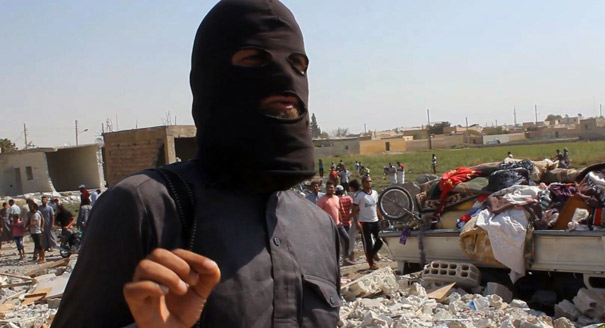
What can the EU do to prevent its citizens from leaving for Syria and Iraq to join the Islamic State and becoming a domestic threat once they return to European soil?
Source: euronews
Speaking to on the Frontline on euronews, Marc Pierini was asked what he believes Europe should do to stop more of its citizens from joining militant groups, including the Islamic State (IS), in Syria and Iraq, and how unified the EU’s strategy is to deal with foreign fighters if and when they return home.“The majority of the young people going to Syria are from poor neighborhoods, school dropouts, [with] no job and vague, very vague religious indoctrination,” Pierini said when asked if Europe should prevent people from being recruited to IS.
Pierini argues that Europe has not been inactive on this matter and has in fact been working on counterterrorism measures for a year. But, he says, the EU needs to do more, from reinforcing counterterrorism cooperation within the EU and with Turkey to strengthening the Schengen system within Europe.

Senior Fellow, Carnegie Europe
Marc Pierini is a senior fellow at Carnegie Europe, where his research focuses on developments in the Middle East and Turkey from a European perspective.
Recent Work
Marc Pierini
Marc Pierini
Carnegie does not take institutional positions on public policy issues; the views represented herein are those of the author(s) and do not necessarily reflect the views of Carnegie, its staff, or its trustees.
As the U.S.-led Coalition withdraws, the Kurds’ reliance on Baghdad, and on themselves, will only increase.
Wladimir van Wilgenburg

The acknowledgment has sparked fears of a new arms race with China and Russia.

Chris O’Meara
Smaller powers cannot go it alone, but Canadian history shows that integration with the United States will not always be benign.
Paul Samson

The European Commissioner for Trade is headed to China. But after President Xi’s bridge-building visit to Washington, can a more isolated EU overcome Beijing’s stranglehold on critical raw materials? Who will blink first?

Rym Momtaz, ed.

The summit may be remembered as a fatal blunder, when Washington, Beijing, and the AI industry collectively chose ceremony over action.

Jeffrey Prescott