

Article
C. Raja Mohan, Darshana M. Baruah
{
  "authors": [
    "C. Raja Mohan"
  ],
  "type": "legacyinthemedia",
  "centerAffiliationAll": "dc",
  "centers": [
    "Carnegie Endowment for International Peace",
    "Carnegie India"
  ],
  "collections": [],
  "englishNewsletterAll": "ctw",
  "nonEnglishNewsletterAll": "",
  "primaryCenter": "Carnegie India",
  "programAffiliation": "SAP",
  "programs": [
    "South Asia"
  ],
  "projects": [],
  "regions": [
    "South Asia",
    "India"
  ],
  "topics": []
}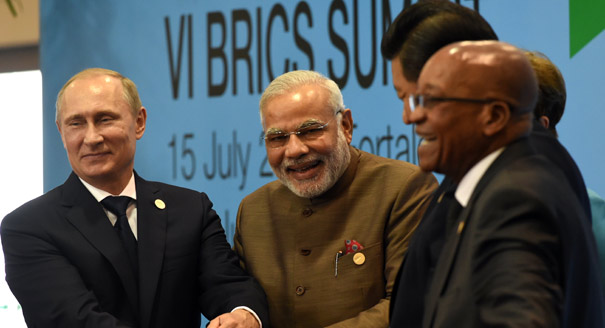
Source: Getty
As Russia embraces China to relieve the pressures from the West, India’s room for geopolitical maneuver in Asia and beyond is bound to shrink.
Source: Indian Express
The extended crisis in Ukraine and the growing tension between Russia and the West are likely to pose a major challenge for India’s foreign policy. As Russia embraces China to relieve the pressures from the West, India’s room for geopolitical manoeuvre in Asia and beyond is bound to shrink.
For nearly half a century, New Delhi’s strategic partnership with Moscow has survived many twists and turns, including the collapse of the Soviet Union. Much like China’s ties with Pakistan, India’s relations with Russia seemed to constitute an all-weather partnership. One big factor cementing Delhi’s ties with Moscow over the decades was their common apprehension about China, which shares long borders with both India and Russia. India and Russia have both fought limited border wars with China. Although India and Russia began to normalise bilateral relations with China in the 1980s, they remained wary about Beijing and its strategic intentions. The rapid rise of Chinese power relative to Russia and India over the last two decades suggested Moscow and Delhi needed each other even more today in securing a stable Asian balance of power.
The significant expansion of Russia’s economic, security and political ties with China, however, begin to pose a problem for India. For, the Sino-Russian partnership is becoming a lot thicker than that between India and Russia. Even in the defence domain, where Russia once privileged relations with India, China is rapidly becoming an important partner for Moscow. It is no surprise, then, that Delhi looks the odd man in the much-celebrated eastern strategic triangle involving Russia, China and India.When he met visiting Chinese Premier Li Keqiang in Moscow this week, Russian President Vladimir Putin declared that Russia and China were “natural partners, natural allies and neighbours”. Realists might quibble with the formulation by saying that large neighbours find it very difficult to be allies.
Those familiar with the history of Sino-Russian relations would agree. They recall the fact that Russia’s Joseph Stalin and China’s Mao Zedong announced a military alliance in 1950. Despite the shared ideology of communism and hostility towards the West, Russia and China fell apart by the late 1950s. The Sino-Soviet rift coincided with the conflict between India and China, and helped define Delhi’s strategic partnership with Moscow.
If the logic of realpolitik should limit the depth of Sino-Russian partnership at the current moment, America and Europe appear determined to push Moscow into the arms of Beijing. In Moscow, there is deep resentment that America failed to offer Russia an honourable peace at the end of the Cold War. When Putin took charge of Russia in 2000, he sought strong ties with China as part of an effort to construct a multipolar world and improve Moscow’s leverage with the US. What began as Moscow’s manoeuvre for position a decade and a half ago now looks to be a strategic choice to align with Beijing amidst Western attempts to isolate and punish Russia over Ukraine.
It does not matter who or what is responsible for post-Soviet Russia’s alienation from the West and alignment with China. What matters for India are the multiple negative implications of this power shift.
The conflict between Russia and America in the Cold War severely limited India’s foreign policy choices. Normal relations between Moscow and Washington allowed India to pursue good relations with both over the last quarter of a century. If Russia and America fail to reset their relations quickly, India will be compelled by both sides to make difficult political choices. Until now, India has avoided making those choices. On Ukraine, for example, Delhi neither criticised nor endorsed Russia’s annexation of Crimea and its legitimation of it through a referendum.
As Russia and China draw closer, they are bound to put more pressure on India to back their positions at multilateral forums like the BRICS and the United Nations on a range of global issues. Delhi also knows that Beijing is now the senior partner to Moscow, and that the alliance with Russia will end up improving China’s bargaining power with the US.
Delhi can neither turn hostile towards Moscow by aligning with Washington nor become a junior partner to the unfolding Sino-Russian alliance. India must pursue good relations with Russia, Europe and America, with each on its own merit. Keeping these in separate compartments and having a clear sense of India’s own interests will be the new challenges in Delhi’s engagement with great powers.
Former Nonresident Senior Fellow, Carnegie India
A leading analyst of India’s foreign policy, Mohan is also an expert on South Asian security, great-power relations in Asia, and arms control.
Recent Work

C. Raja Mohan, Darshana M. Baruah


Alexander Gabuev, Paul Haenle, C. Raja Mohan, …
Carnegie does not take institutional positions on public policy issues; the views represented herein are those of the author(s) and do not necessarily reflect the views of Carnegie, its staff, or its trustees.

With the growth in points of friction between the great powers, organizations like the SCO will continue to play a role in the strategic adaptation of the smaller powers caught between them.

Temur Umarov
Xi, Putin, and other regional leaders are back-slapping in Bishkek, but the SCO has yet to answer the most serious questions about continental Asia's economic future.

Evan A. Feigenbaum

In any defense establishment, change is an ongoing process. However, despite the best of intentions, existing bureaucracies, bound by habit and years of socialization, have their limits in implementing transformative change.

Anit Mukherjee

As AI grows more sophisticated, as the supply chains that power it become more contested, and as access to frontier models becomes geopolitically charged, India must begin to ask a different set of questions. Not what applications it can build on someone else’s infrastructure but what the world needs.

Konark Bhandari
As India undergoes a demographic transition, its cities will be its economic powerhouse—but only if it accurately captures city growth and empowers cities to support their citizens.
Apoorva Jadhav