

Q&A
- +1
Amr Hamzawy, Andrew Leber, Eric Lob, …
{
  "authors": [
    "Marwan Muasher"
  ],
  "type": "legacyinthemedia",
  "centerAffiliationAll": "dc",
  "centers": [
    "Carnegie Endowment for International Peace",
    "Malcolm H. Kerr Carnegie Middle East Center"
  ],
  "collections": [],
  "englishNewsletterAll": "menaTransitions",
  "nonEnglishNewsletterAll": "",
  "primaryCenter": "Carnegie Endowment for International Peace",
  "programAffiliation": "MEP",
  "programs": [
    "Middle East"
  ],
  "projects": [],
  "regions": [
    "Middle East",
    "Jordan",
    "Levant"
  ],
  "topics": [
    "Security",
    "Civil Society"
  ]
}
Source: Getty
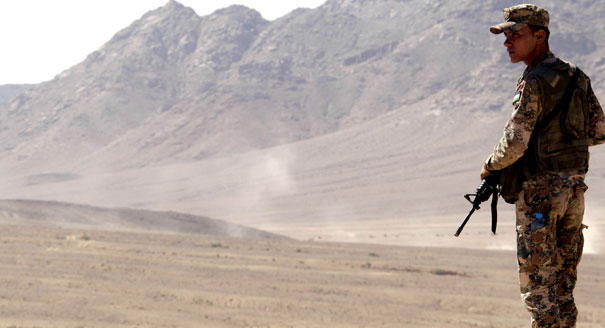
Jordan’s participation in the fight against the Islamic State, particularly outside its borders, is problematic to some Jordanians. With the pilot hostage situation, the government is caught between two very bad situations.
Source: CNN International
“Jordan’s participation in the fight against ISIS, particularly outside its borders, is problematic to some Jordanians,” said Carnegie’s Marwan Muasher, speaking on CNN International. “The government is caught between two very bad situations.” The specter of the pilot being, for example, killed on TV is going to be a major development in Jordanian domestic politics, Muasher said, and it’s not going to be taken lightly by many Jordanians who do not feel that they’re part of this fight. “I think that’s one of the main reasons the government is interested in getting the pilot out,” he added.
“I think unfortunately, both the West and Arab countries are looking at the problem from a purely military perspective,” Muasher argued. “There’s no question in my mind that the fight against ISIS cannot be limited to the military arena only…stability should come through reform and not have a policy of stability over reform.”

Vice President for Studies
Marwan Muasher is vice president for studies at Carnegie, where he oversees research in Washington and Beirut on the Middle East. Muasher served as foreign minister (2002–2004) and deputy prime minister (2004–2005) of Jordan, and his career has spanned the areas of diplomacy, development, civil society, and communications.
Recent Work



Amr Hamzawy, Andrew Leber, Eric Lob, …
Marwan Muasher
Carnegie does not take institutional positions on public policy issues; the views represented herein are those of the author(s) and do not necessarily reflect the views of Carnegie, its staff, or its trustees.

Despite public disputes over trade and immigration, the strategic partnership’s foundations remain sturdy.

Sameer Lalwani
It signals a new era of tech diffusion and warfare.

Steve Feldstein

With its public finances in shambles, the far right polling at 35 percent ahead of the 2027 presidential election, and a growing protest movement, is France’s crisis a threat to the EU’s geopolitical awakening?

Rym Momtaz, ed.

Russia’s AI-driven propaganda campaigns operate in a fragmented, chaotic, and often illogical manner. That’s not necessarily a problem for the Kremlin, though: It’s much easier to mimic genuine public debate that way.

Ilya Klishin

Despite its flop at the box office, the film raises important questions for the climate community to answer.
Leonardo Martinez-Diaz