

Paper
Ariel (Eli) Levite, Toby Dalton
{
  "authors": [
    "Ariel (Eli) Levite"
  ],
  "type": "legacyinthemedia",
  "centerAffiliationAll": "dc",
  "centers": [
    "Carnegie Endowment for International Peace",
    "Malcolm H. Kerr Carnegie Middle East Center"
  ],
  "collections": [
    "Iranian Proliferation",
    "U.S. Nuclear Policy"
  ],
  "englishNewsletterAll": "ctw",
  "nonEnglishNewsletterAll": "",
  "primaryCenter": "Carnegie Endowment for International Peace",
  "programAffiliation": "NPP",
  "programs": [
    "Nuclear Policy"
  ],
  "projects": [],
  "regions": [
    "North America",
    "United States",
    "Middle East",
    "Iran"
  ],
  "topics": [
    "Political Reform",
    "Security",
    "Nuclear Policy"
  ]
}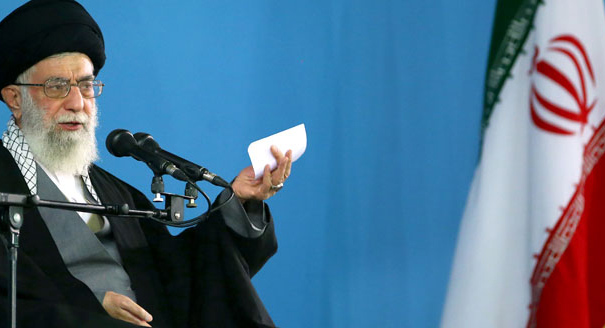
Source: Getty
Iranian Supreme Leader Ayatollah Ali Khamenei continues to procrastinate because he hopes to tactically leverage U.S. President Barack Obama’s eagerness for a deal into even better terms.
Source: Arms Control Today
The negotiations on Iran’s nuclear program have been extended again, removing any remaining doubts that, after 18 months of intense negotiations, the key to obtaining a comprehensive agreement still hinges on finding clever, new technical solutions to bridge the remaining disagreements between the parties.The contours of an achievable deal now seem clear. The United States and its P5+1 partners (China, France, Germany, Russia, and the United Kingdom) have gone very far to accommodate Iran’s preferred terms regarding enrichment capability and gradual sanctions relief.
Yet, Iranian Supreme Leader Ayatollah Ali Khamenei continues to procrastinate because he hopes to tactically leverage U.S. President Barack Obama’s eagerness for a deal into even better terms or he remains strategically uncertain that his regime can survive the political transformation such a deal might introduce. Either way, although negotiations will linger for some additional months, the United States must move on...
Read the full article in Arms Control Today, Vol. 45: No.1, January/February 2015.
Senior Fellow, Nuclear Policy Program, Technology and International Affairs Program
Levite was the principal deputy director general for policy at the Israeli Atomic Energy Commission from 2002 to 2007.
Recent Work

Ariel (Eli) Levite, Toby Dalton
Ariel (Eli) Levite, Toby Dalton
Carnegie does not take institutional positions on public policy issues; the views represented herein are those of the author(s) and do not necessarily reflect the views of Carnegie, its staff, or its trustees.
The truth of the strategic situation is that Europe and Russia are extremely unlikely to be able to “turn the page” on their confrontation within the next two decades.
Arkady Moshes

Despite public disputes over trade and immigration, the strategic partnership’s foundations remain sturdy.

Sameer Lalwani

It signals a new era of tech diffusion and warfare.

Steve Feldstein

With its public finances in shambles, the far right polling at 35 percent ahead of the 2027 presidential election, and a growing protest movement, is France’s crisis a threat to the EU’s geopolitical awakening?

Rym Momtaz, ed.

Putin’s conservative staffing policies and search for ever greater control have cemented parliament’s transformation into a bureaucratic appendage of the executive branch.

Andrey Pertsev