

Commentary
The real test may come after the leaders leave the room.
- +1
Sheena Chestnut Greitens, Oriana Skylar Mastro, Yukon Huang, …
{
  "authors": [
    "Duyeon Kim",
    "Fred F. McGoldrick",
    "Robert Einhorn",
    "James L. Tyson"
  ],
  "type": "other",
  "centerAffiliationAll": "dc",
  "centers": [
    "Carnegie Endowment for International Peace"
  ],
  "collections": [
    "U.S. Nuclear Policy",
    "Korean Peninsula"
  ],
  "englishNewsletterAll": "asia",
  "nonEnglishNewsletterAll": "",
  "primaryCenter": "Carnegie Endowment for International Peace",
  "programAffiliation": "AP",
  "programs": [
    "Asia",
    "Nuclear Policy"
  ],
  "projects": [],
  "regions": [
    "North America",
    "United States",
    "East Asia",
    "South Korea"
  ],
  "topics": [
    "Nuclear Policy",
    "Arms Control",
    "Nuclear Energy"
  ]
}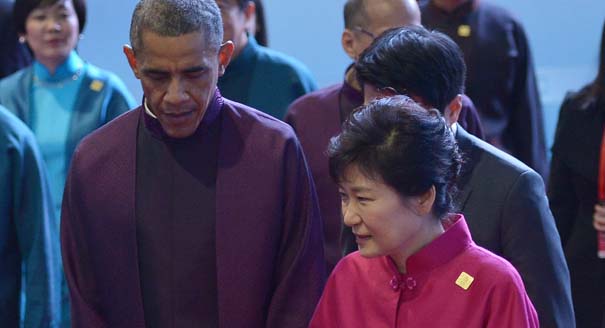
Source: Getty
The projected growth in the use of nuclear power worldwide creates new opportunities for deepening and expanding existing U.S.-South Korean collaboration to promote the civil uses of nuclear energy in third countries. This expansion can build on the cooperation that is already taking place.
Source: Brookings Institution
The United States and the Republic of Korea (ROK) have enjoyed a lengthy and fruitful bilateral cooperative relationship in the peaceful uses of nuclear energy and in promoting mutual nuclear nonproliferation objectives. This Brookings Institution report assesses the prospects for further ROK-U.S. collaboration on civil nuclear projects and nuclear nonproliferation, safety and security—in particular, those efforts which would involve third countries.The United States has long been a major exporter of nuclear materials, equipment and technology. South Korea has recently entered the international nuclear market—for example, it has sold nuclear reactors to the United Arab Emirates (UAE)—and is positioning itself to become a leading supplier of nuclear reactors, components, and services to other countries. The nuclear industries of both countries are already closely intertwined.
The projected growth in the use of nuclear power worldwide creates new opportunities for deepening and expanding existing U.S.-ROK collaboration to promote the civil uses of nuclear energy in third countries. This expansion can build on the cooperation that is already taking place. For example, American companies are participating in the South Korean-led nuclear project in the UAE, and South Korean firms are significant suppliers to Westinghouse AP1000 reactors that are under construction in China. The governments and nuclear industries of both the United States and the ROK also have a strong mutual interest in ensuring that their cooperation in transferring nuclear materials, equipment and technology to third countries is subject to the strictest safety, security and nonproliferation standards.
The conclusion of a new ROK-U.S. civil nuclear cooperation agreement, which is expected soon, should help enhance nuclear commerce and intergovernmental collaboration between the two countries, and promote the development of partnerships between their industries in third markets.

Former Associate, Nuclear Policy Program, Asia Program
Kim is an expert on nuclear nonproliferation, diplomacy, and Northeast Asia.
Fred F. McGoldrick
Robert Einhorn
James L. Tyson
Carnegie does not take institutional positions on public policy issues; the views represented herein are those of the author(s) and do not necessarily reflect the views of Carnegie, its staff, or its trustees.
The real test may come after the leaders leave the room.



Sheena Chestnut Greitens, Oriana Skylar Mastro, Yukon Huang, …

The new U.S.–Denmark–Greenland agreement will help Washington exert political, economic, and financial dominance under the guise of security. Yet, it acknowledged Copenhagen’s and Nuuk’s sovereignty on the island.

Marc Pierini

The nuclear relationship between China and the United States is increasingly shaped by widening perception gaps rather than deliberate strategic design.

Tong Zhao
Washington needs to recognize that influence in the Western Hemisphere comes from presence, delivery, and reliability. It also must recognize that while the United States remains the key external actor, it no longer operates in a permissive environment and cannot presume deference from regional players who have other options, namely China.
Juan S. Gonzalez

Minsk clearly expected the dialogue with Washington to yield more results, in particular the lifting of EU sanctions and permission to export potash.

Artyom Shraibman