

Paper
Yezid Sayigh
{
  "authors": [
    "Yezid Sayigh"
  ],
  "type": "legacyinthemedia",
  "centerAffiliationAll": "dc",
  "centers": [
    "Carnegie Endowment for International Peace",
    "Malcolm H. Kerr Carnegie Middle East Center"
  ],
  "collections": [],
  "englishNewsletterAll": "menaTransitions",
  "nonEnglishNewsletterAll": "",
  "primaryCenter": "Malcolm H. Kerr Carnegie Middle East Center",
  "programAffiliation": "MEP",
  "programs": [
    "Middle East"
  ],
  "projects": [],
  "regions": [
    "Levant",
    "Syria",
    "Middle East"
  ],
  "topics": [
    "Security"
  ]
}
Source: Getty
If Syrian rebels are to make political headway with wider social constituencies, they will have to demonstrate a far higher level of military coordination, political skills, and administrative capacity.
Source: Al-Hayat
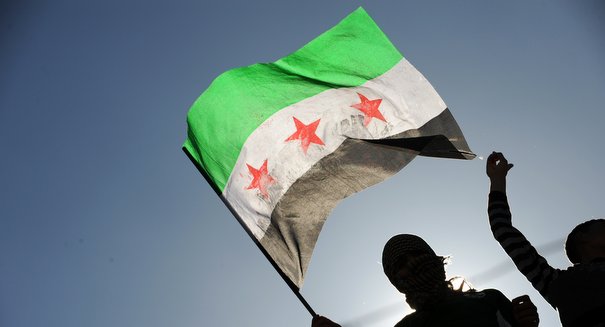
Recent battlefield gains by rebel forces opposed to the regime of Syrian President Bashar al-Assad have again prompted predictions that his fall is imminent. But although the rebels are likely to make further significant advances in coming months – especially in Daraa in the south, and possibly in Aleppo in the north – the challenges facing them will actually increase with every gain. As the territory and population coming under their control grow, they will have to demonstrate a far higher level than they have so far of military coordination, political skills, and administrative capacity. Unless the rebels and their external backers anticipate and prepare for this effectively, the Syrian conflict could settle once more into stalemate.
Militarily, the withdrawal of regime forces on some fronts allows them to shorten their lines of supply and communication and establish new frontlines that may be easier to defend. The regime appears to be deliberately contracting its zone of control, focusing it on heavily built up and densely populated areas where some 50-60 percent of Syria’s population still live. The administrative and economic burden of maintaining basic services and food supply will strain the regime severely, deepening the social and political pressures on it internally and placing its longer term future in severe doubt. But in the meantime, the going will become harder for the rebels as they attempt to advance from areas where they have the advantage, including around Aleppo and Daraa, into the regime’s remaining zone of control.
The real challenge facing Syria’s rebels, however, is social and political. They have mainly fought on home ground so far, in rural and urban migration areas inhabited by local populations largely sympathetic to them. The rebels have yet to transition from fighting in and for villages, larger towns, and some provincial cities that represent their natural social base: Sunni, Arab, and rural or of recent rural origin. Their relative social homogeneity is what has enabled the badly outgunned, poorly trained, and disunited rebels to survive and eventually to cohere and expand within their home provinces, but from now on they will encounter populations that are considerably different in their sectarian, class, and urban socio-cultural diversity. Gaining their active support or at least ensuring their neutrality and compliance requires political skills and an administrative capability to govern urban areas that the rebels have not yet shown.The rebels enjoy a significant advantage in the extent and breadth of opposition to the Assad regime among Syrians. Even those who fear a rebel takeover have little genuine liking for the regime. But the rebels cannot cross the rural-urban and class or sectarian barriers without demonstrating an ability to build credible, broad and politically diverse coalitions. The Syrian opposition’s various umbrella frameworks and factions – both those in exile represented by the National Coalition, and those inside Syria – have become too marginal and discredited to play this kind of bridge-building role. By way of historical contrast, the victorious entry of the Cuban rebels led by Fidel Castro to the capital Havana in 1959 was only made possible by the uprising of organized labour, the Communist Party, and large parts of the urban middle classes. This will not happen in Syria.
If they are to make political headway with wider social constituencies – or receive the increased levels of external assistance they will badly need – Syria’s rebels will have to address three main concerns. The first is to provide security. Their rudimentary policing and provision of shari’a-based justice has been barely adequate in opposition areas, where needs are relatively simple. Protecting lives and property from revenge attacks and looting in urban areas inhabited by socially diverse and politically hostile or uncommitted populations requires much greater unity and discipline, and poses a much greater challenge. Failure in one location would make the battle for another that much harder, and increase the social and economic costs of reconciliation and reconstruction in the longer term.
Second, both the rebels and the administrative councils and relief organizations of the opposition will have to prove their ability to deliver services for a growing number of people coming under their control. This will increasingly include internally displaced persons concentrated in larger towns and cities, who are especially vulnerable and needy, and urban populations that are generally dependent on rural areas or external markets for food supply. Increased need for food, fuel, and medical supplies in the coming autumn and winter makes a considerable expansion of administrative capacity vital, but this depends on higher levels of political coordination across the opposition spectrum. But relations between the provisional government of the National Coalition based in Gaziantep in southeast Turkey – currently on the verge of financial bankruptcy – and the rebel groups are poor in the north of Syria and virtually non-existent in the south.
Third, neither the rebels nor the opposition and its local administrative councils generally have constructed a large-scale public financial system or engaged in anything approaching regional (let alone national) economic management – or really had to. On one hand, most rebel groups survive on taxing the movement of vehicles and goods at border crossings with neighboring countries or at checkpoints between areas of rival regime or Islamic State control, and on external funding. On the other hand, economic management has been left to rural communities that can largely provide their own basic needs and to urban ones that receive remittances flows and international assistance from abroad and residual regime services and salaries. But these flows are unlikely to expand sufficiently to meet rapidly growing new needs, nor will laissez-faire financial and economic management suffice should the rebels fulfil their ambitions of breaking into major regime-held areas.
In reality, these challenges are still a long way off. The regime is on a declining trend, but all it needs do in the coming period is not lose. Furthermore, the situation is complicated by the looming presence of the Islamic State, which is poised to take the advantage should the regime’s weakening offer opportunities to seize new ground and population centers. Its threat constrains the rebel’s options, and slows their potential advance.
This may be good news. It compels Syria’s rebels to focus on preparing to meet the coming challenges and on laying political foundations for a broader front. It also confronts their regional backers, who have only recently been able to harmonize their efforts to support relatively small coalitions of Islamist rebels in the north and nationalist rebels in the south, with the need to operate at a much higher level of political coordination and sophistication and to commit financial assistance and technical support for administrative and economic governance on a much larger scale.
A few rebel groupings have shown awareness of these coming needs. The Southern Front, for example, has published a blueprint for the restoration of a functioning state, and some political opposition bodies have presented their own proposals for governing transition in Syria. The ongoing effort by the Gulf Cooperation Council to bring the opposition together in a broad front is another necessary step in the right direction. But all this still falls short of the level of political coalition-building that must extend across the current dividing line of the Syrian conflict, and of the scale of political and material investment in constructing the means to manage what will inevitably be an enormously complex and costly transition. Until then, and unless a diplomatic bargain is reached that ends the armed conflict in the meantime, Syria will slip back into a long, mutually hurting strategic stalemate.
This article was originally published in Arabic by Al-Hayat.

Senior Fellow, Malcolm H. Kerr Carnegie Middle East Center
Yezid Sayigh is a senior fellow at the Malcolm H. Kerr Carnegie Middle East Center in Beirut, where he leads the program on Civil-Military Relations in Arab States (CMRAS). His work focuses on the comparative political and economic roles of Arab armed forces, the impact of war on states and societies, the politics of postconflict reconstruction and security sector transformation in Arab transitions, and authoritarian resurgence.
Recent Work
Yezid Sayigh
Yezid Sayigh
Carnegie does not take institutional positions on public policy issues; the views represented herein are those of the author(s) and do not necessarily reflect the views of Carnegie, its staff, or its trustees.

The Horn of Africa countries are among those facing a new security calculus.


Andrew Leber, Lesley Anne Warner

The European far right might fail to steer EU policy in the direction Russia wants, but they will create enough chaos inside Europe to benefit the Kremlin.

Dimitar Bechev

The new U.S.–Denmark–Greenland agreement will help Washington exert political, economic, and financial dominance under the guise of security. Yet, it acknowledged Copenhagen’s and Nuuk’s sovereignty on the island.

Marc Pierini

A summer of escalation in the Black Sea has hurt Ukraine economically and is exacerbating world food security. A truce is needed—as is a broader reframing of Europe’s Ukraine strategy.

Thomas de Waal

As the U.S. stumbles in its war with Iran, we are likely to see an acceleration of its disengagement from the region.

Michael Young