

Other
- +18
James M. Acton, Saskia Brechenmacher, Cecily Brewer, …
{
  "authors": [
    "Marc Pierini"
  ],
  "type": "legacyinthemedia",
  "centerAffiliationAll": "dc",
  "centers": [
    "Carnegie Endowment for International Peace",
    "Carnegie Europe",
    "Malcolm H. Kerr Carnegie Middle East Center"
  ],
  "collections": [
    "Turkey’s Transformation"
  ],
  "englishNewsletterAll": "ctw",
  "nonEnglishNewsletterAll": "",
  "primaryCenter": "Carnegie Europe",
  "programAffiliation": "EP",
  "programs": [
    "Europe"
  ],
  "projects": [],
  "regions": [
    "Europe",
    "Türkiye",
    "Western Europe",
    "Iran"
  ],
  "topics": [
    "Foreign Policy",
    "Political Reform"
  ]
}
Source: Getty
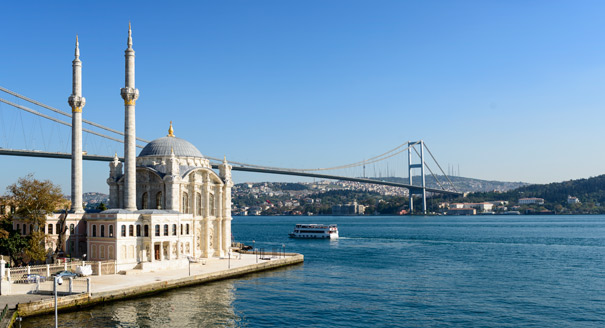
With the Turkish electorate overwhelmingly rejecting Erdogan’s hyperpresidential style of politics, is it safe to say that Turkey is moving closer to the European Union?
Source: Hürriyet Daily News
Directly or indirectly, the legislative elections illustrated the cycles of hope and despair in the Turkey-EU relationship.
Take the campaign first: in many ways, the campaign was as far away from EU political practice as one could imagine: extreme polarization, violence and deaths, direct attacks on journalists, demonization of the Peoples’ Democratic Party (HDP), anti-Western narrative, the ruling party’s disproportionate access to public media, a proposal for a one-man-rule system without real checks and balances.
Take June 7 voting operations and ballot counting: The day unfolded according to EU democratic standards, with a remarkable display of dignity by the voters and a massive civic mobilization.Take the initial results: After a campaign geared at maintaining the Justice and Development Party’s (AKP) 12-year single rule and introducing a super-executive presidential regime, a democratic vote led to the exact opposite results. According to provisional numbers, 41 percent voted for the AKP and 59 percent for their opponents. This is both an abrupt re-balancing of the political landscape and a loud “no” to the prospect of a presidential regime. The overall political reality looks like most elections in EU countries: Dominant political forces are not single-handedly in power forever, and their ideas cannot prevail when a substantial majority of citizens disagree with them. Turkey has returned to a nationally nurtured political normalcy.
In addition, the newcomer in the political game, the HDP, is a political party with a truly European outlook: It has a man and woman as co-chairs (like green parties in the EU), the highest proportion of female deputies, an environmental policy, while entertaining the demands of minority groups and defending a clear democratic orientation.
Will a post-election Turkey be closer to the EU or not? This can only be answered on the basis of a number of hypotheses.
The over-arching hypothesis from an EU standpoint is whether the country will implement its constitution. When roughly three in five voters reject the proposed super-presidential system, it leaves no doubt that the nation’s will is a parliamentary system with checks and balances. The expectation of Turkey’s Western partners is quite clearly that its democratically-elected president acknowledges this equally democratically-expressed preference.
The next hypothesis is whether the rule-of-law and fundamental freedoms, including freedom of the media, will be reinstated as a priority of the next government. During the past 18 months, Turkey has backslid so much with respect to the EU political criteria that it cannot be seen as “sufficiently fulfilling” these conditions. A government program clearly reversing the current state of affairs (e.g. swiftly dropping politically-motivated cases against journalists and prosecutors and reforming the higher council of judges of prosecutors) would take post-election Turkey much closer to the EU.
A certainty, not a hypothesis, is that Turkey depends heavily on EU direct investment for its growth. EU financial circles expect Turkey to reinstate the smart economic policy that once was the AKP’s hallmark, i.e. to restore the Central Bank’s independence, do away with a populist but suicidal cheap money policy and reassure investors with a fully independent judiciary. This may sound obvious, but the electoral campaign’s damage needs fixing.
Another hypothesis lies with the attitude of the next government with regard to Turkey’s Western anchor. Clarifying as a matter of urgency Ankara’s attitude with respect to the Islamic State of Iraq and the Levant (ISIL) – e.g. a leap forward in both military and counter-terrorism cooperation – will be a litmus test for a country which is currently under NATO’s safe umbrella. Similarly, if the future government provides resolute support to a comprehensive solution of the Cyprus question, normalizes diplomatic and border relations with Armenia, goes back to full diplomatic relations with Israel, and honors its NATO commitments in terms of missile defense, it will have mended fences with the Western world and simultaneously, through the Cyprus deal, unblocked negotiations with the EU.
Conversely, Turkey could fall into more uncertainty if its political forces fail to reach a workable agreement. A possible snap election, as tempting as it may seem for AKP leaders, would cause the biggest damage in the eyes of EU and Western partners.
This article was originally published on Hürriyet Daily News.

Senior Fellow, Carnegie Europe
Pierini is a senior fellow at Carnegie Europe, where his research focuses on developments in the Middle East and Turkey from a European perspective.
Recent Work



James M. Acton, Saskia Brechenmacher, Cecily Brewer, …
Marc Pierini
Carnegie does not take institutional positions on public policy issues; the views represented herein are those of the author(s) and do not necessarily reflect the views of Carnegie, its staff, or its trustees.

Germany's sometimes ambiguous nuclear policy advocates nuclear weapons for deterrence purposes but at the same time adheres to non-proliferation. This dichotomy can turn into a formidable dilemma and increase proliferation pressures in Berlin once no nuclear protector is around anymore, a scenario that has become more realistic in recent years.
Ulrich Kühn

In an interview, Hassan Mneimneh discusses the ongoing conflict and the myriad miscalculations characterizing it.

Michael Young
Domestic mobilization, personalized leadership, and nationalism have reshaped India’s global behavior.

Sandra Destradi
The recent record of citizen uprisings in autocracies spells caution for the hope that a new wave of Iranian protests may break the regime’s hold on power.


Thomas Carothers, McKenzie Carrier
In an interview, Nicole Grajewski discusses the military dimension of the U.S. and Israeli attacks on Iran.
Michael Young