

Commentary
They face an uphill climb, but they could draw on a strategy that other diplomats have used in the past.
Shana Tabak, Alejandro Martin Rodriguez
{
  "authors": [
    "Deborah Gordon",
    "Wang Tao",
    "Matt Ferchen"
  ],
  "type": "other",
  "centerAffiliationAll": "dc",
  "centers": [
    "Carnegie Endowment for International Peace"
  ],
  "collections": [],
  "englishNewsletterAll": "ctw",
  "nonEnglishNewsletterAll": "",
  "primaryCenter": "Carnegie Endowment for International Peace",
  "programAffiliation": "SCP",
  "programs": [
    "Sustainability, Climate, and Geopolitics"
  ],
  "projects": [
    "Carnegie Oil Initiative"
  ],
  "regions": [
    "North America"
  ],
  "topics": [
    "Climate Change"
  ]
}
Source: Getty
Oil policies in Asia will drive oil development practices and protections worldwide, but they require transparency and data disclosure so that Asia’s decision-makers can better weigh their oil options.
Source: Boao Review
Over the next two decades, the countries in Asia are expected to remain oil import dependent while China, India, and Southeast Asian nations are projected to account for most of the world’s oil demand growth. Moreover, much of the Asian continent—with its vast coastlines second in length only to Canada—is at risk for sea level rise, intensifying storms, and other effects of climate change.
It is therefore imperative for all Asian leaders, already increasingly attuned to the need to improve energy and climate policies, to adopt high environmental standards for oil—especially their imports. A good place to start is to demand better oil information from producers and exporters so that policymakers can factor the actual climate footprints of oil into their decision-making.
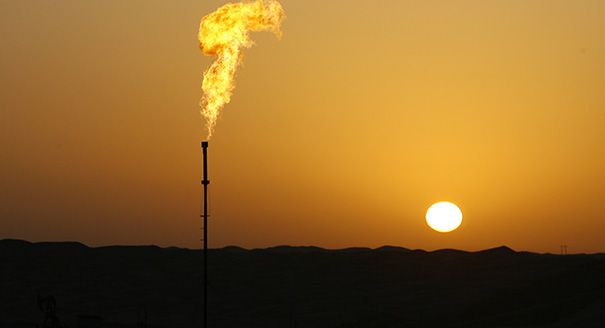
Why is this important? It turns out that climate impacts vary significantly among global oils. Some of these alternative oils’ greenhouse gas (GHG) emission footprints are nearly twice as large as others. And the range of GHG emissions between oils is expected to grow as new, unconventional oil resources are identified. In an era of abundant oil choices, Asian policymakers would benefit from the information provided by the new Oil-Climate Index (OCI). Developed by the Carnegie Endowment for International Peace along with partners from Stanford University and the University of Calgary, the OCI can be of immediate practical use for Asian policy makers in reducing flaring and venting of gassy oils, rethinking extra heavy oils, and managing petroleum coke....

Former Director and Senior Fellow, Energy and Climate Program
Gordon was director of Carnegie’s Energy and Climate Program, where her research focuses on oil and climate change issues in North America and globally.

Former Nonresident Scholar, Carnegie-Tsinghua Center for Global Policy
Wang Tao was a nonresident scholar in the Energy and Climate Program based at the Carnegie–Tsinghua Center for Global Policy.

Former Nonresident Scholar, Carnegie-Tsinghua Center for Global Policy
Ferchen specializes in China’s political-economic relations with emerging economies. At the Carnegie–Tsinghua Center for Global Policy, he ran a program on China’s economic and political relations with the developing world, including Latin America.
Carnegie does not take institutional positions on public policy issues; the views represented herein are those of the author(s) and do not necessarily reflect the views of Carnegie, its staff, or its trustees.
They face an uphill climb, but they could draw on a strategy that other diplomats have used in the past.


Shana Tabak, Alejandro Martin Rodriguez

Understanding the climatic pain points is necessary for policymakers hoping to minimize the war’s negative environmental consequences.


Alejandro Martin Rodriguez, Joy Arkeh, Sarah Yerkes
Congress needs to step up and make EXIM a low-carbon financing powerhouse.

Jesse Young

By focusing only on hard security, the Shield ignores the conditions that fuel cartel power.

Alejandro Martin Rodriguez, Kayly Ober
Investments in a climate-friendly cooling system known as geothermal district cooling will help rapidly urbanizing societies resist dangerous heat indexes.


Daevan Mangalmurti, Debbra Goh, Milo McBride