• Research
  • Emissary
  • About
  • Experts
Carnegie Global logoCarnegie lettermark logo
DemocracyIran
  • Donate
{
  "authors": [
    "Yukon Huang"
  ],
  "type": "legacyinthemedia",
  "centerAffiliationAll": "dc",
  "centers": [
    "Carnegie Endowment for International Peace"
  ],
  "collections": [],
  "englishNewsletterAll": "asia",
  "nonEnglishNewsletterAll": "",
  "primaryCenter": "Carnegie Endowment for International Peace",
  "programAffiliation": "AP",
  "programs": [
    "Asia"
  ],
  "projects": [],
  "regions": [
    "East Asia",
    "China"
  ],
  "topics": [
    "Economy"
  ]
}
Source: Getty

In The Media

The Heat: Chinese Economy and Transnational Partnerships

In China, there is not always a significant division between those who regulate the economy and those who champion economic growth.

Link Copied
By Yukon Huang
Published on Jul 16, 2015
Program mobile hero image

Program

Asia

The Asia Program in Washington studies disruptive security, governance, and technological risks that threaten peace, growth, and opportunity in the Asia-Pacific region, including a focus on China, Japan, and the Korean peninsula.

Learn More

Source: CCTV

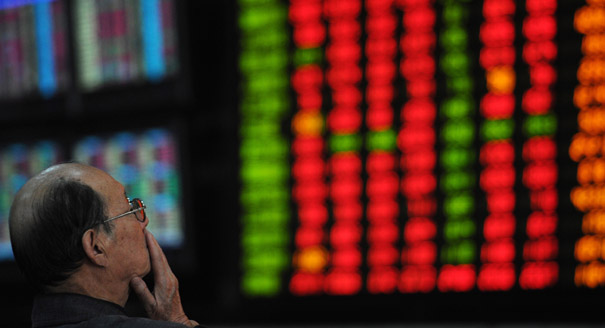
Carnegie’s Yukon Huang appeared on CCTV to talk about the recent downturn of China’s stock market and the controls that regulators put in place to stabilize the market. Huang said that while the controls are currently stabilizing the market, what will happen after the controls are lifted can only be speculated. He characterized the controls as draconian, saying that they are effectively not allowing people to sell shares and only encouraging people to buy shares.

Huang said that in China there is not as much of a division between those who regulate the economy and those who champion economic growth. He concluded that investors should expect higher stock markets in the future.

This interview was originally broadcast by CCTV.

About the Author

Yukon Huang

Senior Fellow, Asia Program

Huang is a senior fellow in the Carnegie Asia Program where his research focuses on China’s economy and its regional and global impact.

    Recent Work

  • Commentary
    Three Takeaways From the Biden-Xi Meeting

      Yukon Huang, Isaac B. Kardon, Matt Sheehan

  • Commentary
    Europe Narrowly Navigates De-risking Between Washington and Beijing

      Yukon Huang, Genevieve Slosberg

Yukon Huang
Senior Fellow, Asia Program
Yukon Huang
EconomyEast AsiaChina

Carnegie does not take institutional positions on public policy issues; the views represented herein are those of the author(s) and do not necessarily reflect the views of Carnegie, its staff, or its trustees.

More Work from Carnegie Endowment for International Peace

  • A Black man pulls a trolley. He is small in the bottom center of the frame; in the background are stacks of large, colorful shipping containers and the parts of a large crane or similar piece of equipment.
    Article
    Africa’s Global Economic Edge: Advancing Strategic Sectors

    In key sectors such as critical minerals, specialty agriculture, and fintech, Africa can become a global powerhouse by investing more in manufacturing, value-add, and scaling.

      • Kholofelo Kugler

      Kholofelo Kugler, Georgia Schaefer-Brown

  • Xi walking into a room with people standing and applauding around him
    Commentary
    Emissary
    The Xi Doctrine Zeros in on “High-Quality Development” for China’s Economic Future

    In the latest Five-Year Plan, the Chinese president cements the shift to an innovation-driven economy over a consumption-driven one.

      • Damien Ma

      Damien Ma

  • apan's 8,900-ton Maritime Self-Defense Force supply ship Oosumi leaves Muroran port escorted by the 4,550-ton destroyer Murasame bound for Kuwait February 20, 2004 in Muroran, Japan.
    Article
    Japan’s Security Policy Is Still Caught Between the Alliance and Domestic Reality

    Japan’s response to U.S. pressure over Hormuz highlights a broader dilemma: How to preserve the alliance while remaining bound by legal limits, public opinion, and an Asia-centered security agenda. Tokyo gained diplomatic space through an alliance-embracing strategy, but only under conditions that may not endure.

      • Ryo Sahashi

      Ryo Sahashi

  • A white humanoid robot with a black head and hips stands behind a rope barrier. It stands with its feet apart, knees bent, and elbows raised at its sides.
    Commentary
    Europe Is Falling Behind in General-Purpose Robotics. Here’s What It Can Do to Catch Up.

    The continent needs to improve conditions for production of complete AI robotic systems and preserve its edge in hardware.

      Pavlo Zvenyhorodskyi

  • Worker pushing machinery toward a car frame
    Commentary
    Emissary
    Europe’s New Industrial Policy Can Learn From U.S. Mistakes

    Although the IAA often differs from the IRA, European policymakers can still take note of the U.S. act’s shortcomings.

      Milo McBride

Get more news and analysis from
Carnegie Endowment for International Peace
Carnegie global logo, stacked
1779 Massachusetts Avenue NWWashington, DC, 20036-2103Phone: 202 483 7600Fax: 202 483 1840
  • Research
  • Emissary
  • About
  • Experts
  • Donate
  • Programs
  • Events
  • Blogs
  • Podcasts
  • Contact
  • Annual Reports
  • Careers
  • Privacy
  • For Media
  • Government Resources
Get more news and analysis from
Carnegie Endowment for International Peace
© 2026 Carnegie Endowment for International Peace. All rights reserved.