

Commentary
Nathan J. Brown
{
  "authors": [
    "Nathan J. Brown"
  ],
  "type": "legacyinthemedia",
  "centerAffiliationAll": "dc",
  "centers": [
    "Carnegie Endowment for International Peace",
    "Malcolm H. Kerr Carnegie Middle East Center"
  ],
  "collections": [
    "Arab Awakening"
  ],
  "englishNewsletterAll": "menaTransitions",
  "nonEnglishNewsletterAll": "",
  "primaryCenter": "Carnegie Endowment for International Peace",
  "programAffiliation": "MEP",
  "programs": [
    "Middle East"
  ],
  "projects": [],
  "regions": [
    "North Africa",
    "Egypt"
  ],
  "topics": [
    "Political Reform",
    "Democracy"
  ]
}
Source: Getty
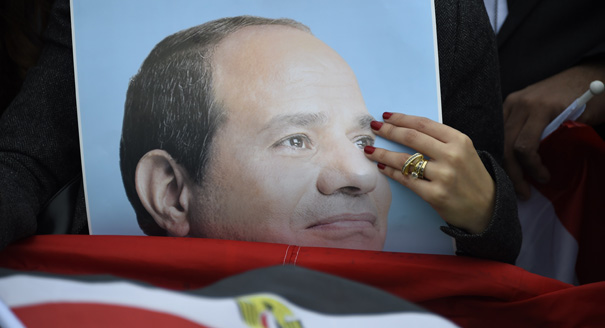
In Egypt today, the newly-elected parliament is likely to provide some space for debates and posturing but unlikely to do much to correct the performance of government.
Source: BBC
Judging from the number of times they have been summoned to the polls in recent years, Egyptians would seem to have an enthusiastically democratic system.
Judging from the comments of most analysts, Egyptians have returned to an authoritarian past in which a parliament exists simply to give a participatory veneer to a profoundly authoritarian presidential system.
The results of Egypt's just-concluded parliamentary elections suggests the cynics have the weight of the evidence on their side.
True, opposition parties have been banned, manipulated, or marginalised. Those with deep pockets and support from key state actors (such as the security services) will populate much of the body.
But the result is not a simple return to the past. There are reasons to believe Egypt's parliamentary life will be a bit more bumpy than the past for three reasons.
This will make the parliament a headache for the president. It will not be an Achilles heel, however, since steps are being taken to forestall an overly oppositional body.
Indeed, the electoral system looks to have been designed to produce a body that if unruly is ultimately loyal.
Key state bodies (the military, security forces, religious establishment and judiciary) have considerable constitutional and legal insulation from the parliament.
The head of the loose coalition of loyal parties is a security official; a major general from the army was slotted to serve as secretary-general of the parliament, responsible for overseeing parliamentary staff and operations, until he was forced to resign this week for lacking the requisite qualifications.
And if all else fails, the constitution can be amended to strengthen the president - an idea that has been floated (even by President Sisi himself) in recent weeks.
Egypt's past presidents have generally ruled by controlling politics.
Mr Sisi, by contrast, seems to wish to rule without it - to have state bodies do what they are supposed to do and for citizens to do what they are told.
The parliament, therefore, has been an afterthought. And it will behave like one.
In Egypt today, as the new regime's economic, security, and administrative performance produce increasing grumbling, the parliament is likely to provide some space for debates and posturing but unlikely to do much to correct performance.

Nonresident Senior Fellow, Middle East Program
Nathan J. Brown, a professor of political science and international affairs at George Washington University, is a distinguished scholar and author of nine books on Arab politics and governance, as well as editor of five books.
Recent Work
Nathan J. Brown
Nathan J. Brown
Carnegie does not take institutional positions on public policy issues; the views represented herein are those of the author(s) and do not necessarily reflect the views of Carnegie, its staff, or its trustees.

China’s political future will be shaped between now and next October. As the Communist Party enters its intense “campaign season” to prepare for a major political transition in 2027, reading Beijing's actions and responses may become more difficult as domestic politics weigh on its behavior more than usual.

Damien Ma

Putin’s conservative staffing policies and search for ever greater control have cemented parliament’s transformation into a bureaucratic appendage of the executive branch.

Andrey Pertsev

Ex-president Gurbanguly Berdimuhamedov remains interested in politics, but his son Serdar, Turkmenistan’s current president, is becoming increasingly independent and willing to break with his father’s legacy. If their covert rivalry goes too far, both risk losing power.

Galiya Ibragimova

A notable degree of participative democracy has firmly arrived in Europe. But to have more far-reaching impact, democratic deliberation needs to move into a radically new phase.

Richard Youngs
Today’s global democratic recession is partly rooted in a common perception that democracies have a delivery problem, with many citizens in both autocracies and democracies alike now believing that strongmen can achieve better governance outcomes. But a study of four countries in Africa reveals that democratic-leaning governments have demonstrated better governance performance than autocratic governments.


Sarah Yerkes, Natalie Triche, Amr Hamzawy