

Commentary
Evan A. Feigenbaum
{
  "authors": [
    "Evan A. Feigenbaum"
  ],
  "type": "legacyinthemedia",
  "centerAffiliationAll": "dc",
  "centers": [
    "Carnegie Endowment for International Peace"
  ],
  "collections": [],
  "englishNewsletterAll": "asia",
  "nonEnglishNewsletterAll": "",
  "primaryCenter": "Carnegie Endowment for International Peace",
  "programAffiliation": "AP",
  "programs": [
    "Asia"
  ],
  "projects": [],
  "regions": [
    "North America",
    "United States",
    "East Asia"
  ],
  "topics": [
    "Foreign Policy"
  ]
}
Source: Getty
The United States is failing to adapt to the drama of economic and institutional change in Asia. America risks missing opportunities in every part of the region—East, Central, and South—while being out-competed in both geopolitics and business.
Source: Parlio
Asia is changing dramatically but the United States is losing the plot. The region is being stitched back together in ways that could make the United States less relevant in each of Asia’s constituent parts. Asians are, in various ways, passing America by.
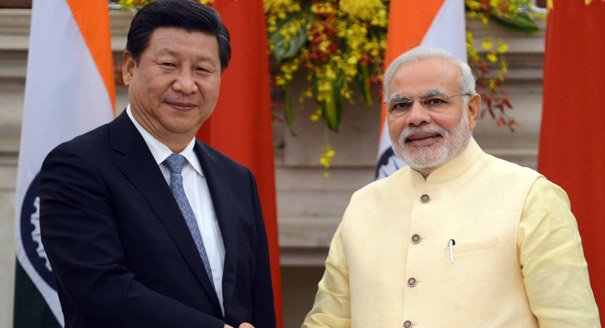
Recent articles in the Financial Times, New York Times, and other major media have delved into China’s grand new plan to reconnect Asia with a network of massive infrastructure projects. This so-called “One Belt, One Road” effort, launched to great fanfare by President Xi Jinping in 2013, evokes the ancient Silk Road that stretched from Asia to Europe and saw goods, people, and technology move across continental caravan routes and well-trafficked sea lanes. The "Belt and Road" is Xi’s signature foreign policy initiative and may soon include billions in new Chinese spending. On paper, at least, it is a classic example of economic statecraft, envisioning a series of China-sponsored rails, roads, pipelines, ports, and power stations spanning Asia, from Indonesia to Turkmenistan and beyond.
Some argue that this Chinese initiative aims to construct a Sinocentric Asia and dislodge the United States. But in fact, the competitive challenge America now faces in Asia is bigger, broader, and has deeper roots.Put bluntly, Asia is being reconnected, strategically and economically. Ultimately, the region could, in important ways, more closely resemble the historical norm that prevailed for centuries prior to America’s arrival.
This change reflects trends that date back decades and is a function of the choices, actions, and capabilities of many Asian states — not just China but also Japan, India, and South Korea, among others.
Asians are, in various ways, passing America by.
The United States is badly prepared for this momentous rebirth, which is at once stitching Asia back together and making the United States less relevant in each of Asia’s constituent parts.
The question is not just whether or to what extent the United States is or isn't “pivoting” to Asia, as U.S. officials have put it. More broadly, the question is whether the United States, to compete in both geopolitics and business, appreciates the dramatic ways in which Asia is changing.
In this essay in The Washington Quarterly, written two years before Xi proposed the "Belt and Road" but, I fear, still all too relevant, I explored “Why America No Longer Gets Asia” and how the United States can adapt to these new challenges.
A follow up essay in Foreign Affairs several months ago pulled these threads some more in light of the U.S.-backed Trans-Pacific Partnership (TPP) and the China-backed Asian Infrastructure Investment Bank.

Vice President for Studies
Evan A. Feigenbaum is vice president for studies at the Carnegie Endowment for International Peace, where he oversees work at its offices in Washington, New Delhi, and Singapore on a dynamic region encompassing both East Asia and South Asia. He served twice as Deputy Assistant Secretary of State and advised two Secretaries of State and a former Treasury Secretary on Asia.
Recent Work
Evan A. Feigenbaum
Evan A. Feigenbaum
Carnegie does not take institutional positions on public policy issues; the views represented herein are those of the author(s) and do not necessarily reflect the views of Carnegie, its staff, or its trustees.

To remain effective, organizations need to master new media and legitimacy markers to make a once-in-a-century shift.


Renée DiResta, Rachel Kleinfeld, Margot Treadwell

Congress needs to step up and make EXIM a low-carbon financing powerhouse.

Jesse Young

The ninety-three-year-old Biya’s absence and refusal to name a vice president threaten to upend domestic and regional stability.

Lesley Anne Warner

With the growth in points of friction between the great powers, organizations like the SCO will continue to play a role in the strategic adaptation of the smaller powers caught between them.

Temur Umarov
Amid celebrations of bilateral ties was a deeper focus on stability in the Middle East.

Amr Hamzawy