
• Research
  • Emissary
  • About
  • Experts
Carnegie Global logoCarnegie lettermark logo
DemocracyIran
  • Donate
{
  "authors": [
    "Sarah Chayes"
  ],
  "type": "legacyinthemedia",
  "centerAffiliationAll": "dc",
  "centers": [
    "Carnegie Endowment for International Peace"
  ],
  "collections": [
    "Anti-Corruption"
  ],
  "englishNewsletterAll": "democracy",
  "nonEnglishNewsletterAll": "",
  "primaryCenter": "Carnegie Endowment for International Peace",
  "programAffiliation": "DCG",
  "programs": [
    "Democracy, Conflict, and Governance"
  ],
  "projects": [],
  "regions": [],
  "topics": [
    "Democracy",
    "Security"
  ]
}
Source: Getty

In The Media

The Pervasive Nature of Corrupt Networks

Corruption fuels violent extremism.

Link Copied
By Sarah Chayes
Published on Apr 9, 2016
Program mobile hero image

Program

Democracy, Conflict, and Governance

The Democracy, Conflict, and Governance Program is a leading source of independent policy research, writing, and outreach on global democracy, conflict, and governance. It analyzes and seeks to improve international efforts to reduce democratic backsliding, mitigate conflict and violence, overcome political polarization, promote gender equality, and advance pro-democratic uses of new technologies.

Learn More

Source: C-Span

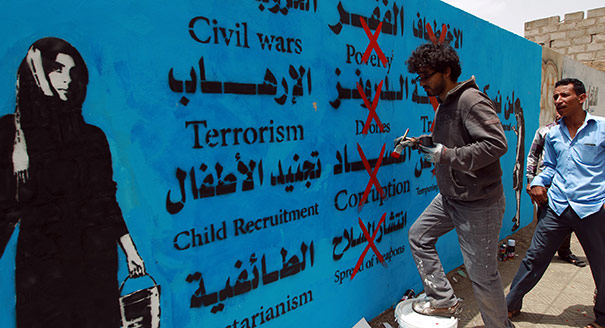
Speaking on C-SPAN, Carnegie’s Sarah Chayes drew on her experience in Afghanistan, Nigeria, and other parts of the world, as well as recent events such as the leak of the Panama Papers, to point to the pervasive nature of corrupt networks and to argue that corruption fuels violent extremism. Chayes also responded to viewer comments and questions at the Los Angeles Times Book Festival, where her book, Thieves of State, was awarded the prize in the “Current Interest” category.   
This interview was originally broadcast on C-SPAN.

About the Author

Sarah Chayes

Former Senior Fellow, Democracy, Conflict, and Governance Program

Sarah Chayes is internationally recognized for her innovative thinking on corruption and its implications. Her work explores how severe corruption can help prompt such crises as terrorism, revolutions and their violent aftermaths, and environmental degradation.

    Recent Work

  • Commentary
    China Financial Markets test

      Sarah Chayes

  • Paper
    Fighting the Hydra: Lessons From Worldwide Protests Against Corruption

      Sarah Chayes

Sarah Chayes
Former Senior Fellow, Democracy, Conflict, and Governance Program
Sarah Chayes
DemocracySecurity

Carnegie does not take institutional positions on public policy issues; the views represented herein are those of the author(s) and do not necessarily reflect the views of Carnegie, its staff, or its trustees.

More Work from Carnegie Endowment for International Peace

  • The tops of people's heads. Raised above their heads are "No Kings" signs, an upside-down American flag, and a rainbow flag.
    Commentary
    Emissary
    Protests Like No Kings Can Only Go So Far to Stem Authoritarianism

    Lessons from other backsliding democracies show that mass mobilization needs to feed into an electoral strategy. 

      Saskia Brechenmacher, Shreya Joshi

  • Commentary
    Strategic Europe
    Win or Lose, Orbán has Broken Hungary’s Democracy

    Hungarians head to the polls on April 12 for an election of national and European consequence. Three different outcomes are on the cards, each with their own implications for the EU.

      Zsuzsanna Szelényi

  • A member of "Timur's Special Forces Unit" of the Defence Intelligence of Ukraine looks on on Snake Island, also known as Zmiinyi Island, located in the Black Sea, on August 14, 2025, amid the Russian invasion of Ukraine.
    Article
    The Changing Military Balance in the Black Sea: A Ukrainian Perspective

    Ukraine’s asymmetric approach has rendered Russia’s Black Sea Fleet functionally useless. But a long-term commitment will be needed to maintain this balance of power.

      Alina Frolova, Stepan Yakymiak

  • Commentary
    Emissary
    The Iran War Is Uncovering the Weakness in U.S.-Gulf Ties

    Neither the Abraham Accords nor the presence of large U.S. bases are enough to protect Arab Gulf states.

      Marwan Muasher

  • Commentary
    Carnegie Politika
    The Afghanistan–Pakistan War Poses Awkward Questions for Russia

    Not only does the fighting jeopardize regional security, it undermines Russian attempts to promote alternatives to the Western-dominated world order.

      Ruslan Suleymanov

Get more news and analysis from
Carnegie Endowment for International Peace
Carnegie global logo, stacked
1779 Massachusetts Avenue NWWashington, DC, 20036-2103Phone: 202 483 7600Fax: 202 483 1840
  • Research
  • Emissary
  • About
  • Experts
  • Donate
  • Programs
  • Events
  • Blogs
  • Podcasts
  • Contact
  • Annual Reports
  • Careers
  • Privacy
  • For Media
  • Government Resources
Get more news and analysis from
Carnegie Endowment for International Peace
© 2026 Carnegie Endowment for International Peace. All rights reserved.











