

Article
C. Raja Mohan, Darshana M. Baruah
{
  "authors": [
    "C. Raja Mohan"
  ],
  "type": "legacyinthemedia",
  "centerAffiliationAll": "dc",
  "centers": [
    "Carnegie Endowment for International Peace",
    "Carnegie India"
  ],
  "collections": [],
  "englishNewsletterAll": "ctw",
  "nonEnglishNewsletterAll": "",
  "primaryCenter": "Carnegie India",
  "programAffiliation": "SAP",
  "programs": [
    "South Asia"
  ],
  "projects": [],
  "regions": [
    "United States"
  ],
  "topics": [
    "Foreign Policy",
    "Security"
  ]
}
Source: Getty
Although aimed at American audiences, the Indian strategic community could well benefit from the rare discussion on geoeconomics offered by Blackwill and Harris.
Source: Indian Express
America’s costly but unsuccessful military interventions in Iraq and Afghanistan during the last decade and a half have generated a political backlash in the US against foreign military adventures. No one understands this better than Barack Obama, who has refused, despite much pressure from Washington, to drag America into another war in the Middle East.
Obama’s carefully constructed argument for military prudence has been echoed with a lot less sophistication by the front-runner for the Republican presidential nomination, Donald Trump. Similar arguments have been made by Bernie Sanders, who has sustained, against great odds, the challenge against Hillary Clinton, who was expected to easily win the Democratic nomination.The limits to the political efficacy of military force is also the starting point for Robert Blackwill, the celebrated former US ambassador to India who constructed the intellectual and policy case for the transformation of India-US relations at the beginning of the Bush administration.
To be sure, Blackwill and his co-author, Jennifer M Harris, do not argue that the use of military force has now become irrelevant. But they do insist that military and economic instruments can and must be mutually reinforcing. Blackwill and Harris remind us that economic incentives and coercion are powerful instruments in achieving the vital national interests of leading powers.
“America’s problem today,” the authors assert, “is that after many decades of being preoccupied with the security dimension of American foreign policy, Washington instinctively reaches for the military instrument when often it is largely or entirely irrelevant or inappropriate to the external challenge at hand.”
Unlike in the immediate aftermath of the Cold War, when America faced no geopolitical rival and dominated the liberal economic order, it must now compete for influence with peers like China and Russia.
Arguing that a corrective is long overdue, Blackwill and Harris construct a comprehensive framework for bringing economic statecraft back into America’s grand strategy. Their narrative begins by defining geoeconomics as “the use of economic instruments to promote and defend national interests and to produce beneficial geopolitical results; and the effects of other nations’ economic actions on a country’s geopolitical goals.”
They, then, explore the sources of the new global interest in geoeconomics and its seven constituent elements — trade policy, investment policy, economic sanctions, the cybersphere, aid, monetary policy, and energy and commodity policies.
It is no surprise that Blackwill and Harris devote much attention to China as the world’s “leading practitioner” of geoeconomics today. They examine China’s geoeconomics strategy through six case studies — Taiwan, North Korea, Japan, Southeast Asia, Pakistan and India.
The authors contrast the Chinese successes with America’s loss of memory about geoeconomics. They suggest that somewhere in the late 1960s and early 1970s, Washington began to see “economics as a realm with an authority and logic all of its own, usually no longer subjugated to traditional state power realities — and something to be kept free of unseemly geopolitical incursions.”
Underlining the importance of bridging the structural divide in America between geopolitics and geoeconomics, the authors outline a 20-point agenda for Washington. These range from the emphasis on promoting robust economic growth at home to shifting resources from the Pentagon to the use of geoeconomics instruments.
Blackwill and Harris argue that America must reboot US alliances for purposeful geoeconomic action and find effective economic instruments to limit the assertiveness of China and Russia in Eurasia and strengthen the economic foundations for democracy and peace in the Middle East and North Africa.
On India, Blackwill and Harris urge Washington to make substantive geoeconomic investments in India’s emergence as a Pacific power as a central feature of America’s pivot to Asia. “The strength of the economies of America’s Asian allies and India will be crucial factors in their ability to resist Chinese economic coercion and to stand strong in maintaining the current balance of power in Asia.”
As China’s economic power radiates into the subcontinent, Delhi has found it hard to develop matching geoeconomic strategies or build on India’s natural geographical advantages in the region.
As in America, so in India, there has been too much securitisation of India’s foreign policy. While there is belated recognition of the virtues of economic diplomacy in the Foreign Office, there is no matching awareness in the rest of the establishment on how best to integrate geoeconomics with geopolitics. Although aimed at American audiences, the Indian strategic community could well benefit from the rare discussion on geoeconomics offered by Blackwill and Harris.
This article was originally published in the Indian Express.
Former Nonresident Senior Fellow, Carnegie India
A leading analyst of India’s foreign policy, Mohan is also an expert on South Asian security, great-power relations in Asia, and arms control.
Recent Work

C. Raja Mohan, Darshana M. Baruah


Alexander Gabuev, Paul Haenle, C. Raja Mohan, …
Carnegie does not take institutional positions on public policy issues; the views represented herein are those of the author(s) and do not necessarily reflect the views of Carnegie, its staff, or its trustees.

Trump has promised Belarus a massive potash deal. But Minsk is seeking something greater: restored Western transit and greater room for maneuver from Russia.

Balázs Jarábik
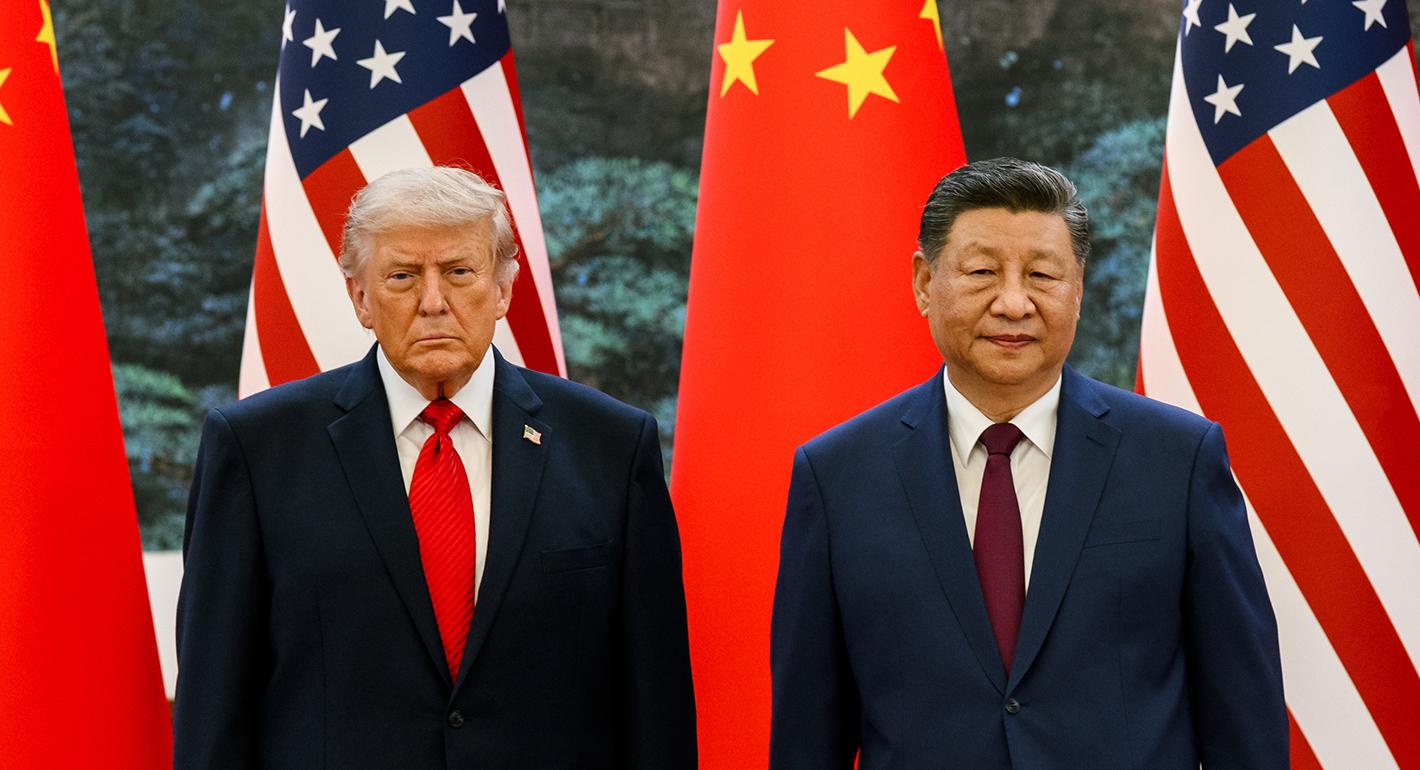
The real test may come after the leaders leave the room.



Sheena Chestnut Greitens, Oriana Skylar Mastro, Yukon Huang, …

The Horn of Africa countries are among those facing a new security calculus.


Andrew Leber, Lesley Anne Warner

The European far right might fail to steer EU policy in the direction Russia wants, but they will create enough chaos inside Europe to benefit the Kremlin.

Dimitar Bechev

The new U.S.–Denmark–Greenland agreement will help Washington exert political, economic, and financial dominance under the guise of security. Yet, it acknowledged Copenhagen’s and Nuuk’s sovereignty on the island.

Marc Pierini