

Commentary
Sarah Chayes
{
  "authors": [
    "Sarah Chayes"
  ],
  "type": "legacyinthemedia",
  "centerAffiliationAll": "dc",
  "centers": [
    "Carnegie Endowment for International Peace"
  ],
  "collections": [
    "Anti-Corruption"
  ],
  "englishNewsletterAll": "democracy",
  "nonEnglishNewsletterAll": "",
  "primaryCenter": "Carnegie Endowment for International Peace",
  "programAffiliation": "DCG",
  "programs": [
    "Democracy, Conflict, and Governance"
  ],
  "projects": [],
  "regions": [
    "South Asia",
    "Afghanistan"
  ],
  "topics": [
    "Democracy"
  ]
}
Source: Getty
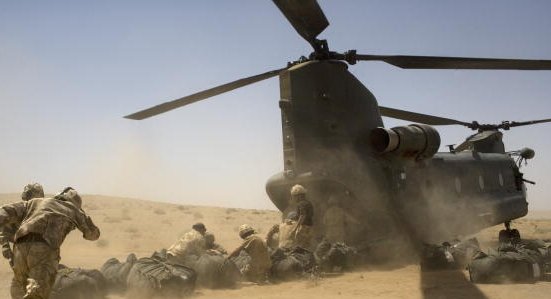
U.S. soldiers are staying on in Afghanistan. Sarah Chayes tells NPR’s Rachel Martin that more troops won't solve the real problem.
Source: NPR
RACHEL MARTIN, HOST: But now we're going to turn to the U.S. commitment in Afghanistan. Since the fall of the Taliban in 2001, the U.S. has had thousands of troops there. Despite a plan to withdraw most of them by this coming January, President Obama says he will keep more soldiers in Afghanistan longer than he planned. He made this announcement this past week.
(SOUNDBITE OF ARCHIVED RECORDING)
PRESIDENT BARACK OBAMA: Instead of going down to 5,500 troops by the end of this year, the United States will maintain approximately 8,400 troops in Afghanistan into next year, through the end of my administration.
MARTIN: The president did point to some successes in Afghanistan, but he acknowledged the Taliban had retaken some parts of the country. There is still the threat from ISIS and al-Qaida. We are joined by someone with long experience in Afghanistan. Sarah Chayes covered the fall of the Taliban for NPR. Afterwards, she remained in the country to start a manufacturing co-op. And later, she went on to work as special assistant to chairman of the Joint Chiefs of Staff, Admiral Mike Mullen. Chayes is now a senior associate at the Carnegie Endowment for International Peace, and she joins me now. Thanks for being with us, Sarah.
SARAH CHAYES: Thanks for having me.
MARTIN: The U.S. has spent $65 billion building up Afghan security forces over so many years now. And we hear all the time about how U.S. forces are increasingly standing down so Afghan troops can stand up. But they seem to be faltering. After so much time, so much investment, why?
CHAYES: I think the problem is that this isn't fundamentally a tactical problem. Troops are only an instrument in the hands of a government. And so if the government is so either dysfunctional or actively hostile to its own population, it's really hard to imagine how an army can become a stronger and more professional organization belonging to that government.
MARTIN: What do you think about the idea of keeping this number of U.S. troops on the ground in Afghanistan? Do you think it's a footprint that's too big? Is it too small?
CHAYES: I don't think it makes any difference. I think zero has a certain psychological impact on Afghans. But the difference between 2,000 or 5,000 or 8,000 is absolutely immaterial. I think this decision is entirely aimed at the United States. If the president were to continue drawing down and if something blew up, it could be blamed on his decision to draw down.
MARTIN: You lived in Afghanistan. I imagine you still keep in touch with some friends who are there. What do they tell you about what kind of presence they want to see from the U.S. in the short and long term?
CHAYES: Most of my friends would prefer more rather than less U.S. presence, but they all agree that this isn't the heart of the problem. And they literally said the problem here is administrative corruption. If you people don't fix the administration of this country, you can send 100,000 - you can send a million soldiers here - it's - you're never going to get security.
MARTIN: OK. So allegations of widespread corruption. What does that look like in Afghanistan today, in 2016? What kind of examples can you give?
CHAYES: It means every time you interact with a government official, you get shaken down for money. As part of the counterinsurgency process, we put, you know, more soldiers out into villages. The soldiers would steal the wood. They steal your produce. Police shake you down - you know, several checkpoints - three to five checkpoints on an hour and a half drive. You have to pay bribes to pay your electricity bill.
And the other thing that's really important to bear in mind is, you know, when a cop shakes you down for money, he doesn't do it politely. I mean, think about that young man in Tunisia who had been slapped in the face by a police officer who was shaking him down. And he lit himself on fire, and we got the Arab Spring. I mean, this is what is generating a lot of the support for the Taliban.
MARTIN: Ashraf Ghani is the new president. He's got strong ties to the U.S., but does he want the U.S. telling him what to do?
CHAYES: Of course not. But I do think it is possible to relook all of the ways that we continue to interact with Afghanistan and figure out how, at least, to shape those interactions so that at least they don't reinforce corrupt practices and where Ashraf Ghani seems to be making a good faith effort to address the problem, to support him, but don't give him a blank check. Don't take anybody at face value.
MARTIN: Sarah Chayes is a senior associate at the Carnegie Endowment for International Peace. Her most recent book is titled "Thieves Of State: Why Corruption Threatens Global Security." Sarah, thanks so much.
CHAYES: Pleasure.
Former Senior Fellow, Democracy, Conflict, and Governance Program
Sarah Chayes is internationally recognized for her innovative thinking on corruption and its implications. Her work explores how severe corruption can help prompt such crises as terrorism, revolutions and their violent aftermaths, and environmental degradation.
Recent Work
Sarah Chayes
Carnegie does not take institutional positions on public policy issues; the views represented herein are those of the author(s) and do not necessarily reflect the views of Carnegie, its staff, or its trustees.
Despite myriad challenges and occasional stumbles, the new Hungarian government is moving ahead with energy and conviction to uproot years of illiberalism and corruption and rebuild Hungarian democracy.

Thomas Carothers

Radical-right parties are expected to do well in upcoming elections in four of the EU's biggest member states. If successful, they could prevent the union from addressing key challenges ahead.

Stefan Lehne

The books, podcasts, and films that explain the world it made.

Andrew Leber
By abandoning past U.S. pro-democracy policies and adopting several lines of pro-autocratic action, the Trump administration has fundamentally repositioned the United States vis-à-vis democracy in the world.
Thomas Carothers

To remain effective, organizations need to master new media and legitimacy markers to make a once-in-a-century shift.
Renée DiResta, Rachel Kleinfeld, Margot Treadwell