

Commentary
Judy Dempsey
{
  "authors": [
    "Judy Dempsey"
  ],
  "type": "legacyinthemedia",
  "centerAffiliationAll": "dc",
  "centers": [
    "Carnegie Endowment for International Peace",
    "Carnegie Europe"
  ],
  "collections": [],
  "englishNewsletterAll": "ctw",
  "nonEnglishNewsletterAll": "",
  "primaryCenter": "Carnegie Europe",
  "programAffiliation": "EP",
  "programs": [
    "Europe"
  ],
  "projects": [],
  "regions": [
    "Europe",
    "Western Europe",
    "Iran"
  ],
  "topics": [
    "EU"
  ]
}
Source: Getty
A series of crises engulfing the EU is fundamentally changing the narrative set out when the union was founded nearly sixty years ago.
Source: Washington Post
A series of crises engulfing the European Union is fundamentally changing the narrative set out when it was founded nearly 60 years ago. That narrative was not limited to trade, competition and internal economic markets but also envisioned a borderless Europe anchored in shared values and democracy. But today, the refugee crisis, terrorism, Brexit and the fear of globalization have the potential to stunt the European Union’s founding ambitions. What was a noble post-World War II experiment could devolve into a messy group of squabbling nation-states.
Despite the unprecedented challenges facing the E.U., many of its leaders believe they can cope without a stronger Europe. This was clear from a Friday meeting of European Union leaders (minus Britain) in the Slovak capital, Bratislava. Even though the issues of migration and refugees influenced the decision by the British to leave the E.U., the Bratislava Declaration didn’t once refer to Brexit. It’s as though Britain had already left — the opening statement of the declaration stated: “Determined to make a success of the EU at 27.”
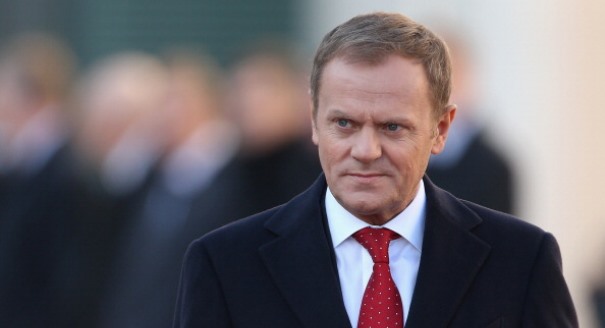
Donald Tusk is at the center of leading the charge to re-brand the E.U.’s way forward. The former center-right prime minister of Poland and current president of the European Council spent the past several weeks traveling around E.U. capitals to hear the views of its leaders and encapsulated his findings in a so-called Bratislava road map. It is supposed to be completed by the time Europe’s leaders converge in Rome next March to celebrate the E.U.’s 60th birthday.
His conclusion, as laid out in the road map, was that E.U. citizens felt threatened and that there was an urgent need to protect Europe’s external borders. He urged that trust between the E.U. institutions and its citizens had to be restored, underscoring the importance of “rebuilding the reputation of the Union as a synonym of protection and stability.”
Yet the road map is devoid of all ambition for Europe. It sets out three main goals: no more uncontrolled migration; full control of the E.U.’s external borders; and the need for a long-term migration policy. These were the very same issues that the E.U. was supposed to settle in the early 2000s. Instead, the member states then failed to reach an agreement over a common asylum and refugee policy. On border security, member states, including Poland, opposed non-national personnel protecting their borders, and states didn’t provide the financing or officers to carry out this task.
German Chancellor Angela Merkel was merely reacting to the paralysis of E.U. policy when she took the decent, moral decision to allow hundreds of thousands of refugees into Germany over the past year. In a Monday speech after her party’s defeat in the Berlin regional elections, Merkel said she was sticking to her policies but acknowledged that she — and the E.U. — could have been much better prepared.
The Bratislava Ddeclaration also called for more “cooperation and information-exchange among security services of the member states.” But weren’t we here before when the Schengen Information System was set up after most internal border controls in the E.U. were abolished? Intelligence was not shared across the bloc.
As populist movements across Europe gain ground in their opposition to migrants, they are linking this insecurity to globalization. Big potential trade accords are being fiercely opposed by well-organized movements across Europe, particularly in Germany. The Transatlantic Trade and Investment Partnership (TTIP), the Comprehensive Economic and Trade Agreement and the E.U.-Canada treaty hang in the balance. In addition to the benefits of mutual trade, these deals would strengthen the Western liberal order on setting trading, financial, consumer and environmental standards, instead of ceding authority on these matters to China or Russia.
European opponents to the deals are tapping into anti-Americanism, arguing that the new arrangements will amount to a U.S.-dominated trading system that will weaken Europe’s consumer standards. The Bratislava Declaration blandly opined that when E.U. leaders meet again in October, they need to “ensure a robust trade policy that reaps the benefits of open markets while taking into account concerns of citizens.”
The upheaval in the E.U. comes at the worst possible time for the transatlantic relationship. Whoever becomes the new U.S. president, both sides of the Atlantic are becoming more insular, more skeptical of each other and, as the TTIP talks show, more cynical about the role and durability of the West. These trends can only benefit Russia and China unless some E.U. leaders can rescue Europe’s original narrative.
For the moment, Merkel is alone in trying to do just that.

Nonresident Senior Fellow, Carnegie Europe
Judy Dempsey is a nonresident senior fellow at Carnegie Europe
Recent Work
Judy Dempsey
Judy Dempsey
Carnegie does not take institutional positions on public policy issues; the views represented herein are those of the author(s) and do not necessarily reflect the views of Carnegie, its staff, or its trustees.

Before the next wave of EU enlargement takes place, the union needs to grapple with thorny questions of how power is distributed among its members.


Emil Sondaj Hansen, Ditte Brasso Sørensen

The European far right might fail to steer EU policy in the direction Russia wants, but they will create enough chaos inside Europe to benefit the Kremlin.

Dimitar Bechev

The new U.S.–Denmark–Greenland agreement will help Washington exert political, economic, and financial dominance under the guise of security. Yet, it acknowledged Copenhagen’s and Nuuk’s sovereignty on the island.

Marc Pierini

As the U.S. stumbles in its war with Iran, we are likely to see an acceleration of its disengagement from the region.

Michael Young

If the Russian-speaking community in Latvia cannot articulate their interests without being seen as disloyal, they could end up embracing a pro-Kremlin agenda.

Sergejs Potapkins