

Research
- +4
Milan Vaishnav, Rahul Verma, Rukmini S., …
{
  "authors": [
    "Christophe Jaffrelot"
  ],
  "type": "legacyinthemedia",
  "centerAffiliationAll": "dc",
  "centers": [
    "Carnegie Endowment for International Peace",
    "Carnegie India"
  ],
  "collections": [],
  "englishNewsletterAll": "ctw",
  "nonEnglishNewsletterAll": "",
  "primaryCenter": "Carnegie Endowment for International Peace",
  "programAffiliation": "SAP",
  "programs": [
    "South Asia"
  ],
  "projects": [],
  "regions": [
    "South Asia",
    "India"
  ],
  "topics": [
    "Economy"
  ]
}
Source: Getty
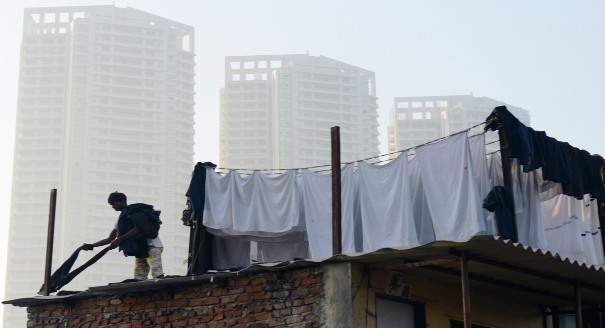
Lower castes have been hurt by the crisis of India’s agriculture, causing a flow of migrants to towns and cities. This shift requires the creation of eight million jobs a year, which India has not supplied.
Source: Indian Express
In 2015, the Patels in Gujarat asked for job quotas in the public sector. In 2016, dominant castes in other parts of the country did the same. The Jats of Haryana demonstrated in February in a violent manner (dozens of buses were set on fire and the Munak canal that supplies water to Delhi was badly damaged). The army had to be deployed — 13 columns of soldiers supplemented 10 companies of paramilitary forces. The agitation by the Jats resulted in more than 20 deaths.
In Maharashtra, the Marathas started an agitation to demand reservation in July, after a young Maratha girl was allegedly raped by a Dalit. But in contrast to the Jats, they opted for a completely non-violent — even silent — method. Rallies were organised at the district level during August to October in which more than 1.2 million people were mobilised. On January 31, the Kapus of Andhra Pradesh had mobilised 4,00,000 people after agitators from the caste burnt a train in coastal Andhra.
These movements reflect the differentiation among the big caste groups along class lines: While those in the upper echelons have benefited from growth, those at the bottom of the pyramid have been badly affected by the crisis of India’s agriculture. According to a 2016 report of the Labour Bureau, 42 per cent of the rural population is underemployed. This causes a flow of migrants to towns and cities — but those who leave their homes in villages to find a job in the private sector are often frustrated too.
While its demographic dynamism requires the creation of more than eight million jobs a year, India is not doing well on that front. According to the Labour Bureau, which has been surveying eight sectors of industry since 2009 (textiles/apparel, leather, metals, automobiles, gems and jewellery, transport, information technology/business process outsourcing and handloom/powerloom), the number of jobs created by these industries (the rest is a statistical terra incognita) is declining: From 6,40,000 in 2009 to 1,17,000 in 2014, in spite of a 7 to 8 per cent growth rate.
Such jobless growth partly relates to the nature of foreign multinational activity in India. In February, the function to mark the “Make in India Week” in Mumbai was well attended by global corporates. They committed to invest $ 225 billion over five years. However, these FDIs will officially translate into only six million jobs because of the highly capitalistic nature of these companies.
Not only are the jobs too few, they are precarious and do not pay well. In the private sector, the average daily earnings of workers was Rs 249 in 2011-12, according to the Labour Bureau and those of all employees was Rs 388. By contrast, wages in the public sector were almost three times more: Rs 679 for workers and Rs 945 for all employees. The seventh pay commission recently recommended an increase in the minimum monthly salary from Rs 7,000 to Rs 18,000.
All this explains the demand for job quotas by the dominant castes — but quotas are not a solution. Firstly, opportunities are very few. There were 19.5 million jobs in the public sector in 1992-1993 when India’s population was 839 million. While the country’s population is now 1.3 billion, the number of jobs in the public sector has shrunk to 17.6 million.
Second, positive discrimination has been designed in favour of the Scheduled Castes and Scheduled Tribes and Other Backward Classes — a category the Supreme Court has redefined in caste terms in the Mandal verdict. Most dominant castes are not backward; only a fraction are. For that reason, the courts systematically strike down the quotas introduced by governments for such castes. The courts also strike down additional quotas because they push up the proportion of reservation above the 50 per cent limit set by the Supreme Court.
Politicians have tried to obviate this problem by creating quotas for economically backward classes. The BJP, whose parent organisation, the RSS, always held that caste-based reservations divided society, has tried to introduce class-based reservations in states governed by the party. The Rajasthan Economically Backward Classes (Reservation of Seats in Educational Institutions in the State and of Appointments and Posts in Services under the State) Bill was passed in 2015. The governments of Gujarat and Maharashtra also tried to introduce quotas for economically weaker sections. But these governments were overruled by the courts.
Ruling parties find it is easier to blame the judiciary rather than create jobs. But there is no alternative if protests of the kind mentioned above have to be avoided. Governments should facilitate small and medium enterprises which have a labour intensity about four times that of large firms. Many such enterprises are in bad shape, not just because of financial problems caused by demonetisation, but also because their access to credit is shrinking.
Behind the reservation issue lies the political economy of India. Big is beautiful for the rulers who need corporate sector funds to contest elections, but by ignoring agriculture (and reducing the budget of the MGNREGA) and the SMEs (which are not protected from competition by big firms any more), they aggravate the job problem.

Former Nonresident Scholar, South Asia Program
Jaffrelot’s core research focuses on theories of nationalism and democracy, mobilization of the lower castes and Dalits (ex-untouchables) in India, the Hindu nationalist movement, and ethnic conflicts in Pakistan.
Recent Work


Milan Vaishnav, Rahul Verma, Rukmini S., …
Christophe Jaffrelot
Carnegie does not take institutional positions on public policy issues; the views represented herein are those of the author(s) and do not necessarily reflect the views of Carnegie, its staff, or its trustees.

The Plaza Accord was not an externally imposed punishment of Japan but part of a broader restructuring that Japanese economists and policymakers themselves recognized was necessary. Its effects were undermined, however, when Tokyo responded to the resulting slowdown with policies that exacerbated investment, credit expansion, and the very imbalances the adjustment was intended to resolve.

Michael Pettis

A summer of escalation in the Black Sea has hurt Ukraine economically and is exacerbating world food security. A truce is needed—as is a broader reframing of Europe’s Ukraine strategy.

Thomas de Waal

The Bureau of Industry and Security needs to adjust its focus and practices to maintain its position as the U.S. government’s primary champion of international technological competition.

Geoffrey Irving

Depleted financial reserves and a shrinking tax base mean it is no longer possible to simultaneously deliver high defense spending, price stability, and economic growth.

Alexandra Prokopenko
U.S. trading partners in Asia are closely watching the dispute for signs of how it may affect their own interests.

Barbara Weisel