

Research
- +10
Rosa Balfour, Frances Z. Brown, Yasmine Farouk, …
{
  "authors": [
    "Moisés Naím"
  ],
  "type": "legacyinthemedia",
  "centerAffiliationAll": "",
  "centers": [
    "Carnegie Endowment for International Peace"
  ],
  "collections": [],
  "englishNewsletterAll": "",
  "nonEnglishNewsletterAll": "",
  "primaryCenter": "Carnegie Endowment for International Peace",
  "programAffiliation": "",
  "programs": [],
  "projects": [],
  "regions": [],
  "topics": [
    "Political Reform",
    "Democracy"
  ]
}
Source: Getty
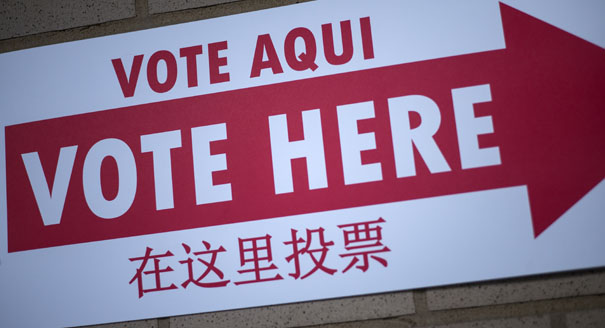
The Internet makes apathetic voters especially vulnerable to the manipulations of demagogues, particular interests, or even foreign powers.
Source: Washington Post
Inept, corrupt or extremist political leaders are harming our democracy. So, too, are the voters who don’t check if what they are reading, hearing or viewing is true. Our democracy’s problems are not just caused by bad leaders but also by indolent voters.
Citizens who don’t care about politics have always existed. As have those who vote without knowing much about who or what they are voting for — or against. But things have changed. Today, the failure of these voters to “click again” and find out more about their choices threatens all of us. The Internet makes apathetic voters especially vulnerable to the manipulations of demagogues, particular interests or even foreign powers.
The Founding Fathers worried about the impact of the uneducated or ill-informed on American democracy. James Madison argued, “A popular Government, without popular information, or the means of acquiring it, is but a Prologue to a Farce or a Tragedy; or, perhaps both.” Thomas Jefferson hoped that education would be the antidote: “Educate and inform the whole mass of the people. … They are the only sure reliance for the preservation of our liberty.”
It is a paradox of our time: Information has never been easier to find and yet we have all become more vulnerable to misinformation, manipulation and propaganda. The Internet is both a marvelous source of insights and a toxic channel through which weaponized lies freely circulate.
Moreover, it’s never been easier to ensconce ourselves in echo chambers that feed our prejudices, exploit our digital tribalism and strip away our defenses against the sophisticated tricks used by manipulators — often stealthily.
What to do? First, undertake a massive and sustained public education campaign to persuade as many voters as possible to click again. And again. Until they are satisfied that the facts on which they base their political preferences are not lies. Second, make life harder for the manipulators and lower their impunity by naming and shaming them and even suing, fining and jailing the worst offenders. Third, get social media companies to stop enabling the manipulators. Require them to deploy their technological and marketing prowess to protect their consumers, and make it costly for tech companies to allow their platforms to become launching pads for antidemocratic aggressions.

Distinguished Fellow
Moisés Naím is a distinguished fellow at the Carnegie Endowment for International Peace, a best-selling author, and an internationally syndicated columnist.
Recent Work



Rosa Balfour, Frances Z. Brown, Yasmine Farouk, …
Moisés Naím
Carnegie does not take institutional positions on public policy issues; the views represented herein are those of the author(s) and do not necessarily reflect the views of Carnegie, its staff, or its trustees.

The domestic impacts of how long it is taking to end the war in Ukraine have pushed the French electorate to the political extremes and compromised the country’s diplomatic capacity.

Rym Momtaz

Sergei Kiriyenko used Russia’s parliamentary vote to further hone his strategy of corporate mobilization that is designed to maximize votes for United Russia.

Andrey Pertsev

Before the next wave of EU enlargement takes place, the union needs to grapple with thorny questions of how power is distributed among its members.


Emil Sondaj Hansen, Ditte Brasso Sørensen

The European far right might fail to steer EU policy in the direction Russia wants, but they will create enough chaos inside Europe to benefit the Kremlin.

Dimitar Bechev

If the Russian-speaking community in Latvia cannot articulate their interests without being seen as disloyal, they could end up embracing a pro-Kremlin agenda.

Sergejs Potapkins