
• Research
  • Emissary
  • About
  • Experts
Carnegie Global logoCarnegie lettermark logo
DemocracyIran
  • Donate
{
  "authors": [
    "Se Young Jang"
  ],
  "type": "other",
  "centerAffiliationAll": "dc",
  "centers": [
    "Carnegie Endowment for International Peace"
  ],
  "collections": [
    "Korean Peninsula"
  ],
  "englishNewsletterAll": "",
  "nonEnglishNewsletterAll": "",
  "primaryCenter": "Carnegie Endowment for International Peace",
  "programAffiliation": "NPP",
  "programs": [
    "Nuclear Policy"
  ],
  "projects": [],
  "regions": [
    "East Asia",
    "South Korea"
  ],
  "topics": [
    "Nuclear Policy",
    "Nuclear Energy"
  ]
}

Source: Getty

Other

South Korea’s Nuclear Energy Debate

South Korean President Moon Jae-in’s announcement that he would resume the construction of two nuclear reactors which had been temporarily halted since mid-July will have a more complicated effect on South Korea’s long-term energy policy.

Link Copied
By Se Young Jang
Published on Oct 26, 2017
Program mobile hero image

Program

Nuclear Policy

The Nuclear Policy Program aims to reduce the risk of nuclear war. Our experts diagnose acute risks stemming from technical and geopolitical developments, generate pragmatic solutions, and use our global network to advance risk-reduction policies. Our work covers deterrence, disarmament, arms control, nonproliferation, and nuclear energy.

Learn More

Source: Diplomat

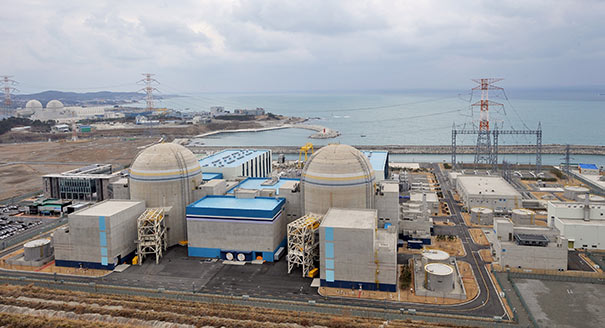
South Korean President Moon Jae-in announced on October 22 that he would resume the construction of two nuclear reactors which had been temporarily halted since mid-July, accepting a deliberative poll in favor of the resumption. On the surface, this decision might be seen as a direct blow to Moon’s nuclear phase-out policy; however, this deliberative democratic process will have a more complicated effect on South Korea’s long-term energy policy. The majority of the respondents ironically supported restarting construction on the two plants and scaling down nuclear power generation at the same time. Such an ironic but eclectic decision made by citizens will contribute to managing a sharp conflict between pro- and anti-nuclear groups while giving some degree of domestic legitimacy to Moon’s long-term energy roadmap for a gradual nuclear phase-out.

South Korea is the fifth-largest producer of nuclear energy in the world, with its 24 reactors generating about a third of its electricity. During his presidential campaign early this year, Moon pledged to phase out coal and nuclear energy, mainly due to the public’s growing concerns about air pollution and nuclear safety. Instead, Moon vowed to increase the share of renewable energy up to 20 percent of total electricity generation by 2030. After taking office, Moon reconfirmed his campaign promise; in a speech to mark the permanent shutdown of Kori-1, South Korea’s oldest commercial nuclear reactor which went into operation in 1978, he declared, “We will abolish our nuclear-centered energy policy and move towards a nuclear-free era. We will completely scrap construction plans for new nuclear reactors that are currently under way.”

As of late May 2017, state-run nuclear operator Korea Hydro & Nuclear Power (KHNP) had five new nuclear reactors under construction; among them, three reactors were nearly complete while other two (Shin Kori no. 5 and no. 6) had been 28.8 percent done (10.4 percent in terms of actual construction) with roughly $1.4 billion already spent and estimated total losses (sunk costs) of $2.3 billion. Moon’s pursuit of “a nuclear-free era” made the fate of the two ongoing construction projects controversial, sparking heated debates between pro- and anti-nuclear campaigners in South Korea. Advocates for resuming the construction assured that the Shin Kori 5 and 6 would be “the most up-to-date version of the third-generation type, equipped with intensive safety features,” while opponents expressed their concerns about the location of these nuclear reactors in a highly-populated area, no matter how advanced safety measures would be.

This article was originally published in the Diplomat.

Read the article

About the Author

Se Young Jang

Former Nonresident Scholar, Nuclear Policy Program

Se Young Jang was a nonresident scholar in the Nuclear Policy Program at the Carnegie Endowment for International Peace.

Se Young Jang
Former Nonresident Scholar, Nuclear Policy Program
Nuclear PolicyNuclear EnergyEast AsiaSouth Korea

Carnegie does not take institutional positions on public policy issues; the views represented herein are those of the author(s) and do not necessarily reflect the views of Carnegie, its staff, or its trustees.

More Work from Carnegie Endowment for International Peace

  • Commentary
    Strategic Europe
    Europe on Iran: Gone with the Wind

    Europe’s reaction to the war in Iran has been disunited and meek, a far cry from its previously leading role in diplomacy with Tehran. To avoid being condemned to the sidelines while escalation continues, Brussels needs to stand up for international law.

      Pierre Vimont

  • An elderly woman walks past a poster at a health centre in Gunwi, some 200 kilometres south of Seoul
    Paper
    Governing Aging Economies: South Korea and the Politics of Care, Safety, and Work

    South Korea’s rapid demographic transition previews governance challenges many advanced and middle-income economies will face. This paper argues that aging is not only a care issue but a structural governance challenge—reshaping welfare, productivity, and fiscal sustainability, and reorganizing responsibilities across the state, private sector, and society.

      Darcie Draudt-Véjares

  • Nuclear power plant reactor construction
    Article
    Promoting Responsible Nuclear Energy Conduct: An Agenda for International Cooperation

    These principles aim to codify core responsible practices and establish a common universal platform of high-level guidelines necessary to build trust that a nuclear energy resurgence can deliver its intended benefits.

      Ariel (Eli) Levite, Toby Dalton

  • Commentary
    Strategic Europe
    Macron Makes France a Great Middle Power

    France has stopped clinging to notions of being a great power and is embracing the middle power moment. But Emmanuel Macron has his work cut out if he is to secure his country’s global standing before his term in office ends.

      • Rym Momtaz

      Rym Momtaz

  • Source: North Atlantic Treaty Organization
    Paper
    Are Long-Term NATO–South Korea Defense Ties Possible? Transitioning From an Arms Exporter to a Trusted Defense Partner

    South Korea has emerged as a major weapon exporter. But its relationship with Europe will depend on more than that.

      Chung Min Lee

Get more news and analysis from
Carnegie Endowment for International Peace
Carnegie global logo, stacked
1779 Massachusetts Avenue NWWashington, DC, 20036-2103Phone: 202 483 7600Fax: 202 483 1840
  • Research
  • Emissary
  • About
  • Experts
  • Donate
  • Programs
  • Events
  • Blogs
  • Podcasts
  • Contact
  • Annual Reports
  • Careers
  • Privacy
  • For Media
  • Government Resources
Get more news and analysis from
Carnegie Endowment for International Peace
© 2026 Carnegie Endowment for International Peace. All rights reserved.