

Paper
James M. Acton, Ankit Panda
{
  "authors": [
    "James M. Acton"
  ],
  "type": "legacyinthemedia",
  "centerAffiliationAll": "dc",
  "centers": [
    "Carnegie Endowment for International Peace",
    "Carnegie Russia Eurasia Center"
  ],
  "collections": [],
  "englishNewsletterAll": "ctw",
  "nonEnglishNewsletterAll": "",
  "primaryCenter": "Carnegie Endowment for International Peace",
  "programAffiliation": "NPP",
  "programs": [
    "Nuclear Policy"
  ],
  "projects": [],
  "regions": [],
  "topics": [
    "Nuclear Policy"
  ]
}
Source: Getty
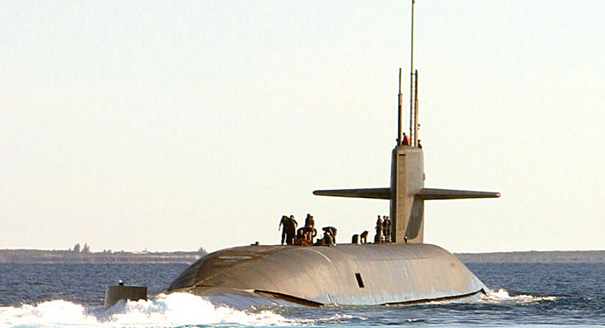
The Trump administration’s Nuclear Posture Review includes a threat to consider using nuclear weapons if an adversary attacks U.S. command and control capabilities.
Source: War on the Rocks
If the U.S. nuclear command-and-control system were a fictional character, it might be 11-year-old Harry Potter living under the Dursleys’ staircase on Privet Drive—desperately underappreciated and chronically underfunded, yet absolutely critical to avoiding the worst outcome imaginable. The result of its neglect, according to the Nuclear Posture Review published Friday, is that the system for detecting nuclear strikes on the United States and relaying orders to U.S. nuclear forces is “subject to challenges from both aging system components and new, growing 21st Century threats.”
The framers of the review are, quite rightly, concerned about how the command-and-control system would perform if the United States ever faced the nuclear equivalent of a duel with Lord Voldemort. And, sensibly, the review announces a comprehensive modernization plan. However, the document goes further than that. In an attempt to enhance deterrence, it includes a seemingly innocuous—and distinctly wonkish—threat to consider using nuclear weapons if an adversary launches nonnuclear attacks against U.S. nuclear “command and control, or warning and attack assessment capabilities.”
This threat marks a significant—and unwelcome—departure for U.S. declaratory policy. To the best of this author’s knowledge, the United States has never before explicitly threatened a nuclear response to nonnuclear attacks on command, control, and warning capabilities—and with good reason. Such a response would be utterly disproportionate. The Nuclear Posture Review’s threat to carry it out, therefore, lacks credibility and could prove both ineffective and damaging to U.S. interests. Instead, the United States should focus on building a much more redundant command, control, and warning architecture—something that current plans appear unlikely to achieve.
Nonnuclear attacks against nuclear command and control are a relatively new danger. During the Cold War, the only way to target an adversary’s command, control, and warning capabilities was generally with nuclear weapons. Today, however, nonnuclear threats to these assets are all too real given recent advances in cyber, high-precision conventional, and anti-satellite weapons. To make matters worse, U.S. command, control, and warning capabilities are surprisingly fragile. Once legacy systems are phased out, the United States will rely on just six satellites for detecting an incoming nuclear attack and four satellites for communicating with nuclear forces. A handful of ground-based assets (and, in the case of communications, aircraft) provide backup.
Nonnuclear threats to satellites are particularly concerning. Russia is developing ground-based lasers to target U.S. early-warning satellites. Chinese strategists go a step further and specifically advocate attacking such satellites in a conventional conflict. Even limited attacks could have severe consequences. In 2014, for example, Gen. William Shelton, then Commander of U.S. Space Command, publicly acknowledged that the loss of a single U.S. early-warning satellite could deprive the United States of the ability to continuously monitor all potential launches of adversaries’ nuclear-armed missiles.
If U.S. command, control, and warning capabilities had no other functions, there would be some logic to responding to attacks on them with nuclear weapons. In that case, the only reason an adversary—most likely Russia or China—would have to attack these capabilities would be to prepare to use nuclear weapons on the United States. Specifically, Russian and Chinese strikes — probably conducted with nonnuclear weapons — could make a follow-up nuclear attack more effective and perhaps delay a U.S. nuclear response. In such a scenario, it might make sense for the United States to respond with nuclear weapons.
In fact, however, many American command, control, and warning capabilities are dual-use; they serve both conventional and nuclear missions. U.S. early-warning satellites, for example, are tasked with detecting an incoming nuclear attack and with triggering defenses designed to intercept nonnuclear ballistic missiles. This duality could give Russia or China a reason to attack them in a conventional war. For instance, if U.S. missile defenses in Europe or Asia were proving effective in knocking the enemy’s nonnuclear ballistic missiles out of the sky, Moscow or Beijing might try to stave off defeat by attacking U.S. early-warning satellites with nonnuclear weapons. Then, according to the new U.S. nuclear doctrine, the United States could launch a nuclear response.
Using nuclear weapons in this scenario would, however, violate any notion of proportionality. Russian or Chinese nonnuclear strikes on U.S. satellites would almost certainly cause no human casualties. Yet U.S. nuclear use—even if highly limited and carefully targeted—could spark a nuclear war that might plausibly kill tens or even hundreds of millions, including many in the United States.
So, would the U.S. president really risk a devastating nuclear conflict in response to bloodless Russian or Chinese attacks on U.S. satellites? Only Donald Trump can know the answer to this question, but it is not difficult to see why Moscow and Beijing might assume it is “no” and, in the event of a conflict, attack U.S. command, control, and warning capabilities anyway. In this case, the president would be left with a profoundly awful choice: refrain and raise doubts about the credibility of other U.S. nuclear threats, or act on the threat to use nuclear weapons and risk mass slaughter?
Fortunately, there are better ways to deal with the very real problem of the vulnerability of command and control to nonnuclear attack.
The most obvious approach would be for the United States to separate nuclear command, control, and warning capabilities from nonnuclear ones. While superficially attractive, this idea would encounter severe difficulties in practice. The cost of building two separate command-and-control systems—one for nuclear and one for nonnuclear operations—would be a real barrier. More subtly, the advent of dual-capable missiles—those that can accommodate a nuclear or nonnuclear warhead—could make it impossible to determine how an incoming weapon is armed, effectively preventing so-called disaggregation.
A better way would be for the United States to start building a much more resilient command, control, and warning architecture. Unfortunately, current modernization plans are unlikely to achieve that goal. Much to the chagrin of Gen. John Hyten, another former commander of U.S. Space Command and the current commander of U.S. Strategic Command, plans to modernize the U.S. space-based early-warning system essentially call for replicating the current architecture with newer satellites. These plans will likely do very little to reduce the vulnerability of early-warning satellites to nonnuclear attack.
An effective way to enhance resilience would be to place a large number—perhaps 20 or 30—of small early-warning sensors in space. These sensors would not be placed on satellites dedicated to early warning, but rather “hosted” on satellites used for other purposes—potentially both military and civilian. This concept is not theoretical; during the Cold War, the United States built a similar system, known as AFSATCOM, for communications.
To be sure, there could be a real trade-off here. A “dispersed” early-warning system—consisting of many small sensors piggybacking on convenient satellites — would be less capable than the status quo of a small number of highly sophisticated satellites dedicated to early warning. But it could absorb many more nonnuclear blows before becoming ineffective.
Maybe the United States can have its space cake and eat it too: It’s possible that, because a dispersed system would obviate the need to construct additional satellites, it could be built cheaply enough that the United States could afford a few dedicated early-warning satellites as well. Yet, if a choice must be made—and in the real world it often must—there is a strong case for ditching dedicated early-warning satellites and building a dispersed system instead. If the only way to defend a dedicated system is with nuclear threats, its cost is simply too high.

Jessica T. Mathews Chair, Co-director, Nuclear Policy Program
Acton holds the Jessica T. Mathews Chair and is co-director of the Nuclear Policy Program at the Carnegie Endowment for International Peace.
Recent Work

James M. Acton, Ankit Panda
James M. Acton
Carnegie does not take institutional positions on public policy issues; the views represented herein are those of the author(s) and do not necessarily reflect the views of Carnegie, its staff, or its trustees.

The nuclear relationship between China and the United States is increasingly shaped by widening perception gaps rather than deliberate strategic design.

Tong Zhao
Congress should ask tough questions about the agreement’s more unique features and whether they advance U.S. interests or compromise them.

Jane Darby Menton

Nuclear and maritime communities face a long and challenging journey to deploy commercial nuclear applications at sea.


Jamie Kwong, Toby Dalton

A look at how public opinion influences the credibility of coercive nuclear threats,and how it enables and constrains strategies of nuclear coercion.

Lauren Sukin, Samuel Seitz
Despite the agreement’s uncertainty, it’s still a significant development in regional and nuclear policy.

Andrew Leber, Jane Darby Menton