

Q&A
Darshana M. Baruah, Satyendra Prasad, Denghua Zhang
{
  "authors": [
    "Darshana M. Baruah"
  ],
  "type": "other",
  "centerAffiliationAll": "",
  "centers": [
    "Carnegie Endowment for International Peace",
    "Carnegie India"
  ],
  "collections": [],
  "englishNewsletterAll": "",
  "nonEnglishNewsletterAll": "",
  "primaryCenter": "Carnegie India",
  "programAffiliation": "",
  "programs": [],
  "projects": [],
  "regions": [
    "South Asia",
    "India",
    "Indo-Pacific"
  ],
  "topics": [
    "Foreign Policy"
  ]
}
Source: Getty
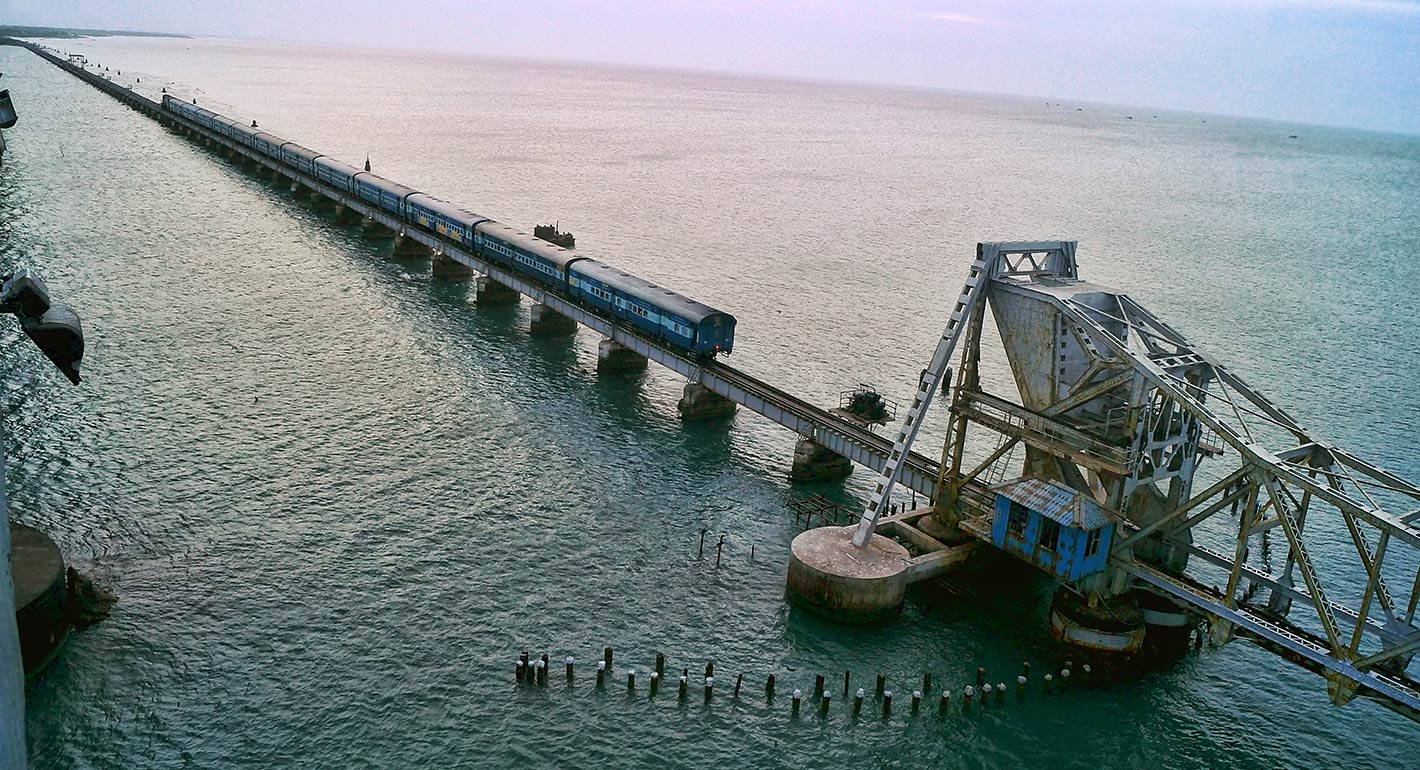
India's geographic location in the Indian Ocean naturally renders the Indian Navy as one of the key players in the region, and an important partner for the Indian Ocean community to keep the area stable and secure.
Source: Oxford University Press
The Indian Ocean is an area of primary importance to the Indian Navy and instability in the region directly affects India's security environment. India's geographic location in the Indian Ocean naturally renders the Indian Navy as one of the key players in the region and an important partner for the Indian Ocean community to keep the area stable and secure. Compared to the Pacific, the Indian Ocean has previously been fairly free of conflicts and geopolitical competition giving India a sense of security in its Indian Ocean role. New Delhi for far too long has been occupied with troubles along its continental border with limited focus on maritime security. The lack of an interest in developing a coherent maritime security strategy in the Indian defence establishment was aided by a relatively favourable maritime environment. The security environment in the Indian Ocean today, however, is quickly changing with a rise in strategic competition. Recent developments have forced New Delhi to take a fresh look at its maritime strategy, particularly under the current government led by Prime Minister Narendra Modi. This chapter examines enhancing India's maritime domain awareness (MDA) in the Indian Ocean as a part of India's new maritime outlook. It underlines the factors driving this change especially in context of the Sino-Indian relationship. The chapter concludes with a set of recommendations to enhance India's surveillance capabilities in the Indian Ocean region improving its domain awareness.
This book chapter was originally published by the Oxford University Press.

Former Nonresident Scholar, South Asia Program
Darshana M. Baruah was a nonresident scholar with the South Asia Program at the Carnegie Endowment for International Peace where she directs the Indian Ocean Initiative.
Recent Work

Darshana M. Baruah, Satyendra Prasad, Denghua Zhang
Darshana M. Baruah
Carnegie does not take institutional positions on public policy issues; the views represented herein are those of the author(s) and do not necessarily reflect the views of Carnegie, its staff, or its trustees.
Power assessments shape our perceptions of the limits of the possible, but quantitative rankings and dashboards can provide false confidence.
Nicholas Kitchen

In its version of an AI middle power strategy, Seoul is pursuing alignment with the United States not as an endpoint but as a strategy to build industrial and geopolitical leverage. Whether this balance holds remains an open question.


Darcie Draudt-Véjares, Seungjoo Lee
This collection of essays by scholars from Carnegie India’s Technology and Society program traces the evolution of the AI summit series and examines India’s framing around the three sutras of people, planet, and progress. Scholars have catalogued and assessed the concrete deliverables that emerged and assessed what the precedent of a Global South country hosting means for the future of the multilateral conversation.



Nidhi Singh, Tejas Bharadwaj, Shruti Mittal, …
If Washington cannot adapt to the ongoing transformations of a multipolar world, its superiority will become a liability.

Amr Hamzawy
Following Ursula von der Leyen’s gaffe equating Turkey to Russia and China, relations with Ankara risk deteriorating even further. Without better, more consistent diplomatic messaging, how can the EU pretend to be a geopolitical power?

Sinan Ülgen