

Article
C. Raja Mohan, Darshana M. Baruah
{
  "authors": [
    "C. Raja Mohan"
  ],
  "type": "legacyinthemedia",
  "centerAffiliationAll": "",
  "centers": [
    "Carnegie Endowment for International Peace",
    "Carnegie India"
  ],
  "collections": [],
  "englishNewsletterAll": "",
  "nonEnglishNewsletterAll": "",
  "primaryCenter": "Carnegie India",
  "programAffiliation": "",
  "programs": [],
  "projects": [],
  "regions": [
    "South Asia",
    "India",
    "Europe"
  ],
  "topics": [
    "Foreign Policy"
  ]
}
Source: Getty
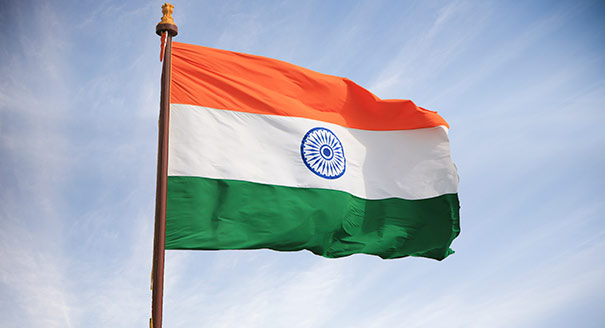
India and Europe have good reasons to strengthen their security partnership—as a hedge against the rise of new regional hegemons and U.S. retrenchment in Eurasia.
Source: Indian Express
The idea of “strategic autonomy”, at once vague and central to Indian foreign policy discourse after the Cold War, appears to be traveling and quite far. Countries — ranging from Britain to Japan and France to Australia — that once looked with much amusement at India’s prickly obsession with autonomy are now beginning to embrace it. Their new enthusiasm for independent foreign and security policies, to be fair, has little do with discovering the virtues of the Indian debate but unprecedented pressure from the U S.
President Donald Trump is asking why America should spend its blood and treasure protecting its rich allies in Europe and Asia. The initial hope that Trump will be “educated” by Washington’s permanent establishment about the importance of America paying for the maintenance of the “liberal international order” have been dashed.
Trump has not stopped questing for US alliance commitments in Europe and Asia. This has begun to compel the US allies to reflect on the need for strategic autonomy. The debate on strategic autonomy has been most vocal in the European Union. It is also beginning to acquire some traction among Asian allies like Japan, South Korea and Australia.
A few days ago, in his address to the French diplomatic corps, President Emmanuel Macron reaffirmed that Europe can no longer rely on Washington alone for its security. A few days earlier, the German foreign minister Heiko Maas declared that the “outstanding aim” of Berlin’s foreign policy “is to build a strong, sovereign Europe”.
That brings us to the second idea popular in Delhi — “sovereignty” — that has begun to infect Europe. Not too long ago, Europeans used to scoff at the excessive Asian emphasis on sovereignty. The new French and German sentiments on sovereignty echoed the president of the European Commission, Jean Claude Juncker. Last week, in his annual address to the European Parliament, Juncker said its time Europe “took its destiny into its own hands” and become a credible sovereign actor on the global stage.
As in Europe, so in India the debate on strategic autonomy has been driven largely by the US. Although pundits in Delhi claim that “strategic autonomy” is a general and fundamental principle of India’s foreign policy, it tends to be invoked only in relation to the United States and never in the discussion of the ties with Russia or China.
Although Washington today is more aligned with Delhi on key regional and global interests than Moscow or Beijing — for example on Pakistan, cross-border terrorism and security in the Indo-Pacific — the residual legacy of “strategic autonomy” is raised to limit a deeper engagement with the US. India’s post Cold War fears of American hyper power was reflected in questions like these: “Are we becoming too close to Washington?” “Is Washington setting the goals of our foreign policy?”
If worries about American “entrapment” drive Delhi’s thinking on “strategic autonomy,” it is the fear of US “abandonment” that shapes the European debate.
Sceptics, however, have long dismissed the Indian and European debates on “strategic autonomy” as empty talk. Autonomy has no meaning if it is not backed by solid national power. In India, the proponents of “strategic autonomy” have often used it block partnerships that would have boosted India’s national capabilities.
In Europe, the discussion of strategic autonomy was wishful thinking so long as the US security guarantees were taken for granted. That, however, has begun to change, thanks to Trump. Trump’s “America First” policy would not have mattered for US allies and partners if Europe and Asia were at peace with themselves. But they are not. The assertiveness of Russia in Europe and China in Asia and the deepening alliance between them adds to the pressures on not just the US allies but also India.
Under the present government, Delhi has begun to take a more practical view of “strategic autonomy” and shed some of the inhibitions against security cooperation with the West. Defence partnerships with the US and France have finally begun to acquire some traction. The EU, meanwhile, has unveiled an ambitious agenda for common defence. This includes Permanent Structured Security Cooperation under the common security and defence policy, development of a joint interventionary force and the establishment of a $15-billion European Defence Fund.
Strategic autonomy and nuclear weapons are often seen as two sides of the same coin. Paris and London have been talking for a while of pooling their nuclear resources for a “European deterrent force”. More improbably, Berlin, despite its long-standing nuclear aversion, has now begun to debate the merits of a German nuclear option.
If India is struggling to get its defence act together, Europe too faces innumerable problems — a rising tide of nationalism, divergent perceptions of the threat, multiplicity of weapons systems, and a competition for arms sales. Yet, India and Europe have good reasons to strengthen their security partnership — as a hedge against the rise of new regional hegemons and the US retrenchment in Eurasia. For Delhi and Brussels, bilateral defence cooperation is not a substitute, but a complement to the security partnership with America.
On its part, Delhi must end its neglect of existing European structures like NATO and pay attention to the emerging defence institutions in Brussels. The EU, on its part, must begin to integrate India into its security calculus. Deepening defence the partnership is a good way to enhance the strategic autonomy of India and Europe in an uncertain world.
This article was originally published in the Indian Express.
Former Nonresident Senior Fellow, Carnegie India
A leading analyst of India’s foreign policy, Mohan is also an expert on South Asian security, great-power relations in Asia, and arms control.
Recent Work

C. Raja Mohan, Darshana M. Baruah


Alexander Gabuev, Paul Haenle, C. Raja Mohan, …
Carnegie does not take institutional positions on public policy issues; the views represented herein are those of the author(s) and do not necessarily reflect the views of Carnegie, its staff, or its trustees.

The acknowledgment has sparked fears of a new arms race with China and Russia.

Chris O’Meara
Smaller powers cannot go it alone, but Canadian history shows that integration with the United States will not always be benign.
Paul Samson

The European Commissioner for Trade is headed to China. But after President Xi’s bridge-building visit to Washington, can a more isolated EU overcome Beijing’s stranglehold on critical raw materials? Who will blink first?

Rym Momtaz, ed.
The summit may be remembered as a fatal blunder, when Washington, Beijing, and the AI industry collectively chose ceremony over action.

Jeffrey Prescott

European NATO countries are wrestling with the possibility of U.S. disengagement from the alliance. With the continent’s security increasingly uncertain, governments must restore the credibility of their collective defense.



Hans-Dieter Lucas, Adam Thomson, Pierre Vimont