

Article
- +1
Toby Dalton, Mark Hibbs, Nicole Grajewski, …
{
  "authors": [
    "Mark Hibbs"
  ],
  "type": "legacyinthemedia",
  "centerAffiliationAll": "dc",
  "centers": [
    "Carnegie Endowment for International Peace"
  ],
  "collections": [],
  "englishNewsletterAll": "ctw",
  "nonEnglishNewsletterAll": "",
  "primaryCenter": "Carnegie Endowment for International Peace",
  "programAffiliation": "NPP",
  "programs": [
    "Nuclear Policy"
  ],
  "projects": [],
  "regions": [],
  "topics": [
    "Nuclear Policy",
    "Arms Control"
  ]
}
Source: Getty
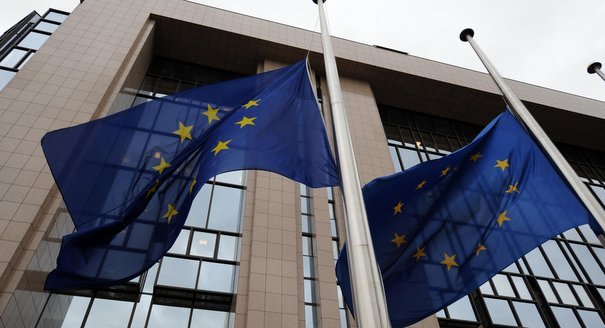
While the decision of President Donald Trump to walk away from the INF Treaty drew a heated response from policy pundits in Washington, European analysts hold hope that the U.S. and Russia may resolve issues with the treaty this week.
Source: Bulletin of Atomic Scientists
Here in Europe, the reaction by thinkers and governments at the end of the weekend to the decision by President Donald Trump to walk away from the INF Treaty did not fully sync with the initial deploring response from many policy pundits in Washington. Whether more circumspect Euros were right or not to see Trump’s October 20 campaign message as an opportunity may become known in few weeks or even a few days. Certainly, when looked at along a 10-year trajectory, this development would appear to point instead toward less stability in US-Russian security relations, not more.
Trump’s announcement can’t help but underscore the impression that this President is all about tearing down things that came to pass on Barack Obama’s watch. If Trump’s critics are right that he ditched the Iran nuclear agreement because Obama negotiated and concluded it, Trump’s announcement that he’s ready to walk away from the INF Treaty might also imply that, in Trump’s view, Obama was dead wrong to uphold an agreement that Russia didn’t respect. If this is what the president thinks, that’s bad news for nuclear arms control because Trump so far hasn’t said whether, if re-elected, he would favor renewal of the New START Treaty—a treaty Obama concluded—when it comes up for a decision in 2021. For Trump’s opponents, of course, the silver lining right now and looking toward 2020 is that Trump has just provided more evidence that he is making important policy decisions on the basis of resentment, not US national interest.
But the differences between the Iran and Russia cases are also significant. The Obama administration owns the Iran deal; Obama loyalists continue to embrace that agreement and extoll it as perhaps Obama’s most important foreign policy achievement, a point of view that irks many Republicans. Trump however can’t blame Obama for what happened to the INF Treaty: Under Obama, the US government on several occasions between 2008 and 2014 called Russia out for violating it. Trump isn’t overturning Obama’s legacy in this case—until now Russia has not addressed the US allegations but instead has countered by claiming that the United States is in non-compliance.
In the aftermath of Trump’s words on October 20, Euro officials and experts expressed the hope that ongoing diplomacy, including whatever happens this week, might resolve US-Russian differences. Some Europeans also suggested this week that, nearly a decade after US talk of a “reset” with Russia went nowhere, at least in this case Trump might have been moved—perhaps even provoked by the monkey on his back in the guise of the special counsel—to throw down the gauntlet to Russian President Vladimir Putin on a major geostrategic point of contention.
For sure, European (and especially where I live, German) TV screens on this Monday displayed footage of 1980s-vintage demonstrations against a rising Cold War missile threat to Europe, underscoring Europe’s profound commitment to ballistic missile management and fear of a return to nuclear arms racing. But European viewers also saw their leaders suggest that a Russian-US conclave held in Moscow this week might set up a process to finally address outstanding compliance issues and even enlarge the scope of the INF obligations, specifically highlighting concern, shared by US allies, that unless China were to be brought into the INF Treaty fabric, Beijing’s military buildup would pose an ever-greater strategic threat to the United States and the West.
Whether US-Russian diplomacy this week and after will move things in a positive direction depends on two unknowns: Whether John Bolton is determined to put an end to nuclear arms control as we know it (and the president agrees with him), and whether Putin truly believes that the INF Treaty is no longer in Russia’s national interest. If the answer to both questions is yes, then the agreement won’t likely survive. If not, hopeful Euros may be right.
This article was originally published in the Bulletin of Atomic Scientists.

Nonresident Senior Fellow, Nuclear Policy Program
Hibbs is a Germany-based nonresident senior fellow in Carnegie’s Nuclear Policy Program. His areas of expertise are nuclear verification and safeguards, multilateral nuclear trade policy, international nuclear cooperation, and nonproliferation arrangements.
Recent Work


Toby Dalton, Mark Hibbs, Nicole Grajewski, …
Mark Hibbs
Carnegie does not take institutional positions on public policy issues; the views represented herein are those of the author(s) and do not necessarily reflect the views of Carnegie, its staff, or its trustees.

The acknowledgment has sparked fears of a new arms race with China and Russia.

Chris O’Meara

The nuclear relationship between China and the United States is increasingly shaped by widening perception gaps rather than deliberate strategic design.

Tong Zhao

A look at why states without nuclear weapons are seeking naval nuclear propulsion, whether they can legally and technically deliver it, what it will cost them, and what responsible stewardship of the capability would look like.

Jamie Kwong
Congress should ask tough questions about the agreement’s more unique features and whether they advance U.S. interests or compromise them.

Jane Darby Menton
Nuclear and maritime communities face a long and challenging journey to deploy commercial nuclear applications at sea.
Jamie Kwong, Toby Dalton